War in Asia

About the Game
War in Asia is a grand strategy game built around systemic simulation. Its goal is to deeply and comprehensively simulate the East Asian theater of World War II from 1937 to 1945 through three major pillars: military operations, economy, and logistics networks.
Command and Campaigns
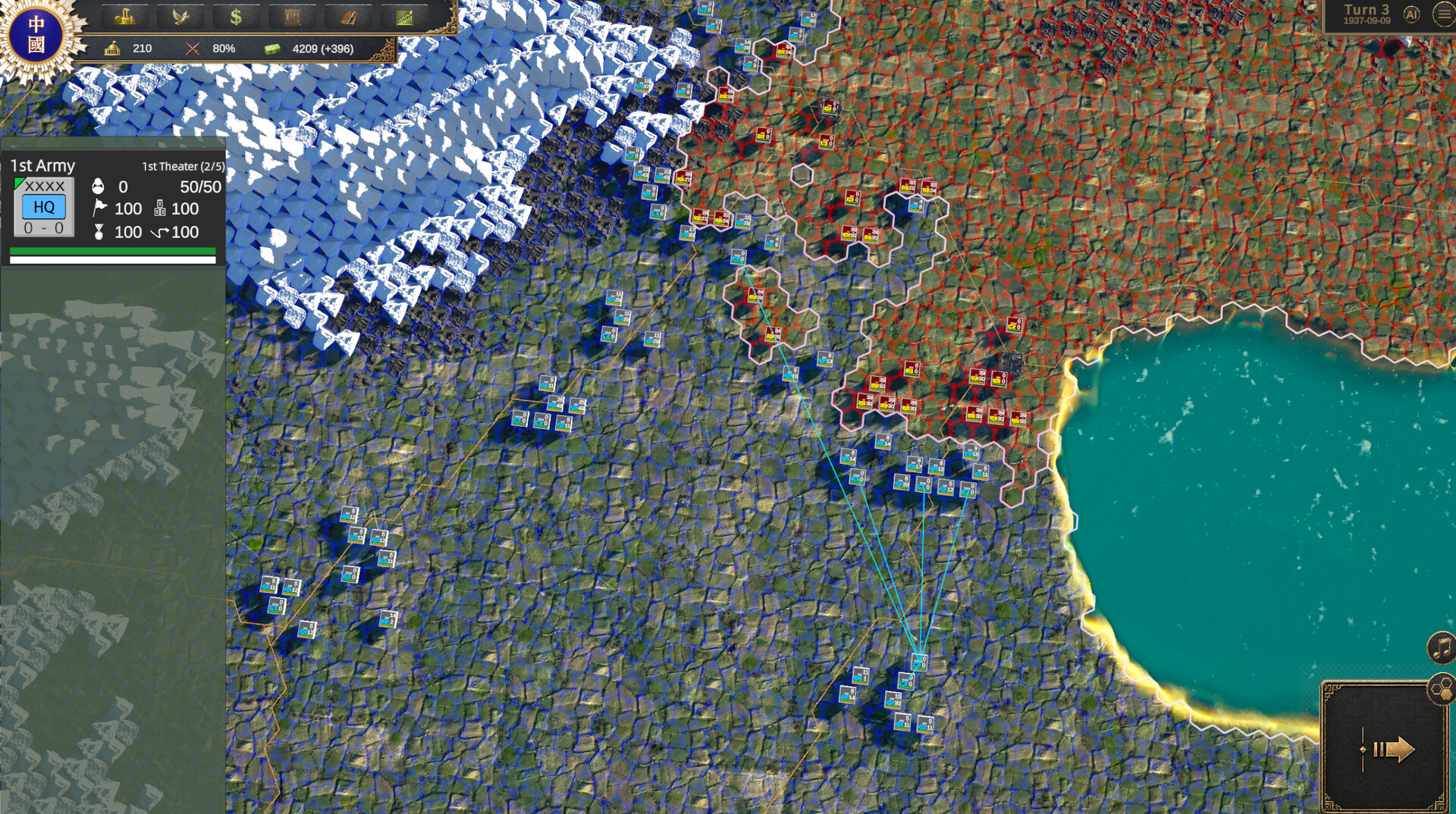
War in Asia features its own distinctive wargame-style operational system. Chinese forces are represented primarily at the division level, while Japanese forces are represented primarily at the regiment level, with formations composed down to regiments and battalions.
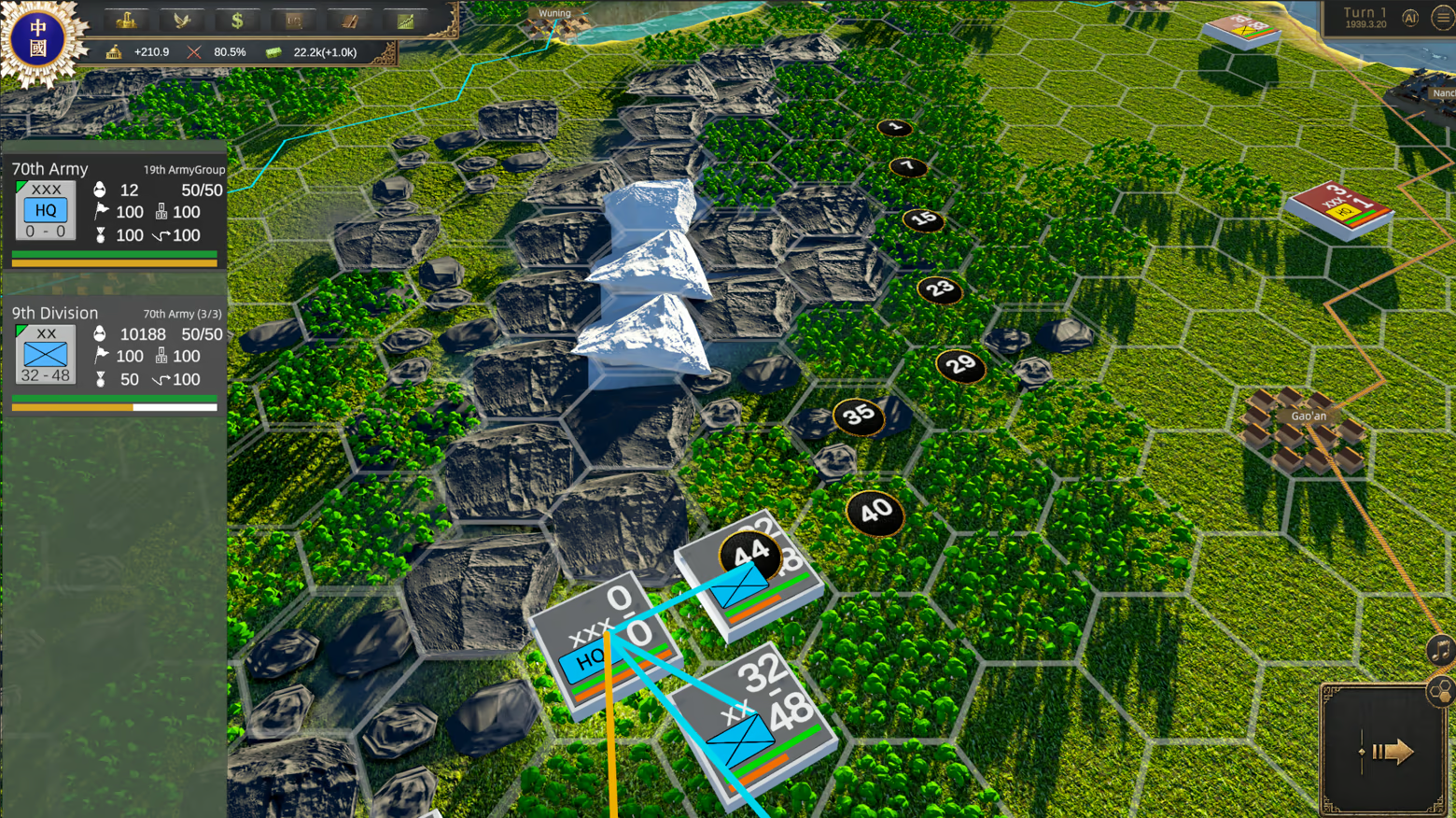
Through the chain-of-command system, you will take control of the entire Chinese front, appoint your commanders, and organize large-scale campaigns. Campaigns are dynamic operations that unfold over days or even weeks. Every breakthrough and delay along the front can reshape the wider strategic situation.
A unit’s combat effectiveness depends heavily on its condition. Disrupted supply lines, or reckless prolonged high-intensity operations, can rapidly weaken or even collapse your forces.
Units do not appear out of thin air. You may organize new formations based on historical orders of battle or custom formation templates. At the same time, each nation’s industrial and equipment capacity will limit what kinds of formations are realistically viable. Train and equip new units in any region, and assign them the designations you prefer.
Map and Cities
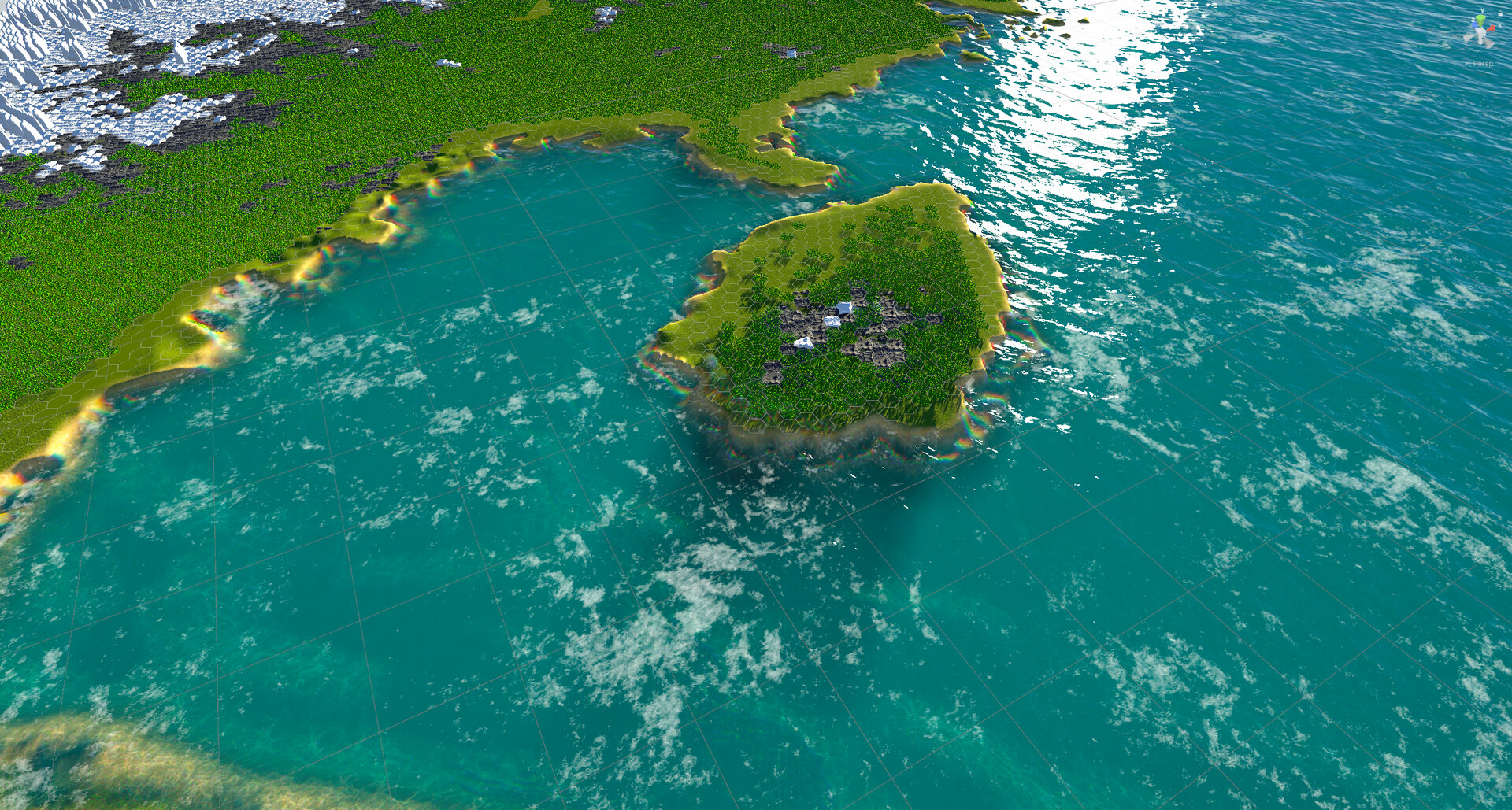
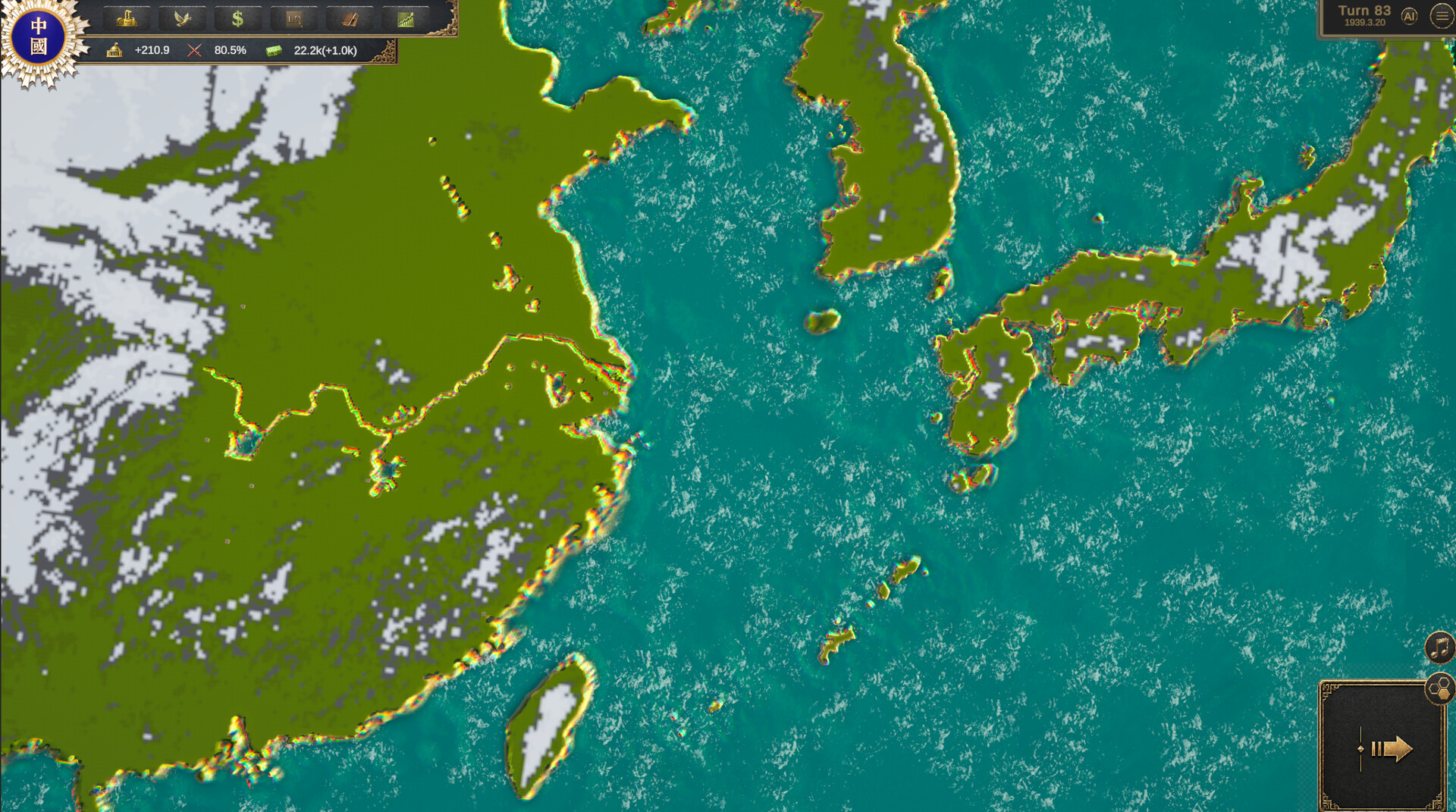
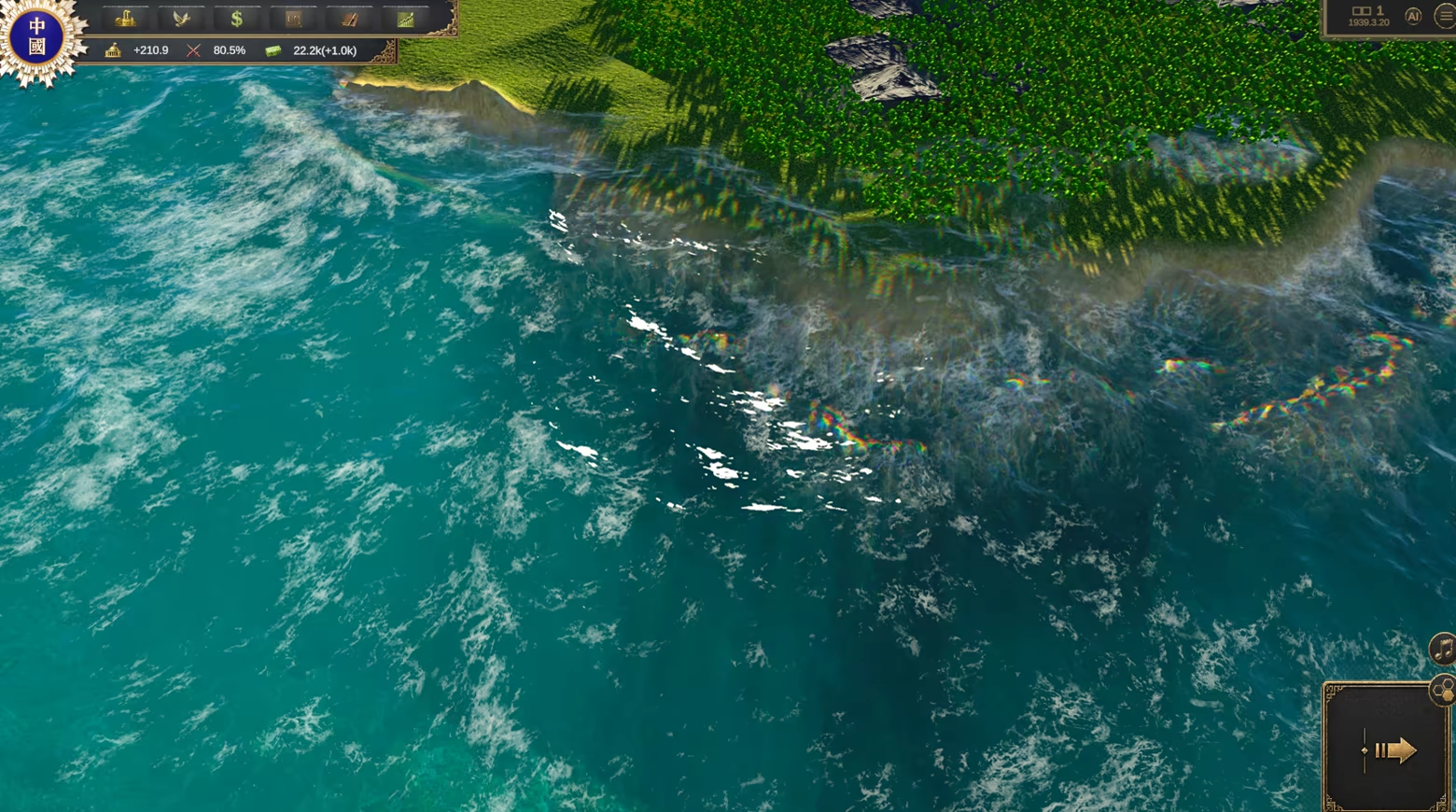
Thanks to a script-driven map editor, War in Asia features more than 300,000 tiles. On one of the most faithful strategic maps of East Asia, you will be able to command all of your forces.
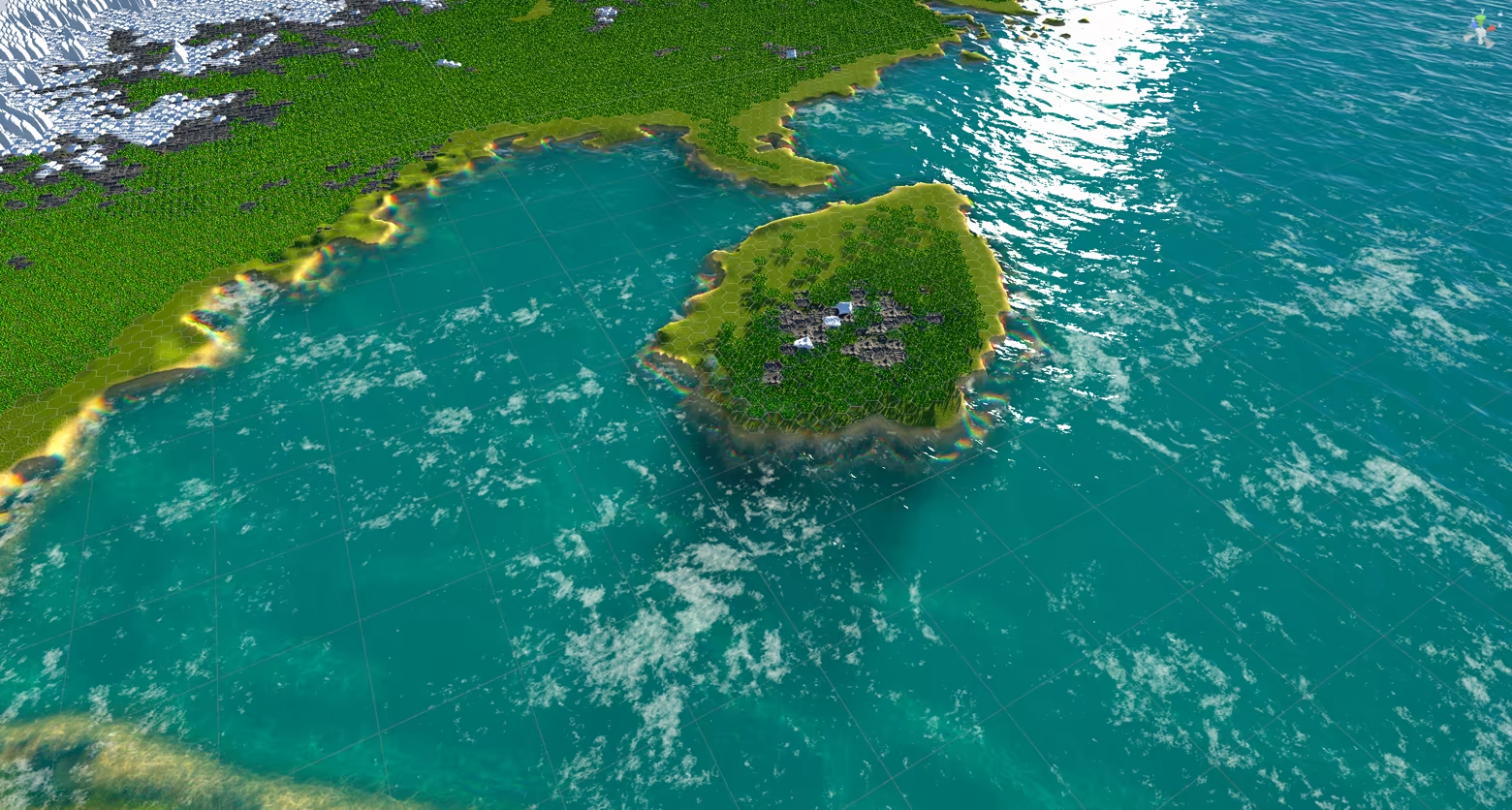
As in the real East Asian theater of World War II, major cities and transportation lines form the core of the game map. Seize and suppress key strategic and resource nodes to secure victory in the war.
Economy and Production
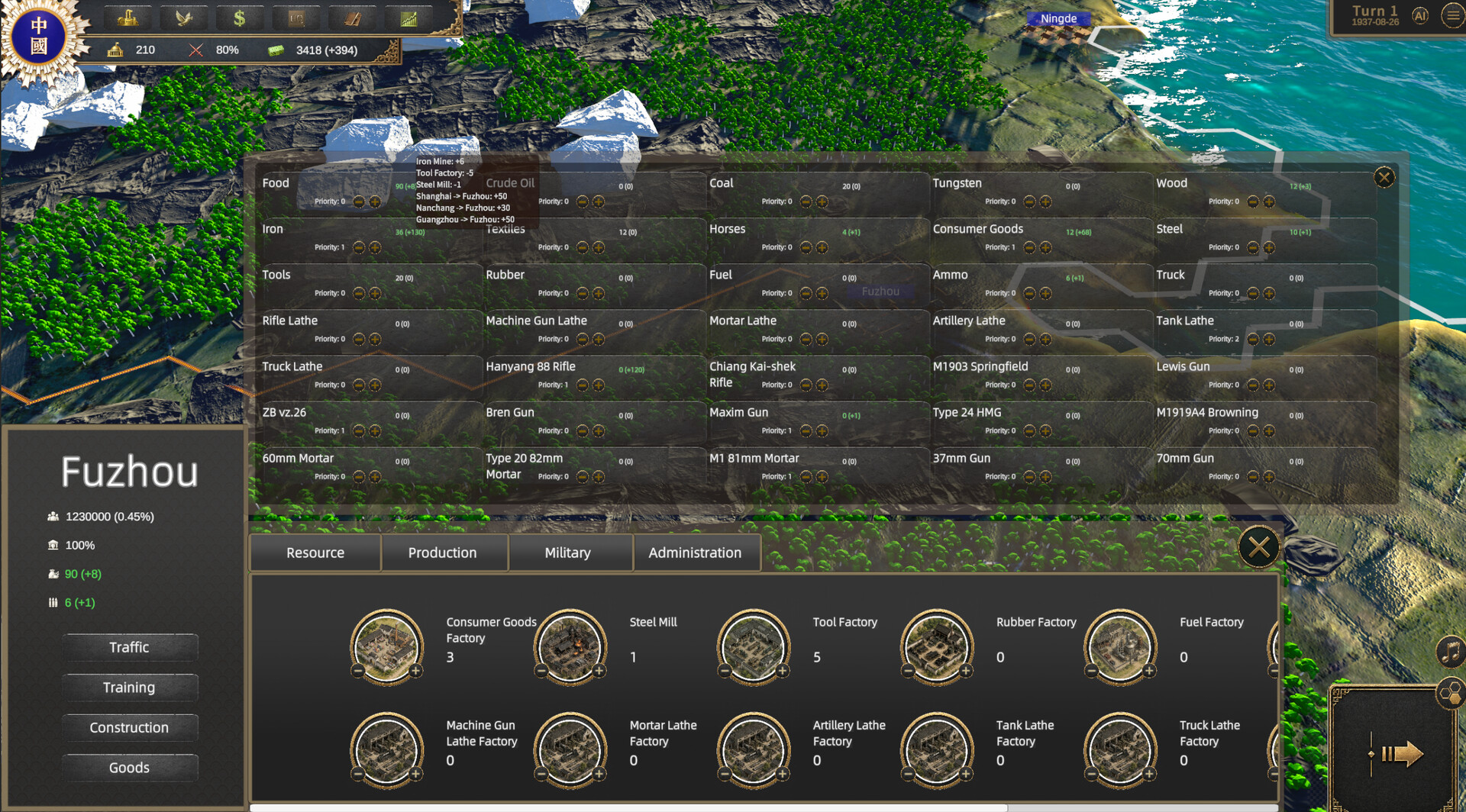
Resources in the game have sources, processing chains, and distribution paths. You must manage your resources by producing basic materials through city buildings, transporting them through the transportation network, and processing them into weapons and equipment that can be delivered to the front.
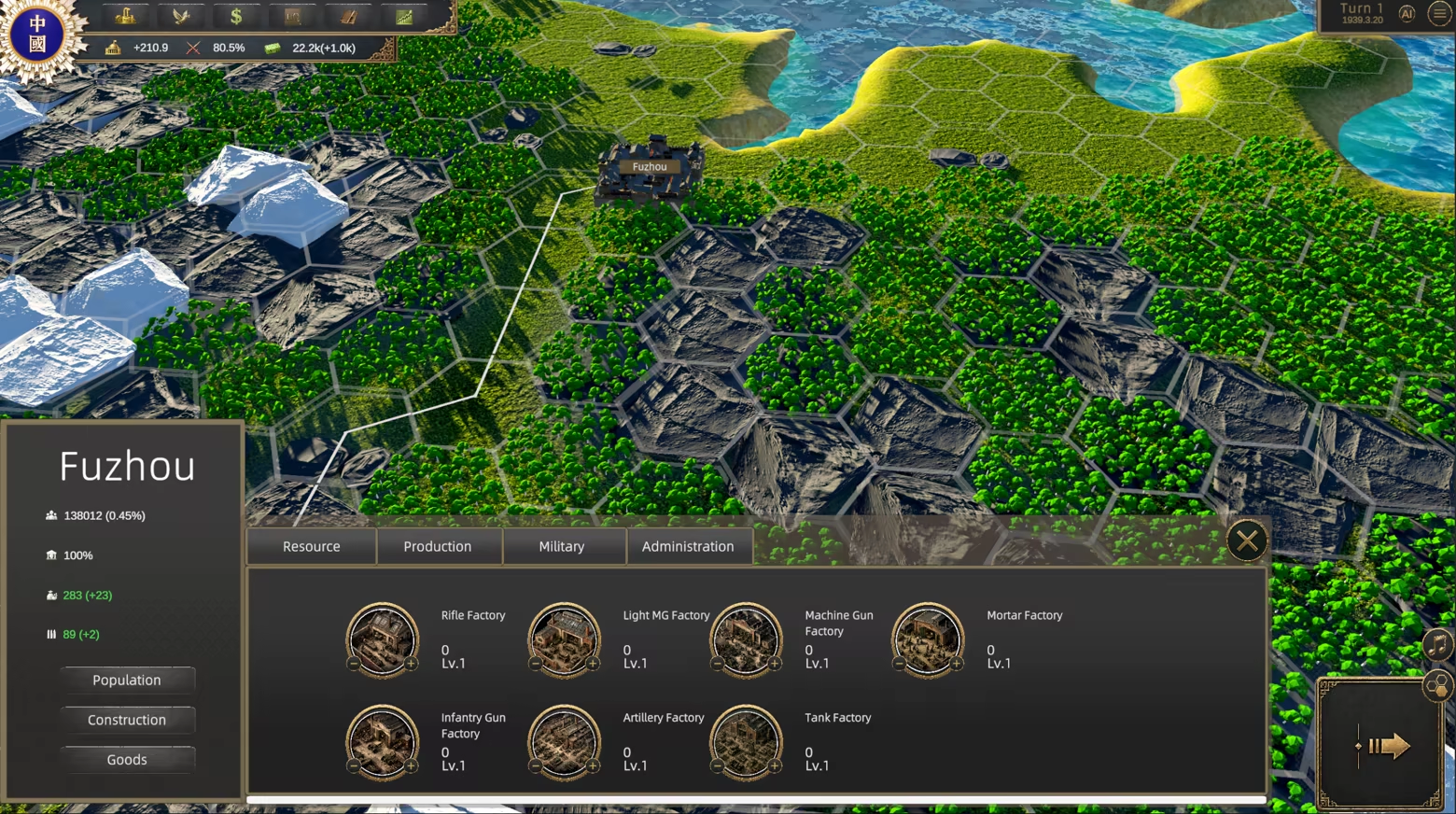
The transportation network is a vital part of the game. Goods can only be moved between cities through the transportation network you build and control.
Logistics and Transportation
Your frontline capabilities depend on sustained supply. You may decide to concentrate resources in Wuhan to support the Central China front. This may increase local industrial output, but it could also create shortages in other regions.
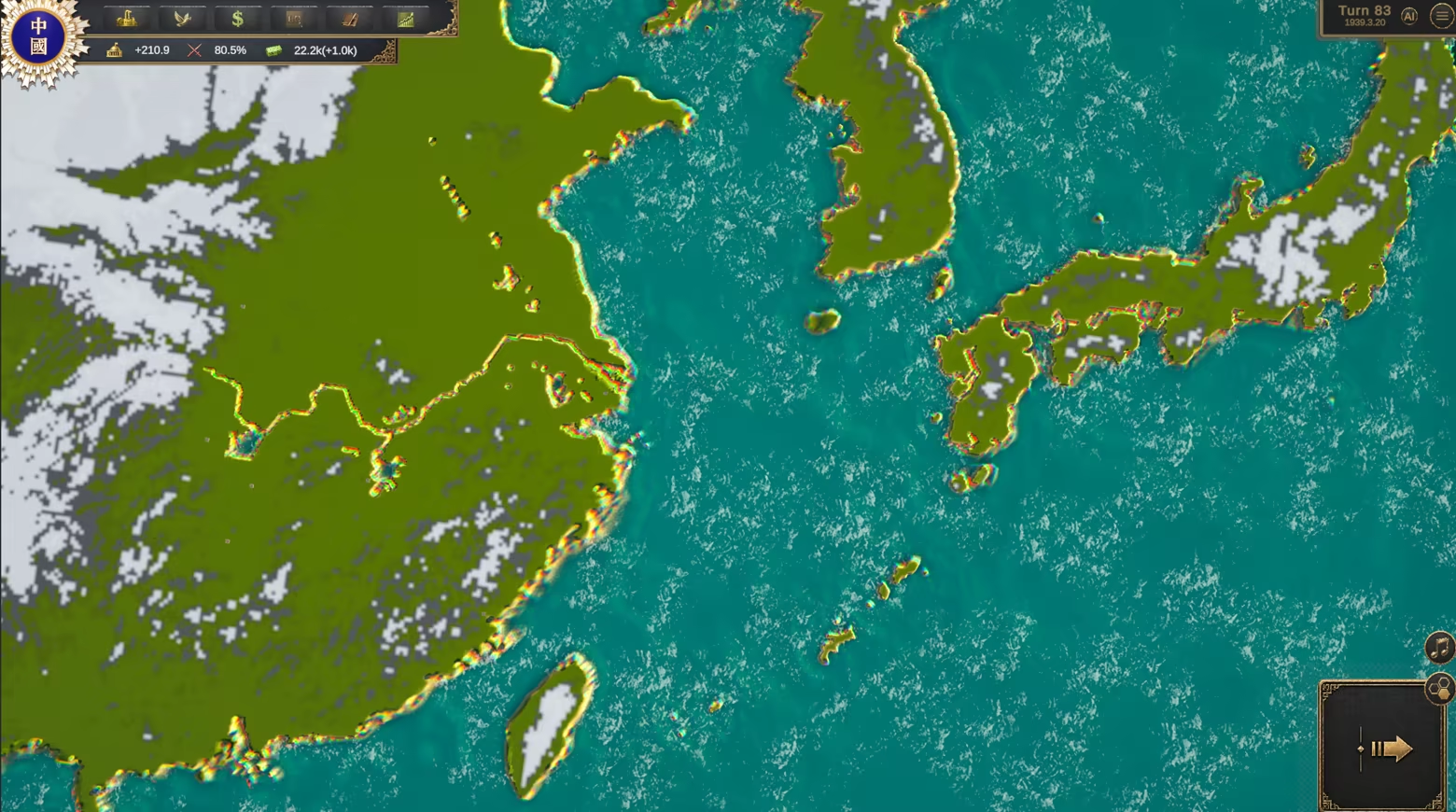
You may choose to launch an offensive, but if your supply preparations are insufficient, the operation may stall on its own during the advance.
Each military unit receives supplies from a designated city. When that city’s stockpiles are depleted, or when the roads connecting the unit to its supply source are cut, the unit will no longer be able to properly replenish personnel or recover its condition.
Politics and Organization
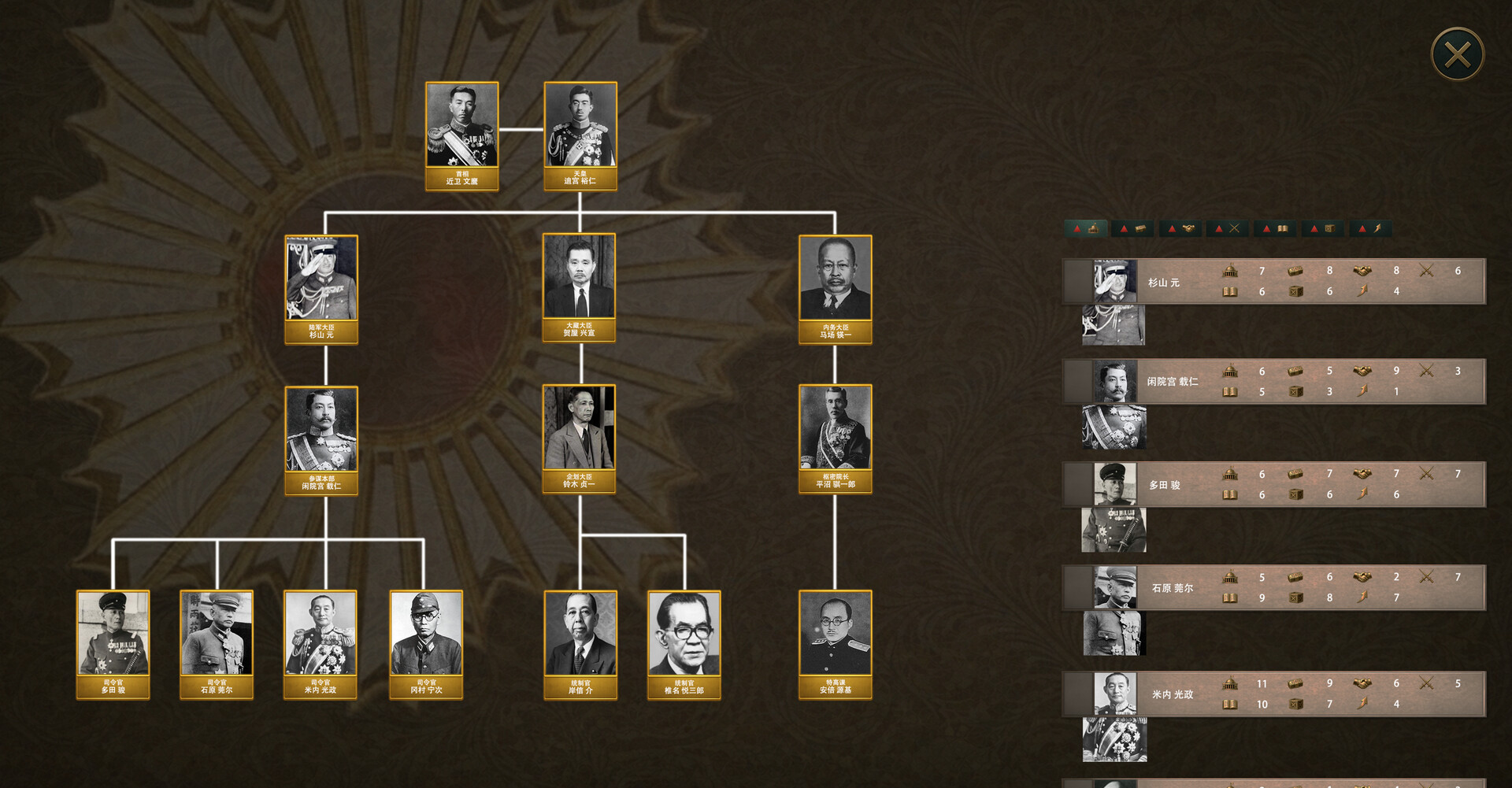
The game features a unique character system. Assign your characters as frontline commanders or bureaucrats within the government, and allocate tasks according to their different talents.
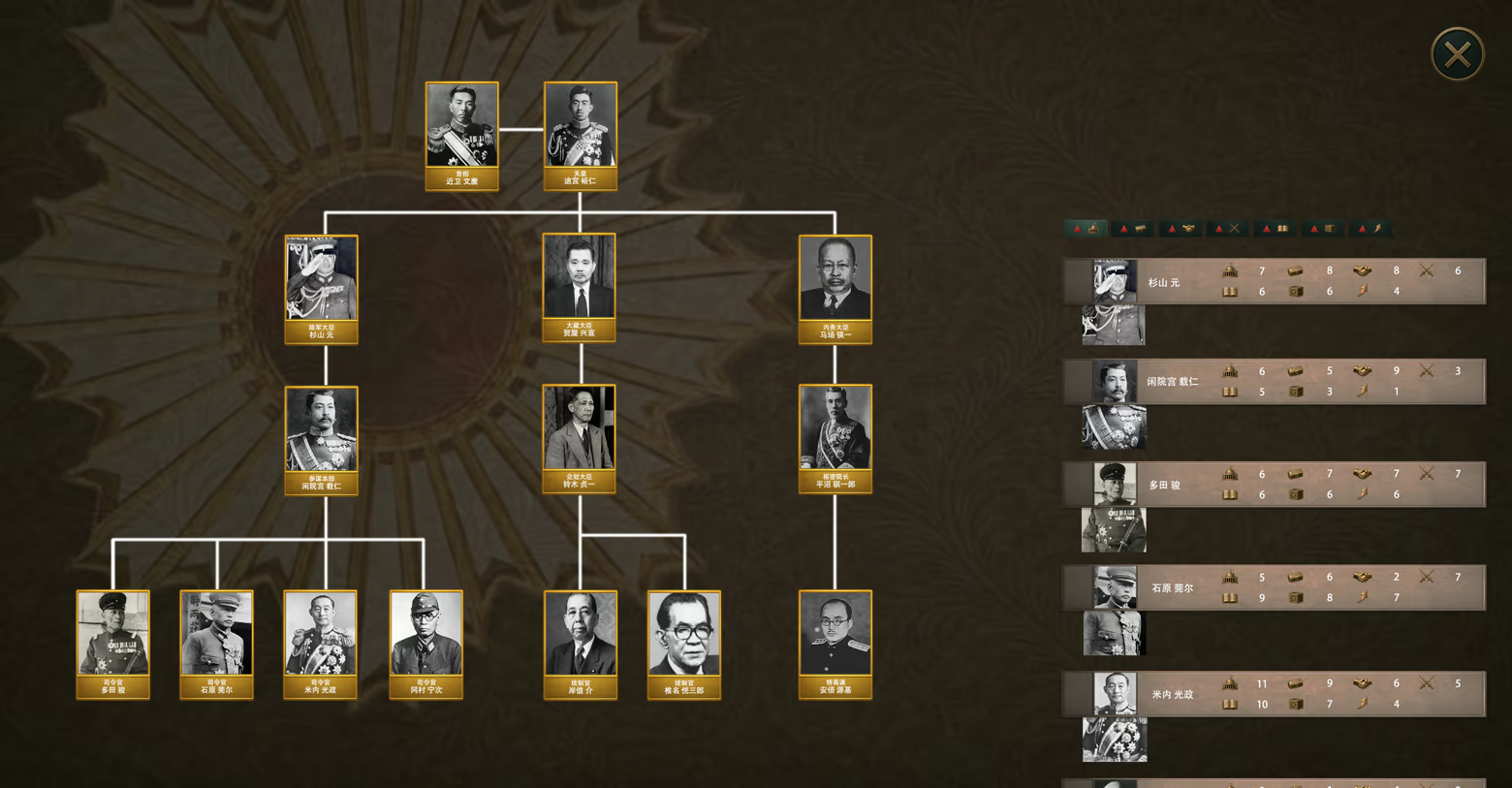
Characters are an important element in keeping your nation running. Choosing the right people for the right positions can bring major advantages.
International Diplomacy
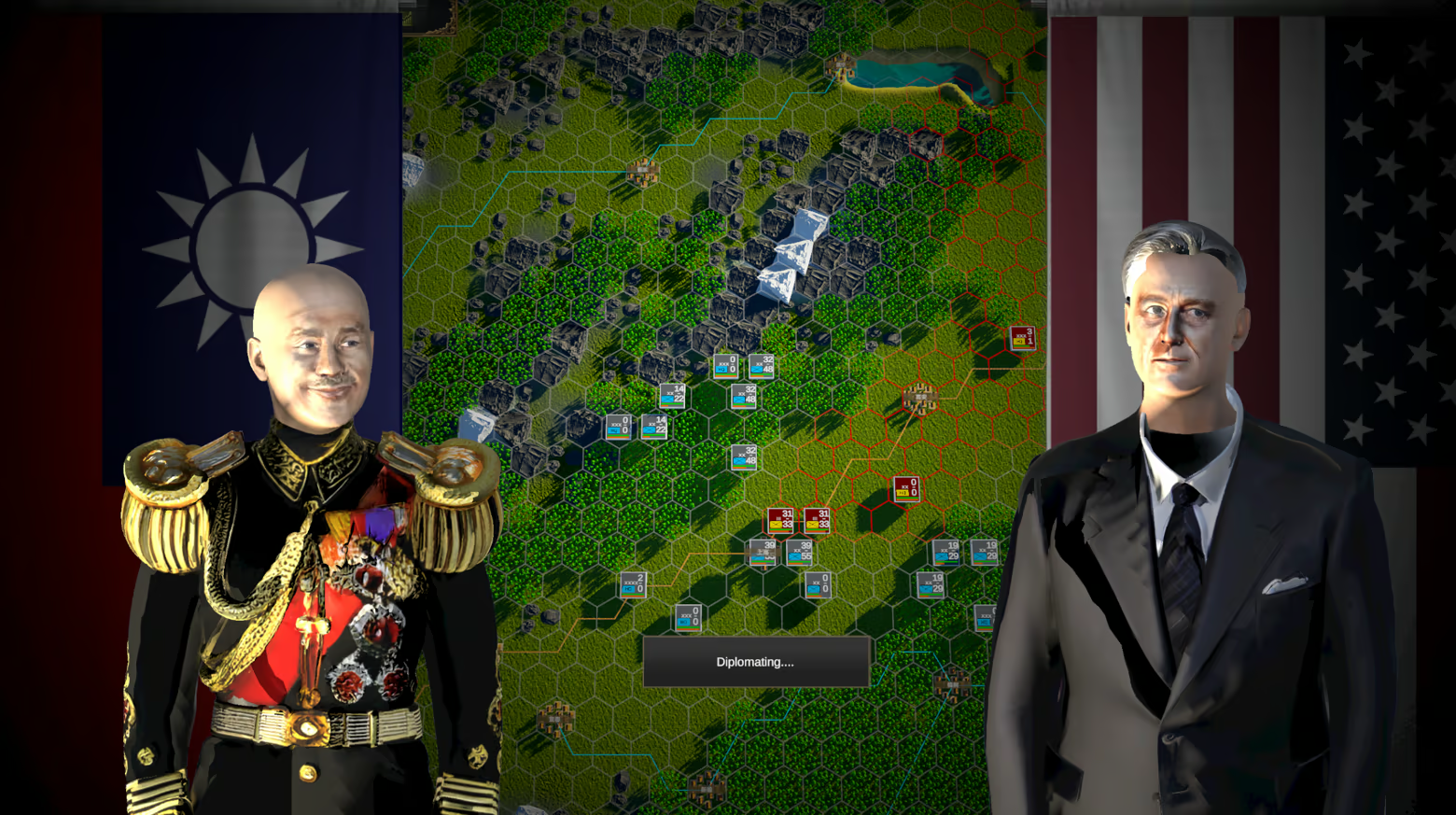
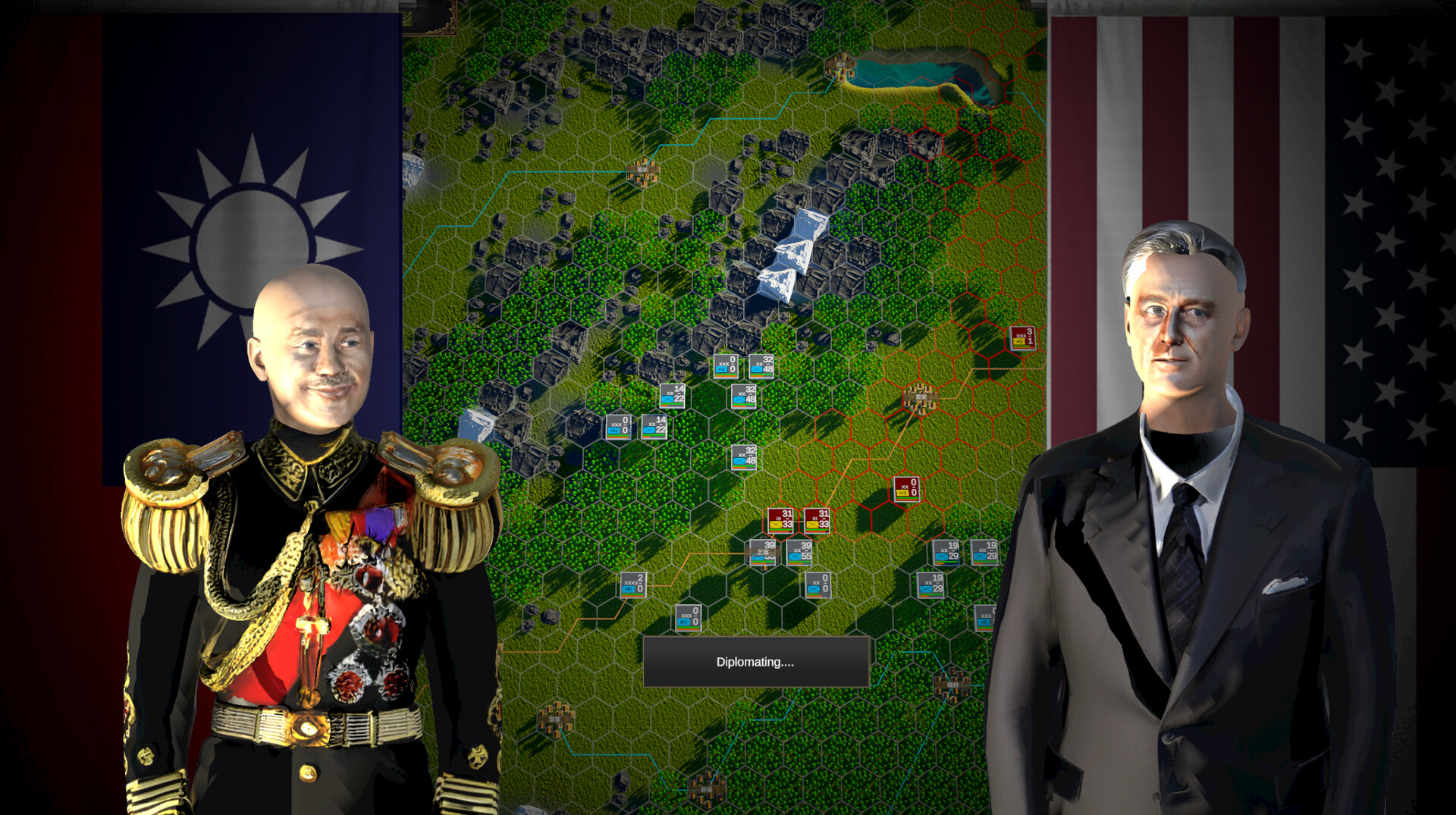
World War II was a global conflict. As a result, the international situation and changes in other countries’ attitudes toward you will directly affect the battlefield.
Poor diplomacy will create more difficulties for you, while a strong international image can bring meaningful benefits.
You can engage in a wide range of international interactions, leading to different outcomes.
Available Tables (0)
View available tables...Events Timeline
View full events timeline...Initial Release