Throughput


About the Game
Build the city. Watch it breathe.
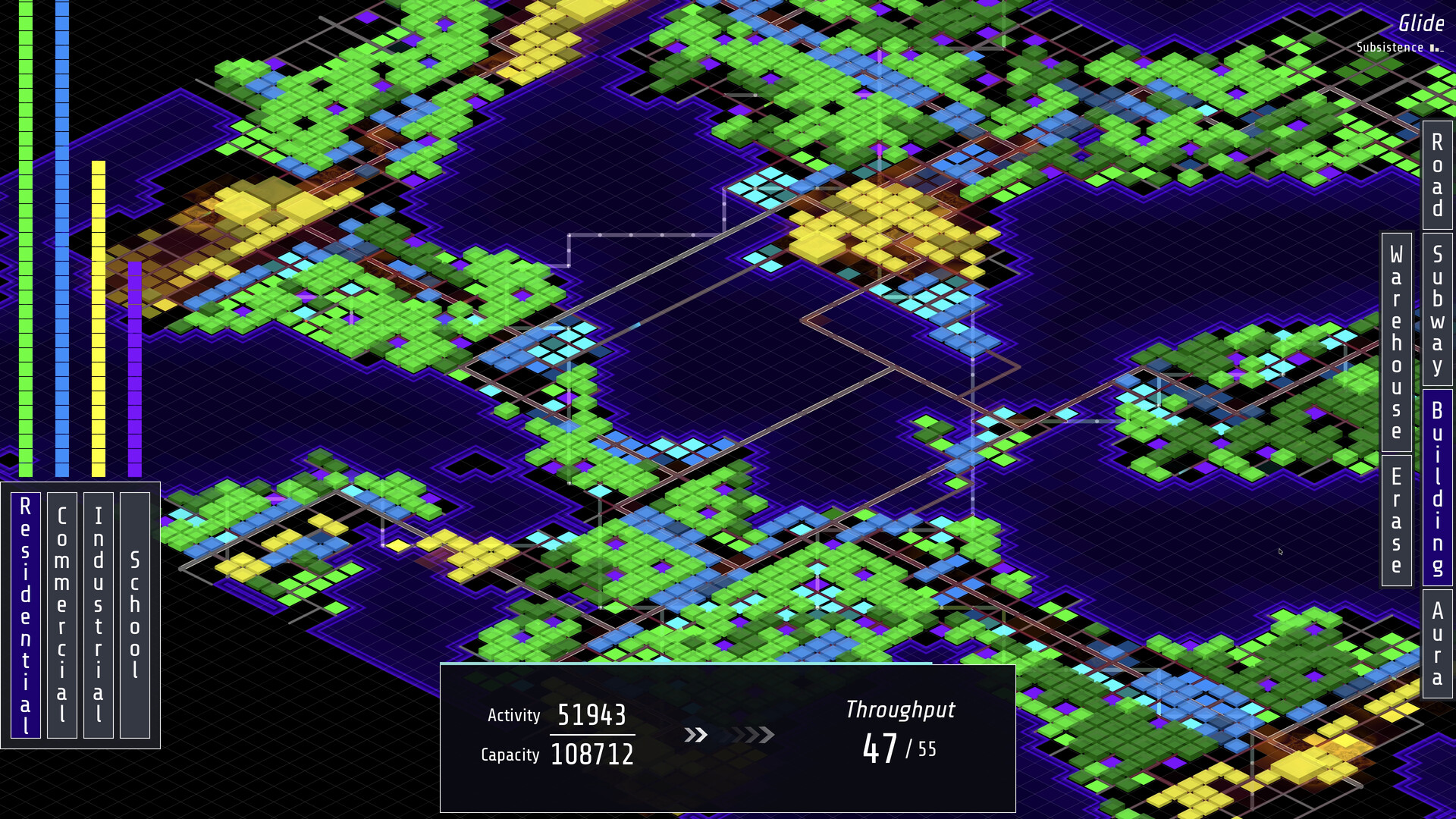
Throughput is a city sim about the elevation of human consciousness, via the trance state of maximizing Activity over Capacity. The music is how you plug in.
The simulation ticks every four bars, traffic flows on the eighth notes, overloaded streets pulse red together on the half.
Traffic is simulated as network flow, so the city is highly responsive to modification. The simulation clock is not time but tempo. After a few sessions you feel the downbeat coming and know to land one more change before it.
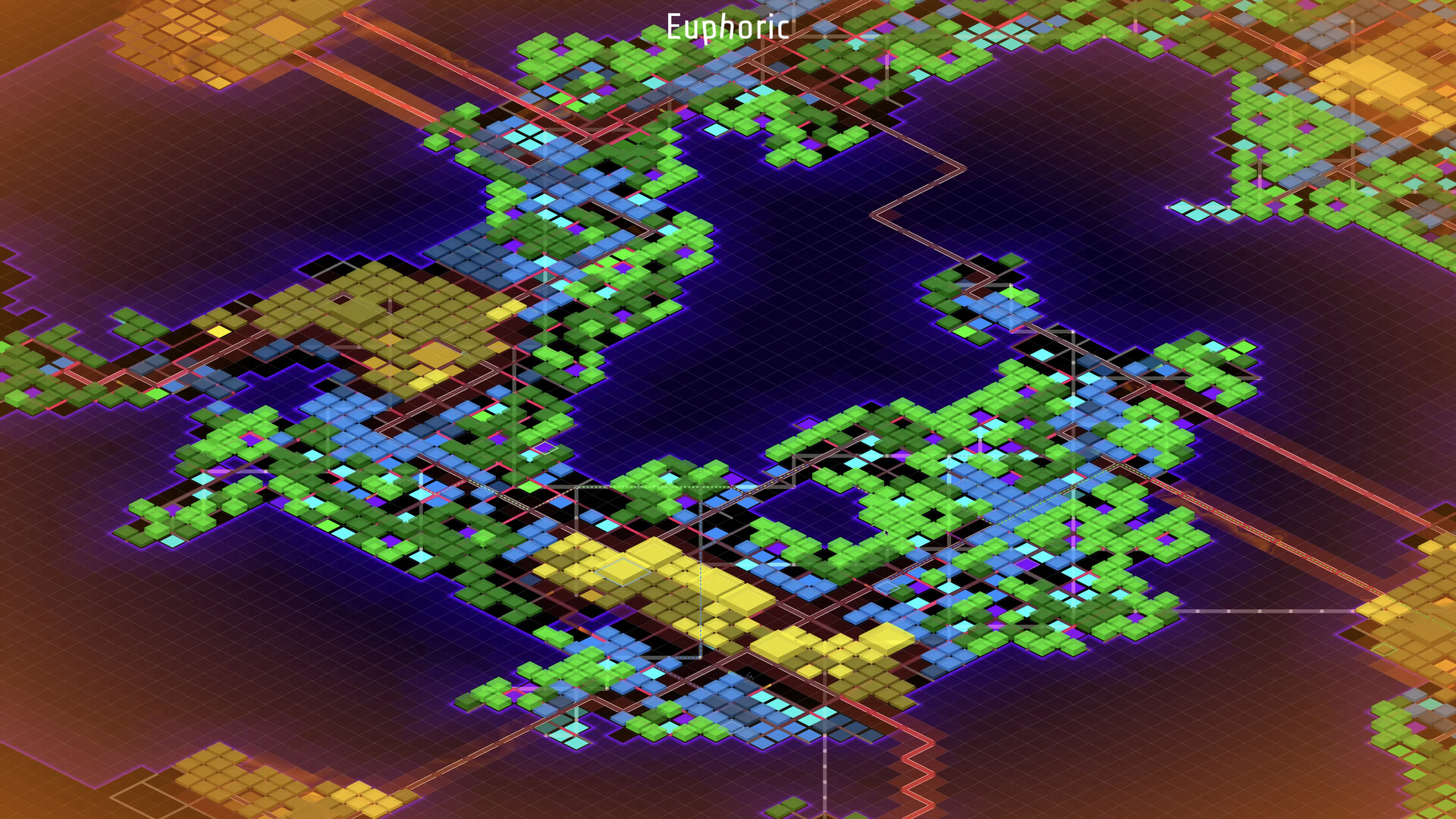
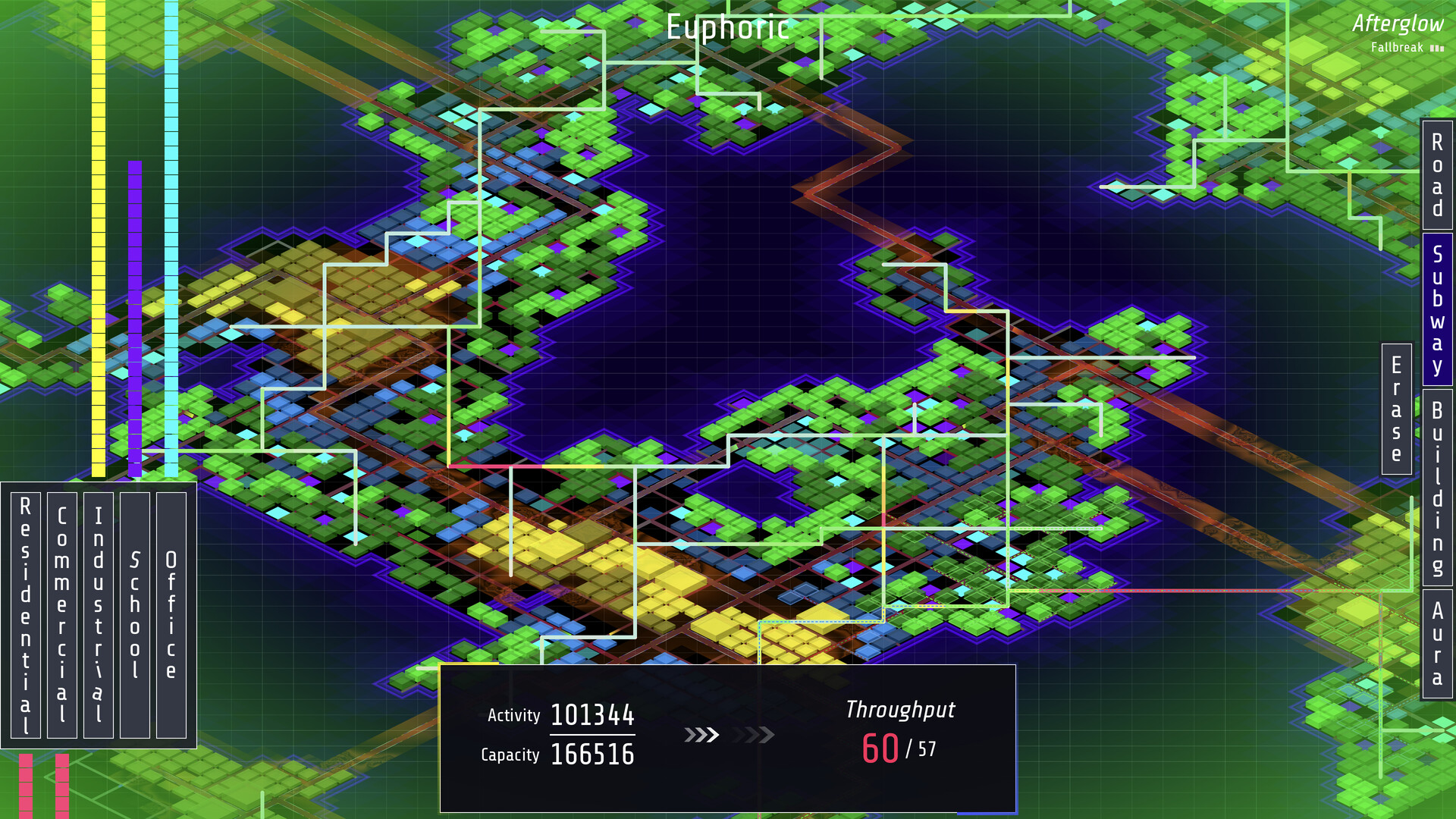
Hold Throughput high for long enough and the city tips Euphoric.
The tempo jumps from 130 to 174, and the simulation runs hotter with the music. For the length of one song, nothing can die.
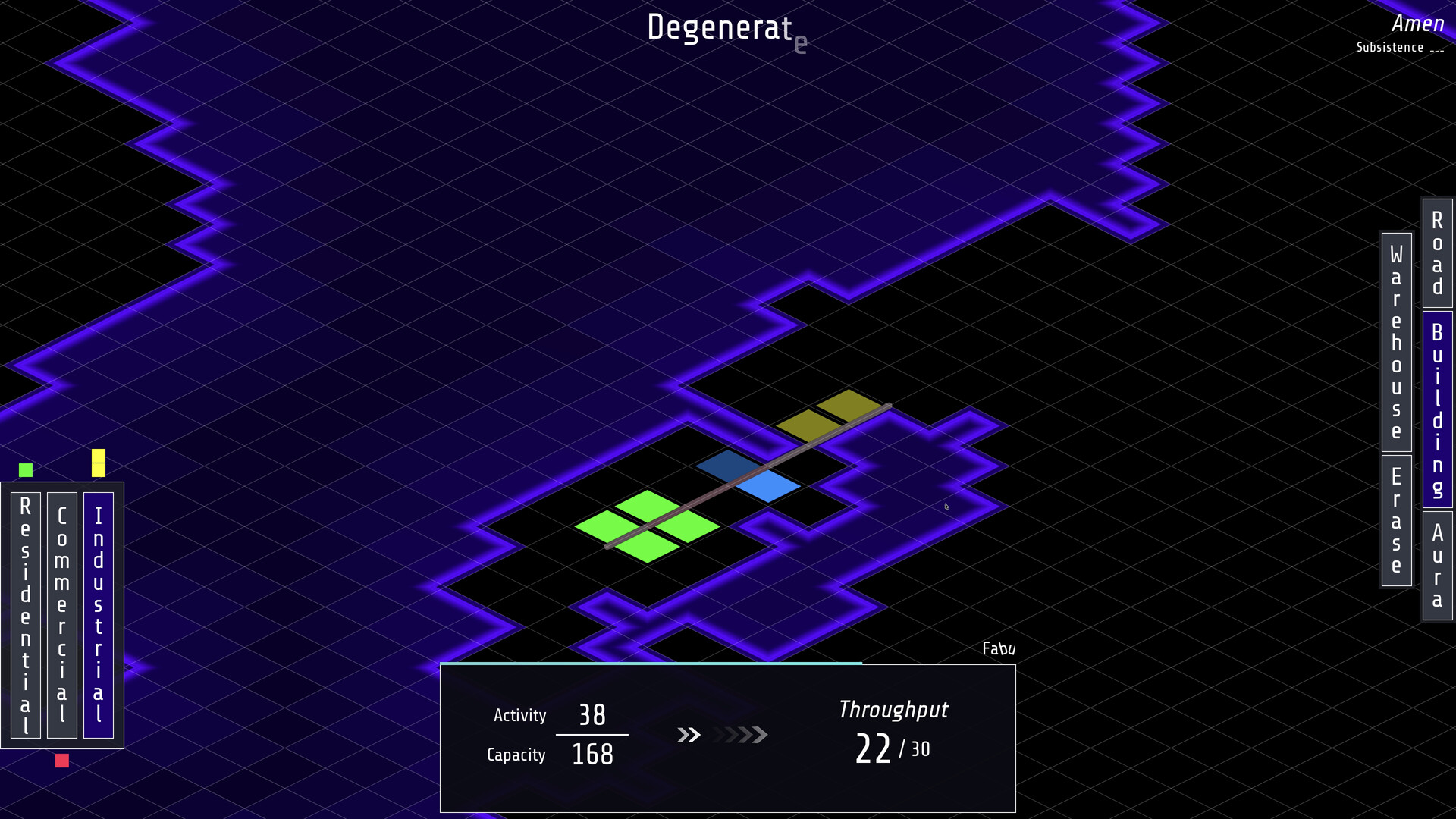
Then the market corrects. Every zone with an unmet need starts to Degenerate. Sometimes the correction runs deep enough that simply patching what you lost won't bring the boom back.
Dying cities have been revived with more careful stimulus, such as a whole new industrial district set down beside the neighborhood that was starving for work. Jay Forrester's Urban Dynamics argued jobs revive a declining city where housing programs fail. Here you can test theories before the next downbeat.
Boom and correction is economics, doing the job other city builders give to a bank balance. The bar for the next Euphoric mode climbs along a logarithmic curve, so the pressure that shaped your first twenty residents is still shaping your seven-thousandth.
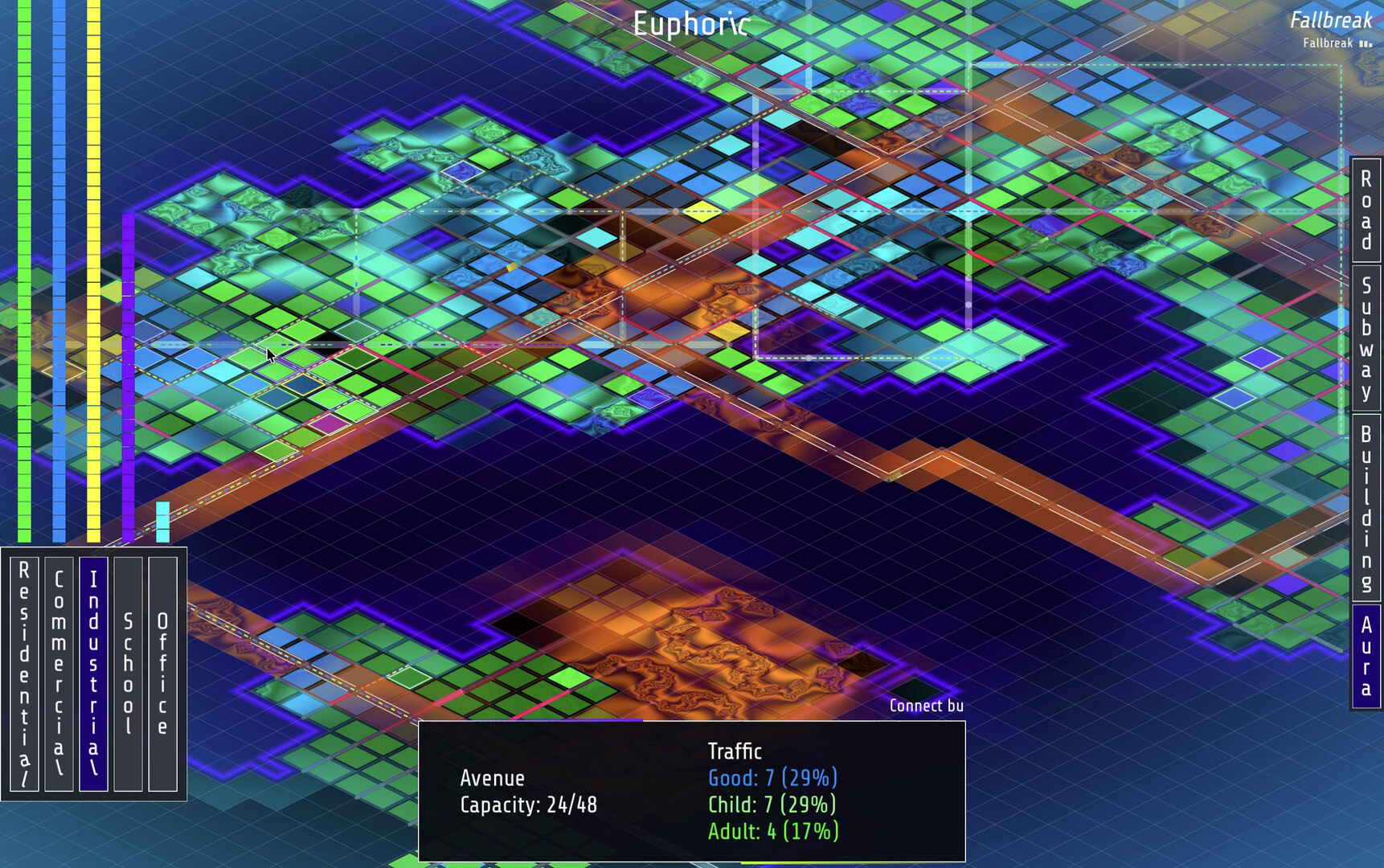
Meanwhile, Aura blooms across the map. Busy, mixed traffic on surface streets makes a neighborhood lively. Industry and traffic necrotize the ground around them. Parks can help keep Degeneration at bay, but a park with negative Aura will only make the problem worse. It’s Jane Jacobs’ The Death and Life of Great American Cities manifested.
Playtesters named the practice "aura farming." One of them never chased Throughput at all and grew a small, stable, glowing town. Another raced to Euphoric, then got buried in negative Aura on the way down: "I built Detroit."
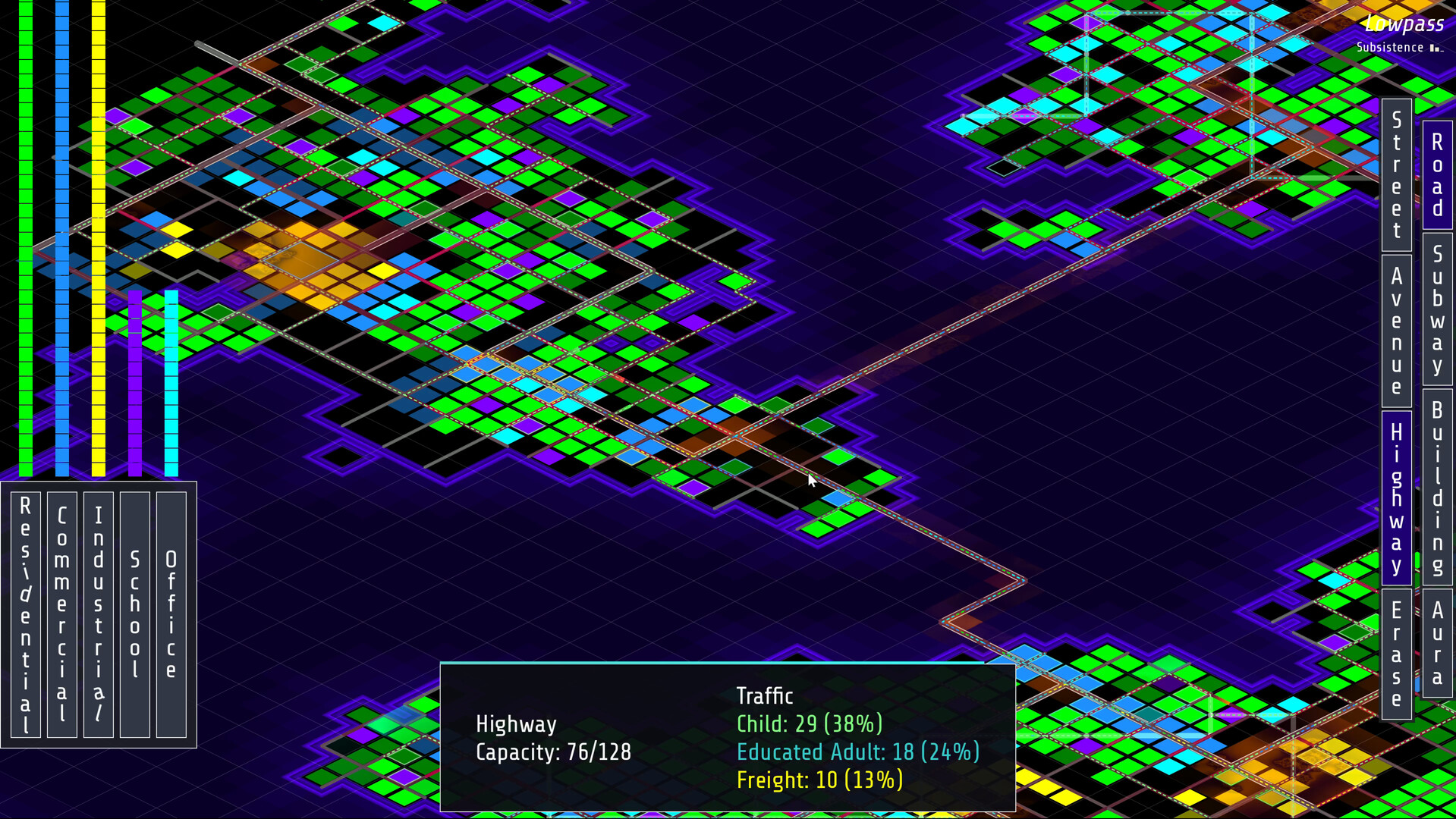
The city grows new organs to serve new needs: avenues when a street first runs hot, subways when commutes get long, highways the first time you reach Euphoric.
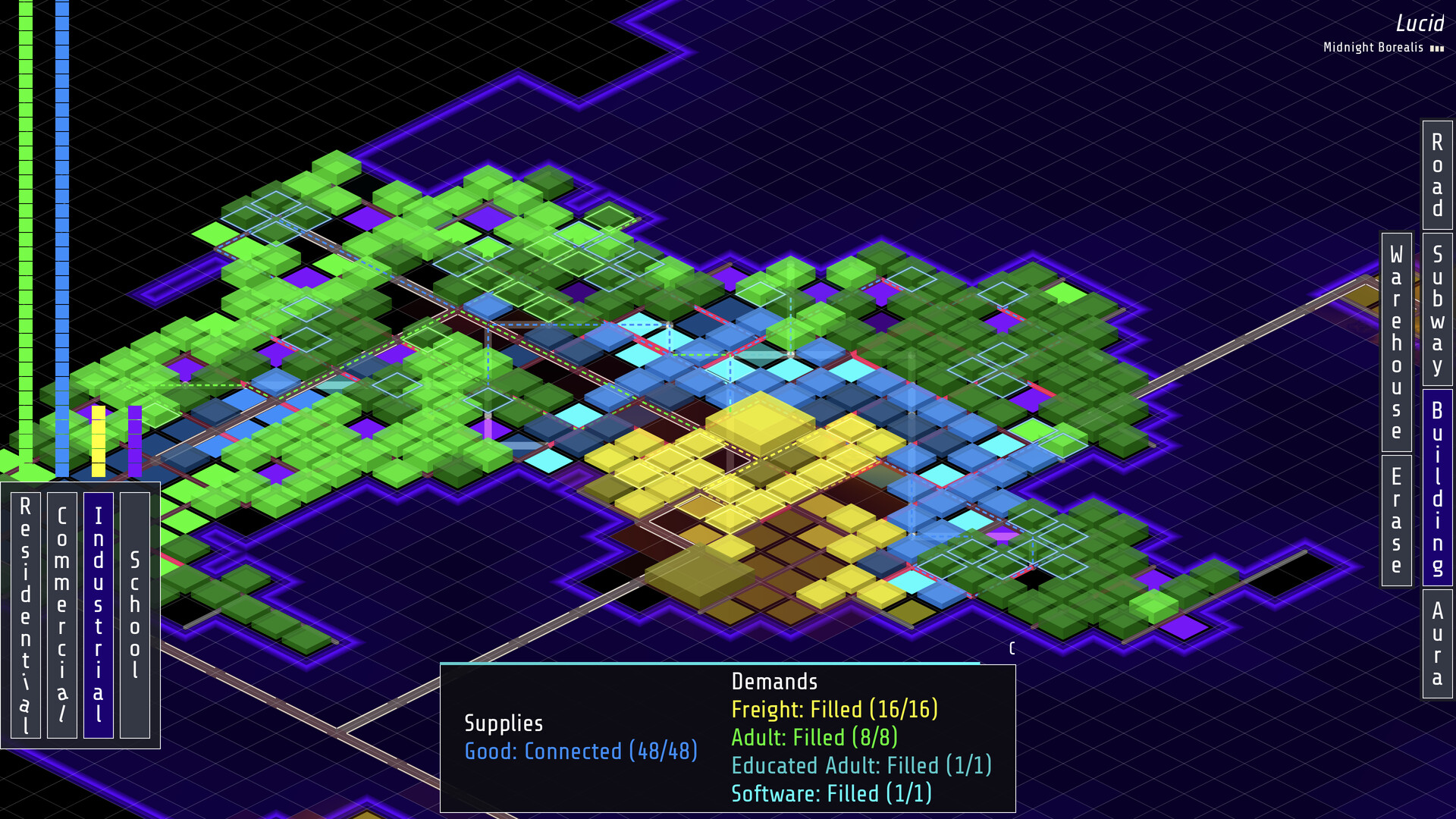
Schools lead to offices, offices ship software, and software wants an internet.
Eventually the game offers you a data center. It produces vast amounts of software and needs very few humans. (Playtester, verbatim: "DATA CENTER??")
You've spent hours wiring yourself into this organism. The data center is the moment it stops needing bodies, and what you do about that is the story the late game leaves with you.
The controls melt into intuition. Z undoes anything. Hold shift and roads lay themselves in a grid.
Saturated, vector-bright, deliberately abstract. An original soundtrack spanning a spectrum of electronic music.
Headphones on. Lock in.
Available Tables (0)
View available tables...Events Timeline
View full events timeline...Initial Release