The Gaffer



About the Game
THE GAFFER starts you in August 1959 in Division Four, with a chairman willing to take a chance on you and a town that hasn't decided yet if you're any good. From there it's yours: up to thirty years in the dugout, one manager, one long career, told as it happens rather than looped forever.
All 92 Football League clubs are placed in real English and Welsh towns rather than placeholders, each with its own researched local history, and the real national headlines of the day run alongside your career as it unfolds. Below them wait twelve non-League clubs, playing a season of their own every year and hoping for a place in the League. Every club has its own squad, its own books and a manager with a career of his own, hired, sacked and poached away as results go. You can look any of them up, and you will feel the weight of all of them. At season's end the Gazette names its best player, goalkeeper and manager across the League, delivered as gossip and headlines rather than a spreadsheet.
The whole League moves by the real rules of its day. Two up and two down at the top until 1973, three after. Until 1986 the bottom four of the Fourth Division have to ask the League's annual meeting to re-elect them, and a club that asks once too often can be voted out, yours included, which ends your career. From 1987 the bottom club drops to the Conference. The play-offs arrive in 1986-87, and if you finish in them you play the ties yourself: two legs, extra time, penalties, and in 1987 a replay. Thirty seasons on, the First Division you look up at is not the one you started under.
The rules of the day are the rules of the game. No substitutes until 1965, and then only for an injury. Goal average until 1976. Two points for a win until 1981. No sponsor's name on a shirt until 1979. No red card between 1981 and 1987. Nobody in the game, not the press, not the pub, not the board, talks about something that hasn't happened yet.
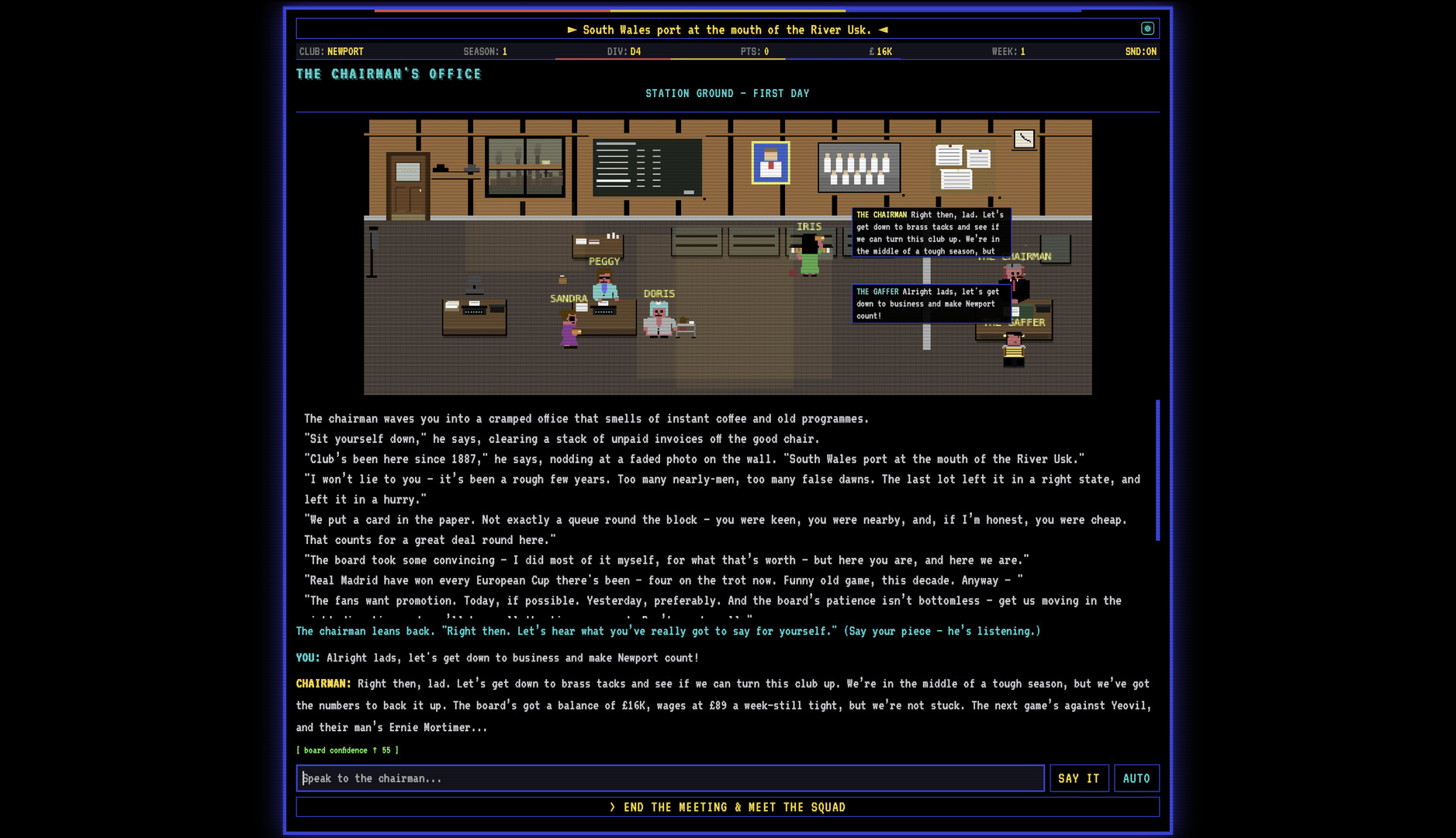
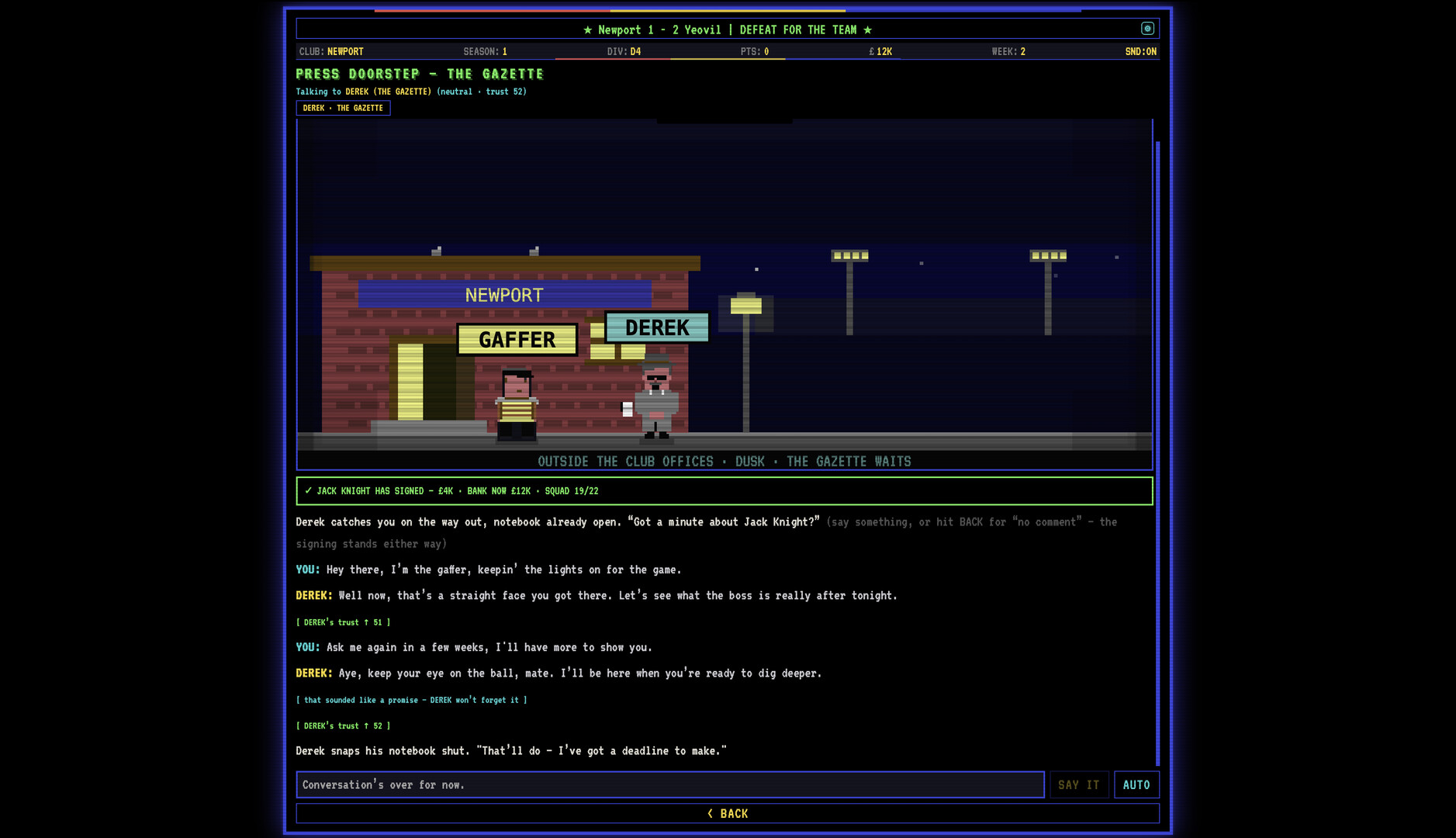
Your club has a life outside the ninety minutes. Down at the pub, a regular cast of locals, the landlord and the old boys who never miss a home game, talk about your results and your record, and they remember what you've actually done, not just this week's scoreline. In the back room, the Snug, six named figures wait: the vice-chairman, the sponsor, a local businessman, the town councillor, the mayor and the supporters' rep, each tracking their own trust and opinion of you. Those memories fade the way real ones do. A big win stays sharp for a while before settling into the background, so what people say about you reflects not just what happened, but how recently.
The board runs on more than league position. Confidence, patience and finances move independently, and a bad-luck run reads differently to the board than a run of bad football. The economics follow the era: wages, gate money, ticket prices and sponsorship all rise on a genuine thirty-year inflation curve, not a modern number in a flat cap.
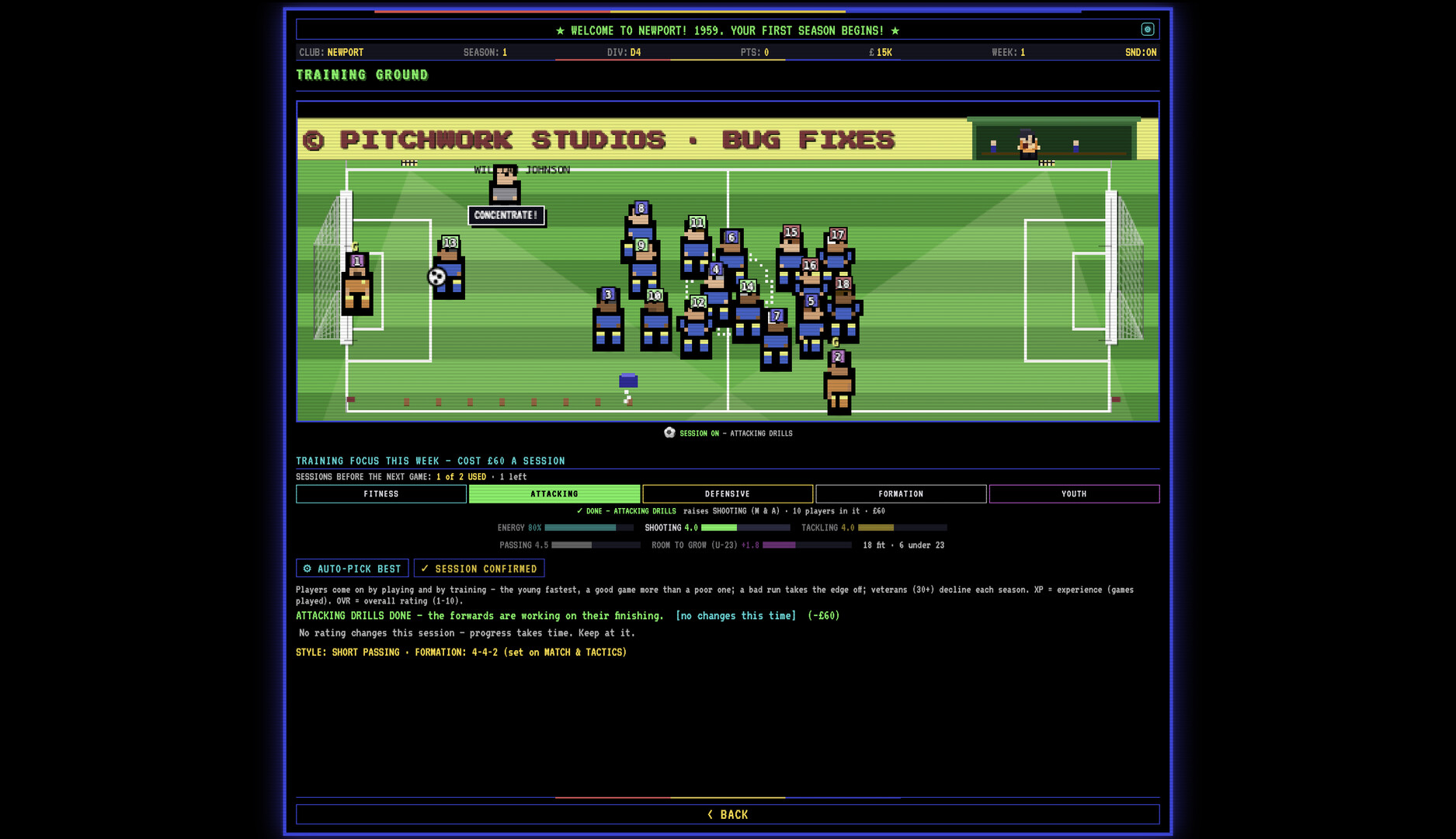
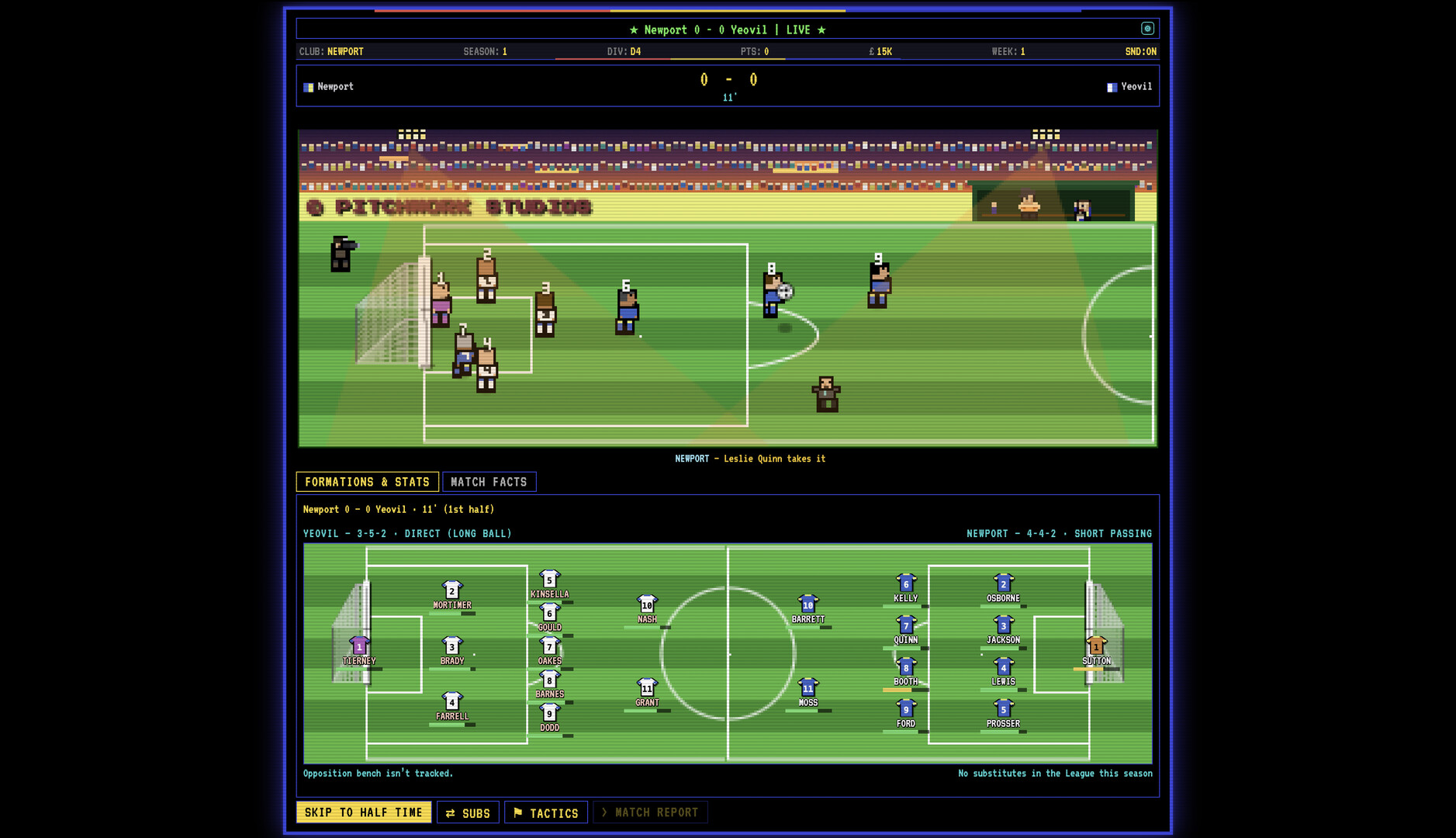
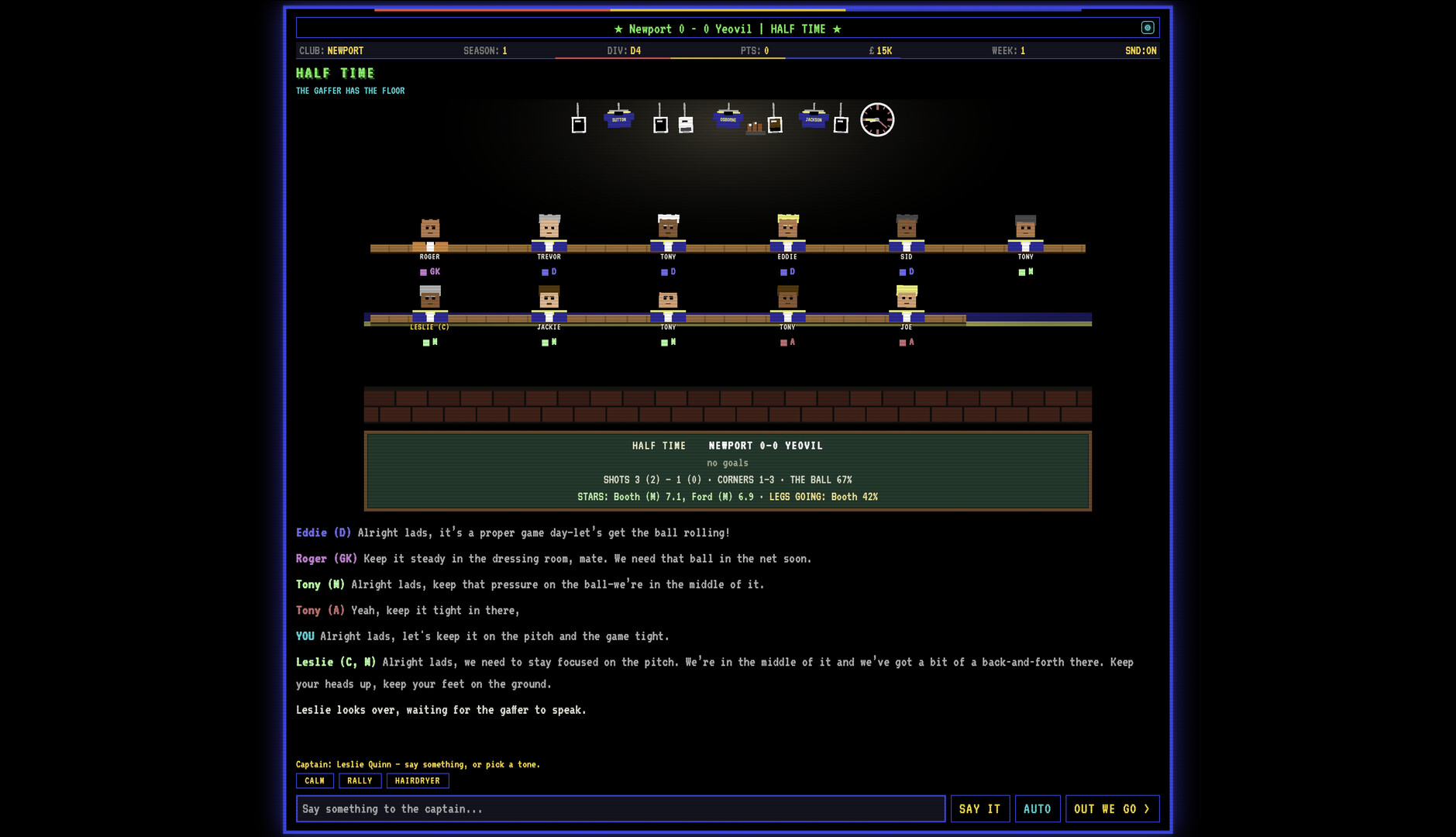
Build a squad the honest way. Sign, sell and negotiate against 91 other League clubs after the same talent, or grow your own through a working Academy where prospects develop, break through or wash out. Players age, decline and retire, the same as their manager eventually will. Injuries have to be managed, not shrugged off. Team talks, live match commentary and a post-match replay put you inside the ninety minutes. Win a trophy, a cup, promotion or the title, and it's real: the actual starting XI on the pitch, the captain lifting it, a pitch invasion for the big ones. Ordinary match wins don't get that. It's earned, not automatic.
Four divisions, two cups, promotion, relegation, re-election and the play-offs, and a season running August to May.
A language model runs on your own machine to put the club's words together: the pub's talk, the boardroom's verdict, the morning's headline. It never decides anything. Every result, every consequence and every change of mind is computed by the simulation and written to your save first; anything the model writes that contradicts the save is thrown away. Nothing is sent anywhere, and no internet connection is needed to play.
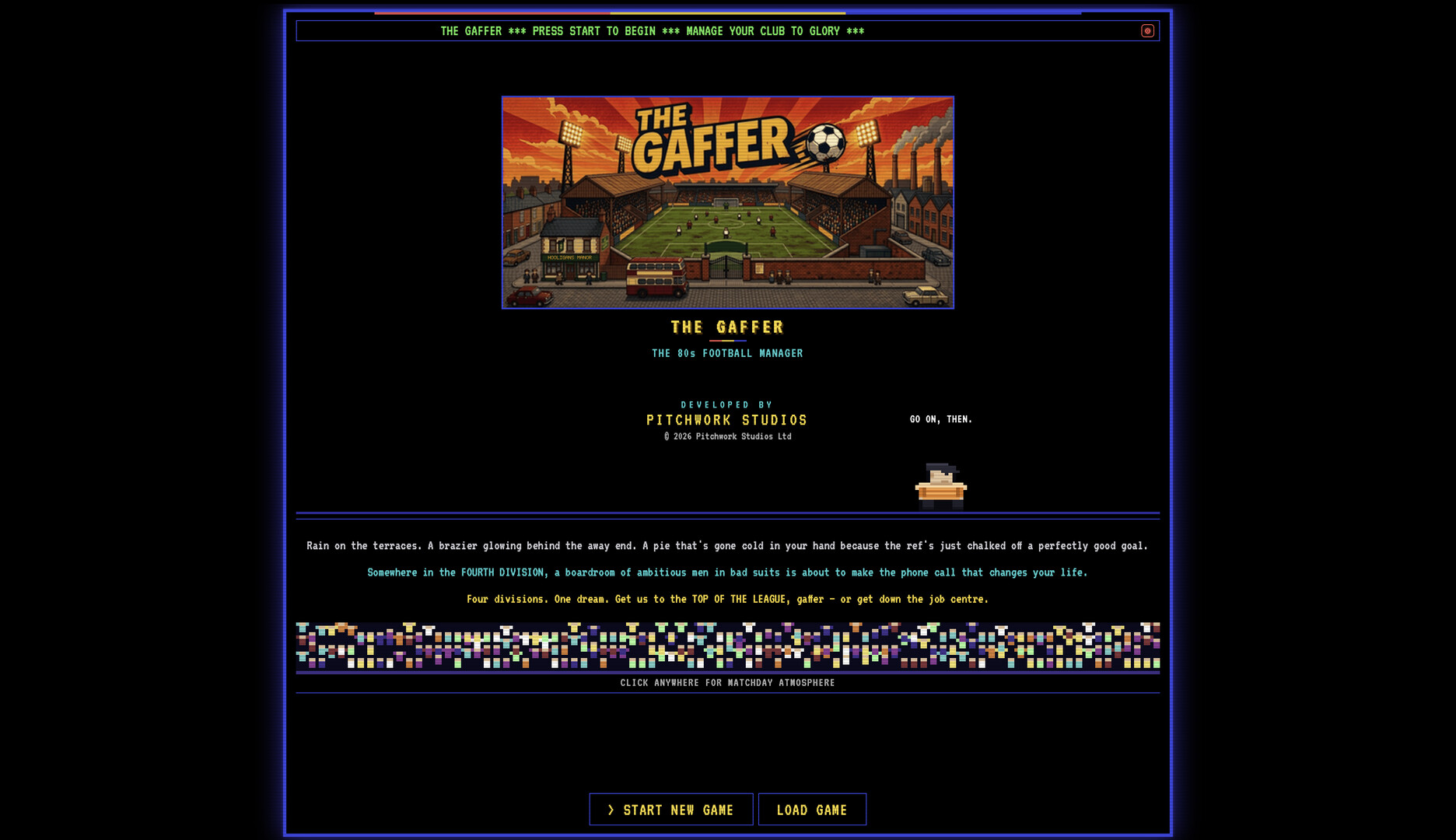
Built entirely around an authentic eight-bit visual style. A manager's career starting in 1959 deserves a screen that belongs to its era, not a modern broadcast graphic with a retro filter.
* A real starting point in English football history: August 1959, built from real national and local events across a genuine thirty-year span.
* A living, thirty-year career: one manager, one story, with real ageing and a genuine end, not an endless loop.
* A League that moves by the real rules: 92 clubs going up and down by each season's rules, re-election until 1986, the Conference from 1987, and play-offs you play yourself.
* The rules of the day: no substitutes until 1965, goal average until 1976, two points for a win until 1981, no shirt sponsors until 1979.
* A world that remembers, and forgets: the pub regulars and the six named Snug figures track trust individually, and those memories fade with time.
* A world that's alive beyond your club: every club with its own squad, books and manager, hirings, sackings and poachings, and a season's-end best-manager award across the League.
* An economy of its own era: wages, sponsorship and ticket prices on real thirty-year inflation data.
* A full football life: transfers, a working Academy, ageing squads, injuries, half-time talks, match replays, and a real on-pitch celebration when you actually win a trophy.
* Words written on your own machine: a local language model phrases what the club has already decided, and decides nothing itself. Nothing leaves your device.
* A distinctive period look, built entirely around an authentic eight-bit style, inside and out.
* Four divisions, two cups, promotion, relegation, re-election and the play-offs, and a season running August to May.
Available Tables (0)
View available tables...Events Timeline
View full events timeline...Initial Release