SGS Battle for: Gettysburg






About the Game
 SGS' Battle for: Gettysburg is the second Civil War title in our SGS Battle Series, covering intense fights and epic concentrated battles at a tactical or ‘grand tactical’ scale (regiment, battalion, company and even platoon-size units, depending on the games) and game turns which represent a very short real period of time (from a few hours to a few days…).
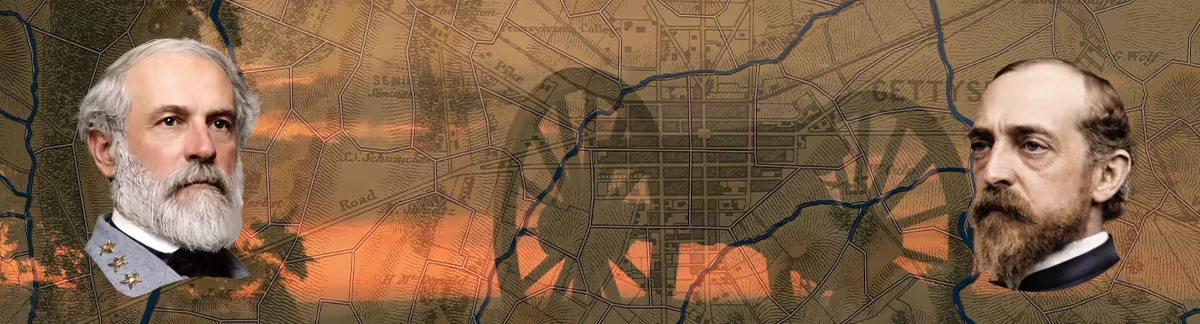
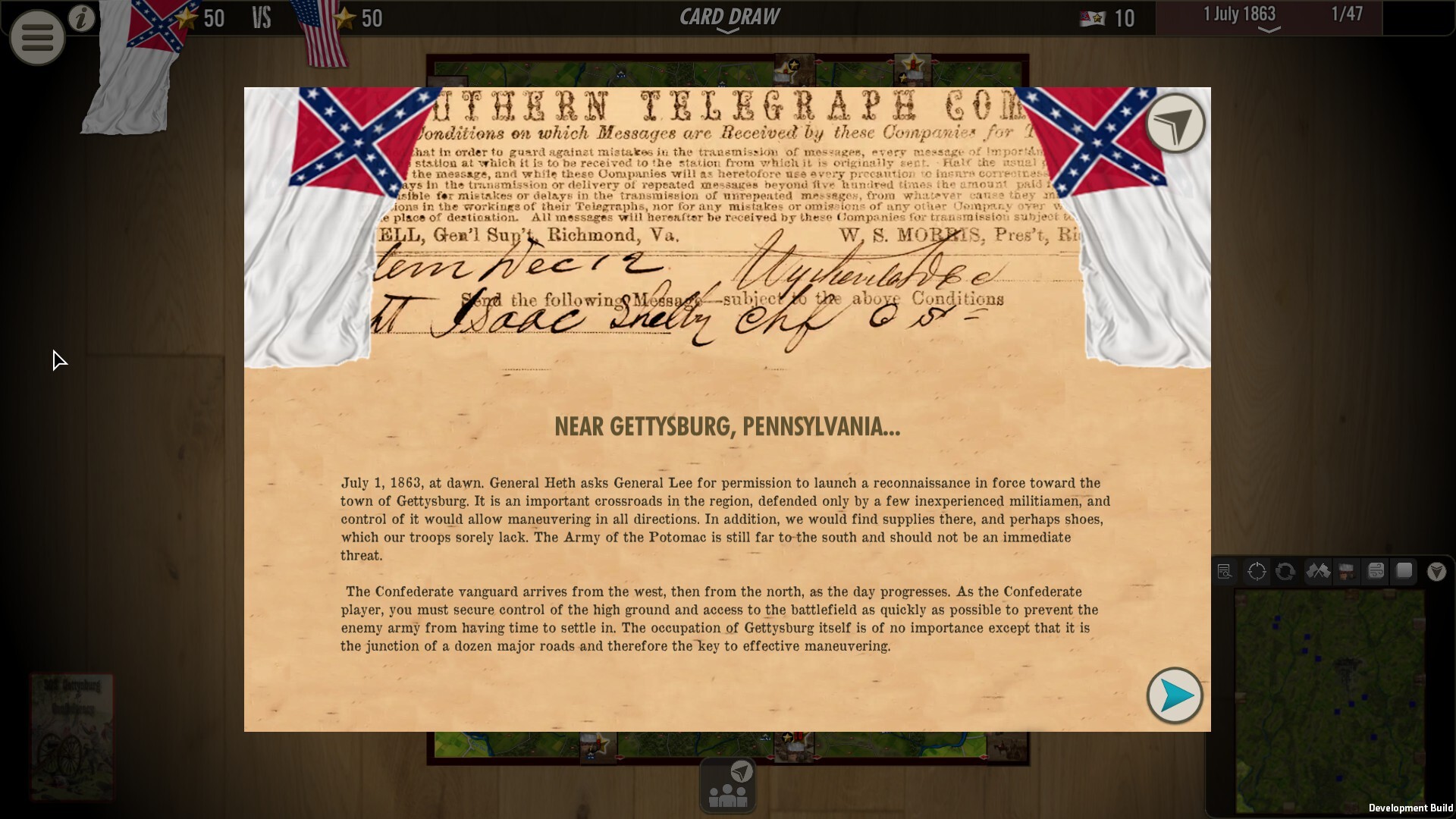
SGS' Battle for: Gettysburg covers the complete battle of Gettysburg between the Confederate Army of Northern Virginia (General Lee, with 75,000 men and 250 guns) and union Army of the Potomac (General Meade, with 90,000 men and 360 guns) from July 1 July 3, 1863, in the Eastern Theater of the American Civil War.
This battle is the result of the Confederate summer offensive to the North and the encounter of the two hostile forces around a little town of the Pennsylvania countryside. Historically a Confederate defeat despite huge losses on both sides, the battle could have been the most decisive one if Lee had prevailed.
As other SGS Games, SGS Battle for: Gettysburg provides an immersive gameplay on the best historical bases.
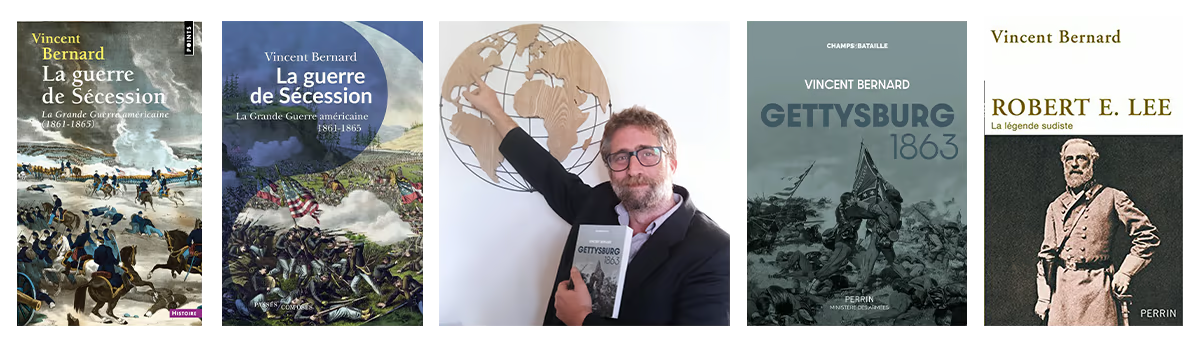
The game is entirely designed by Vincent Bernard, a French military historian specialist of the American Civil War, and author of many books on the subject, including a complete history of the war regarded as authoritative, a monography on the battle of Gettysburg itself and an extensive biography of general Robert E. Lee.
Features
In game events and card playing system are carefully designed, with extensive historical research, to go beyond the game and bring an immersive experience to the players, with its share of uncertainties and hard decisions to be made, just as real field commanders would.
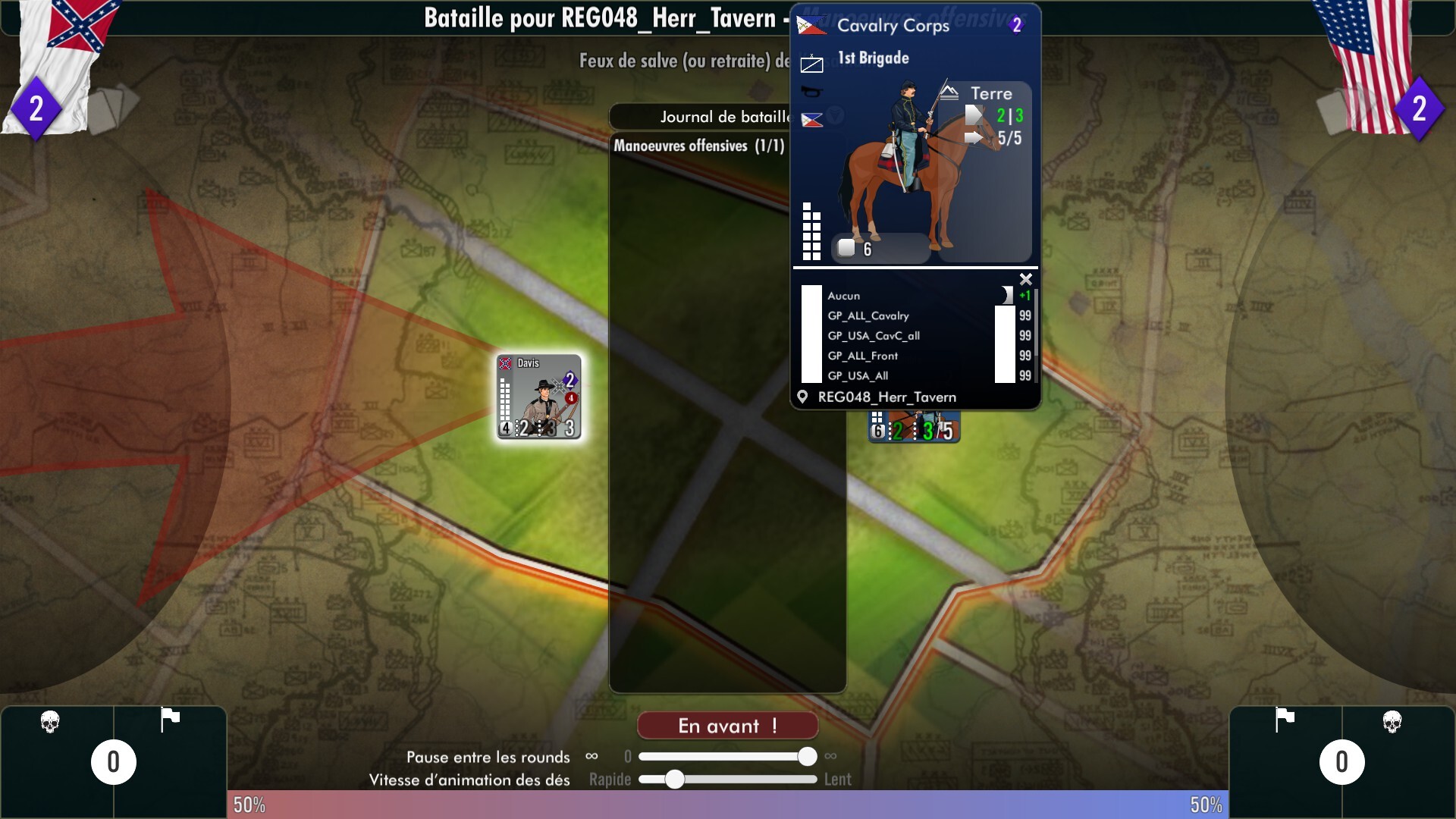
Among the many mechanisms designed to simulate battle as realistically as possible, each branch of the military (infantry, cavalry, artillery, snipers, etc.) has its own tactical characteristics, strengths, and weaknesses.
Artillery can bombard from a distance or fire grapeshot, but is not very effective in difficult terrain.
Cavalry must use its mobility to protect or capture access points to the battlefield, but avoid direct confrontation with infantry.
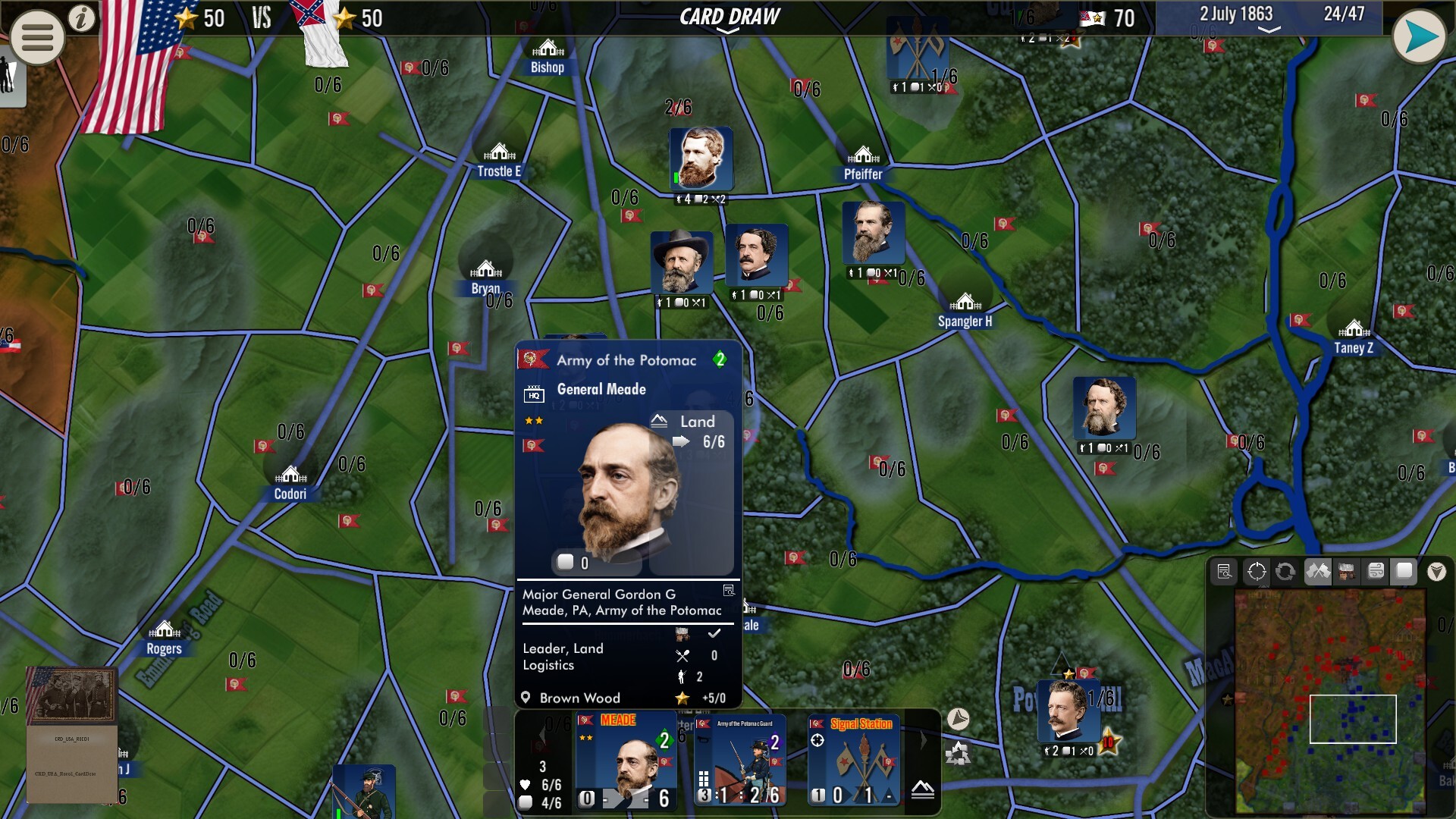
Leaders provide tactical bonus and collect stragglers but are vulnerables.
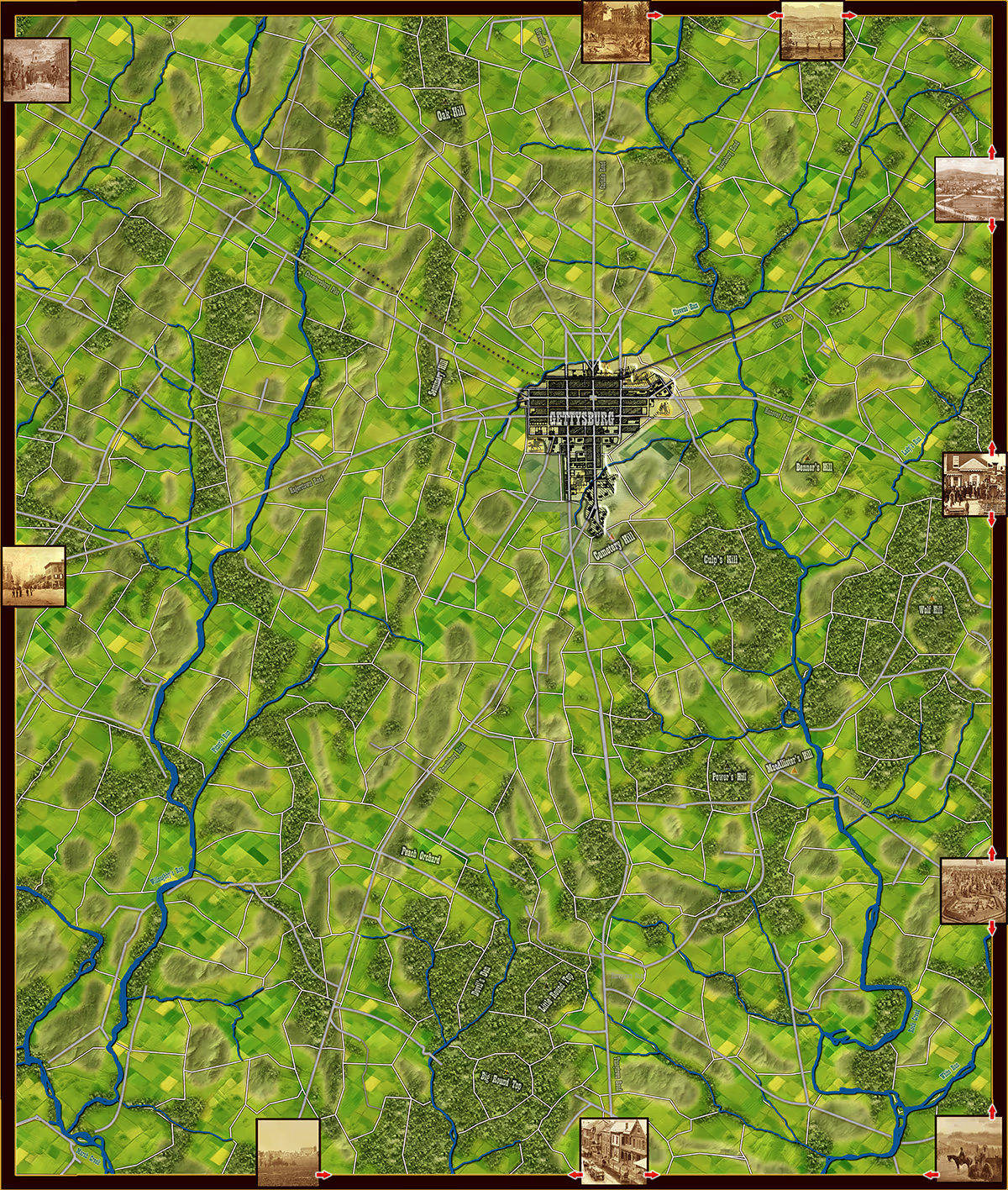
Geography also plays a major role; players must hold onto high ground and key points for an effective defense. The Confederate player must gradually capture key positions on the battlefield if he wish to maintain the initiative and the morale of his army.
Each day has its own specific objectives. Players must also maintain communication lines and avoid isolation on the battlefield.
Scale
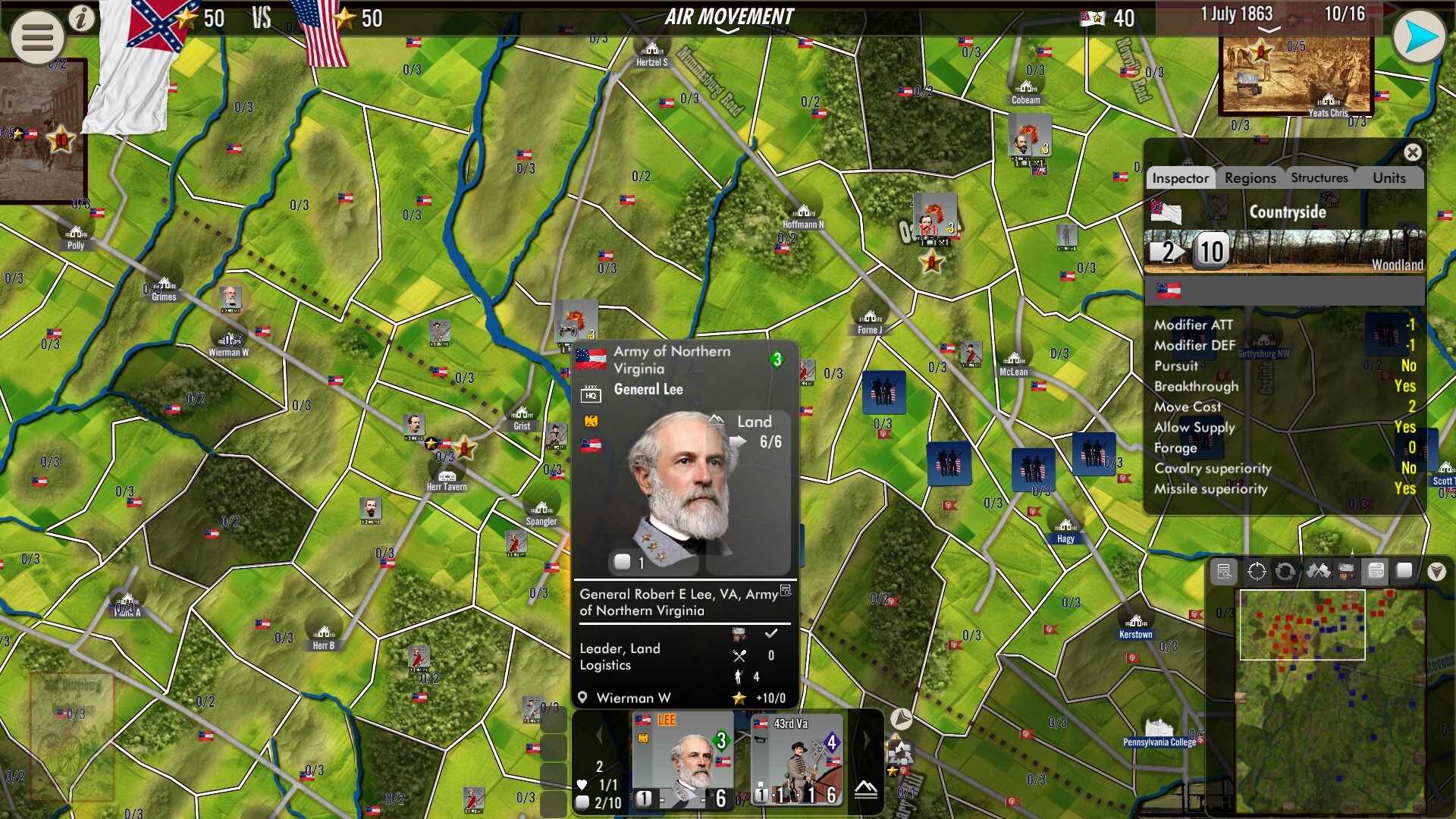
Units: most represent infantry, cavalry or artillery brigades (1000-2000 men or 16 to 30 guns), with some regiments, detachments or special units (trenches, skirmisher, wagons...) . Each side control also all historical leaders of the two armies, from division to army commanders, with their carefully designed historical portraits.
Map: each zone of the map covers more or less 500 meters of real battlefield. Some are iconic and very important to control if you want to prevail, as Seminary Hill, Cemetery Hill or Little Round Top.
Time: each turn covers an hour of real time during day, or a few hours of evening and night. Each full day consists of 16 turns, and the complete three days battle lasts 47 turns, from dawn, july 1st to the evening, july 3, 1863.
Scenarios
The game provides many scenarios from short introductory one (the first engagements) to the grand campaign. Some others, and what if ones, will be added for free with updates after the release of the game, as usual with SGS series.
Estimated Playtime : from 1h to many hours with great tactical replayability.
Hardest to play : depending on the scenario played. The Confederates are stronger on the first day, but they must attack to capture key positions on the battlefield, while the Union army receives numerous reinforcements. The longer it goes on, the harder it will be.
Available Tables (0)
View available tables...Events Timeline
View full events timeline...Initial Release