Serial Founder

About the Game
YOU HAVE AN IDEA AND NO COMPANY
Type it in your own words. Not a dropdown, not a genre picker — you write what your company does, and the game works out what kind of business you just described. Software, manufactured, or people. Global, regional, or local. Whether anyone can fund it.
Then you go and find out how wrong you were.
LIVE IT, DON'T MANAGE IT
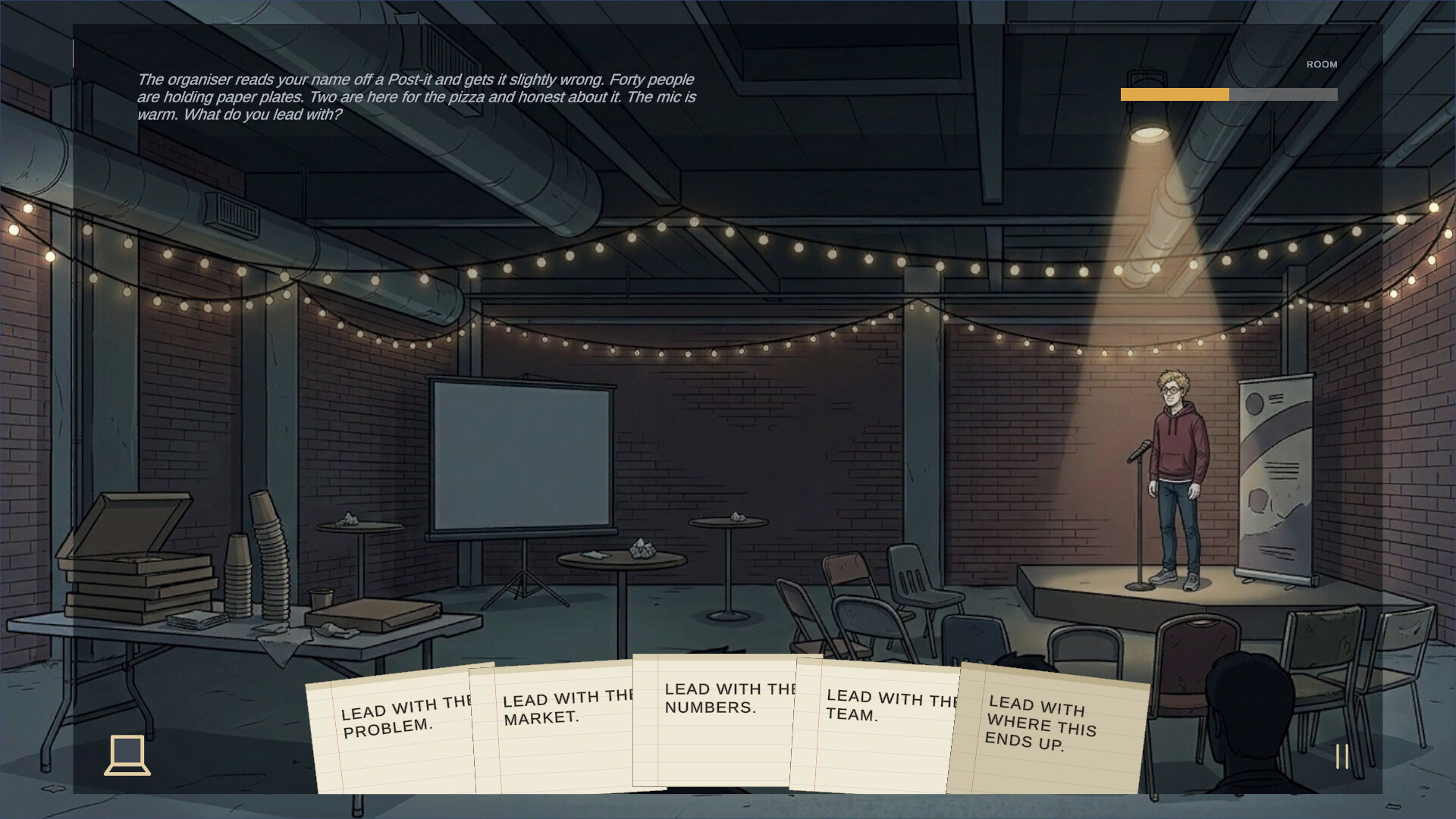
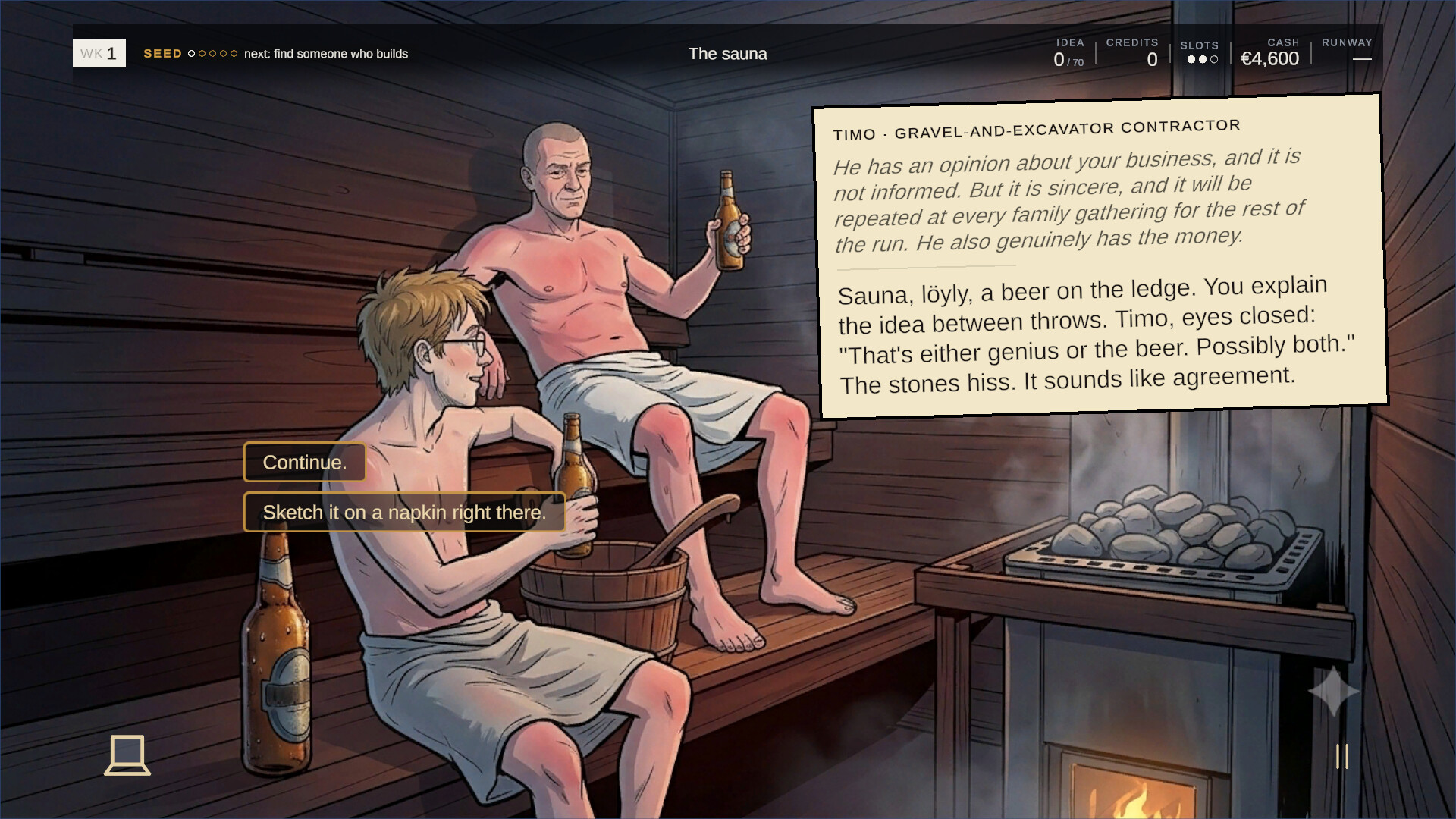
There is no floating dashboard. There is a garage, a coffee shop, a sauna, a trade fair and a VC lobby with one plant and one Eames chair. You walk in, you talk to whoever is actually there this week, and you manage the company on a laptop that exists inside the world.
Each week is a handful of slots. Spend one on a pitch and you do not spend it on the product. That is the whole game.
THE PEOPLE ARE THE DIFFICULTY
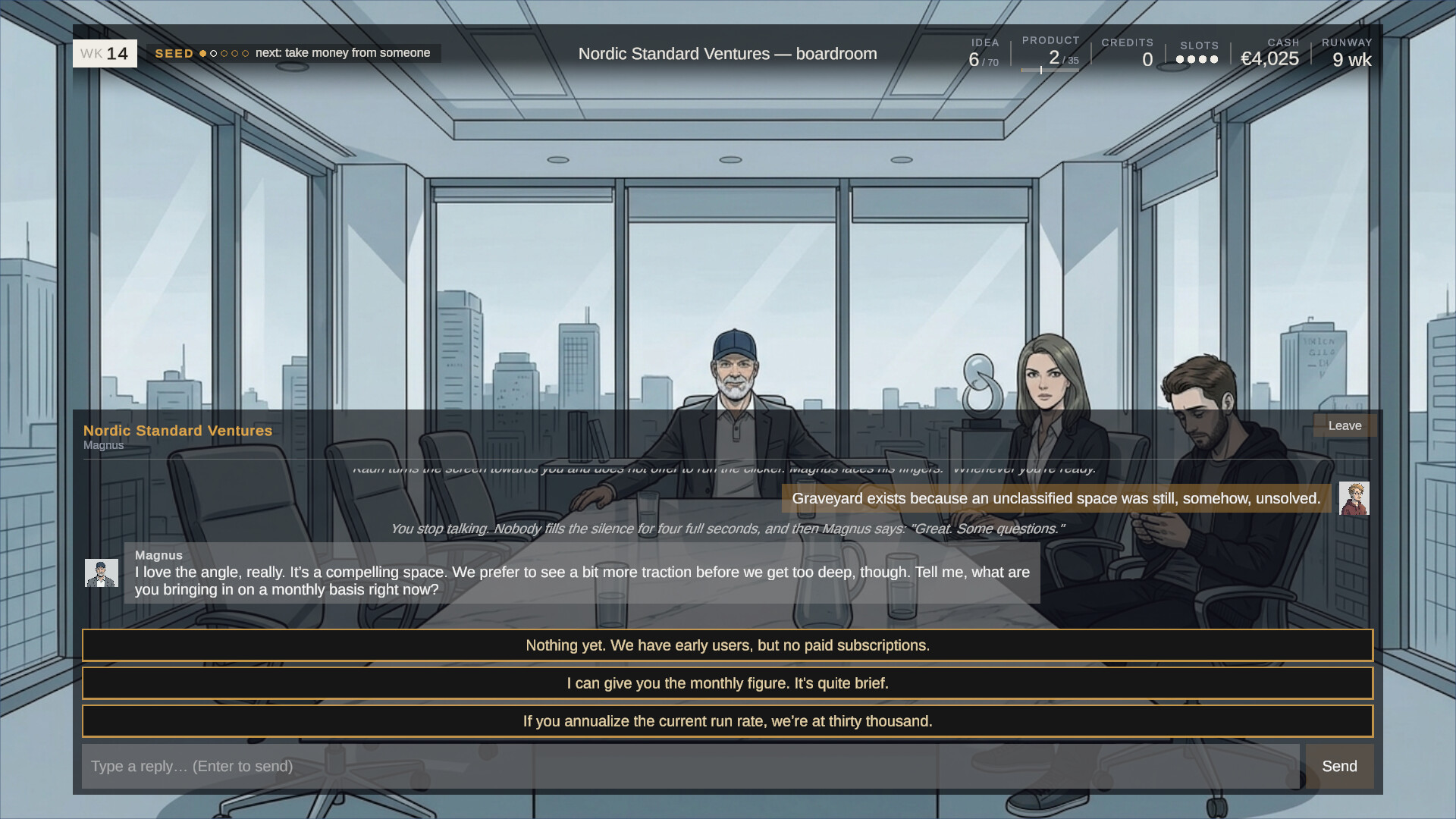
An angel investor is private money — his own, not a fund's. He answers to nobody, which cuts both ways. A VC asks about cohorts because cohorts are what her fund understands, even when your business ships pallets. A lawyer gives you free, correct advice right up until the moment you ask him something, and then it becomes a file he has to open.
Conversations run in a chat panel and they do not repeat. Sit down with the same investor twice and the second conversation knows what happened in the first one — including the promise you have not kept.
THE TERM SHEET IS A DOCUMENT
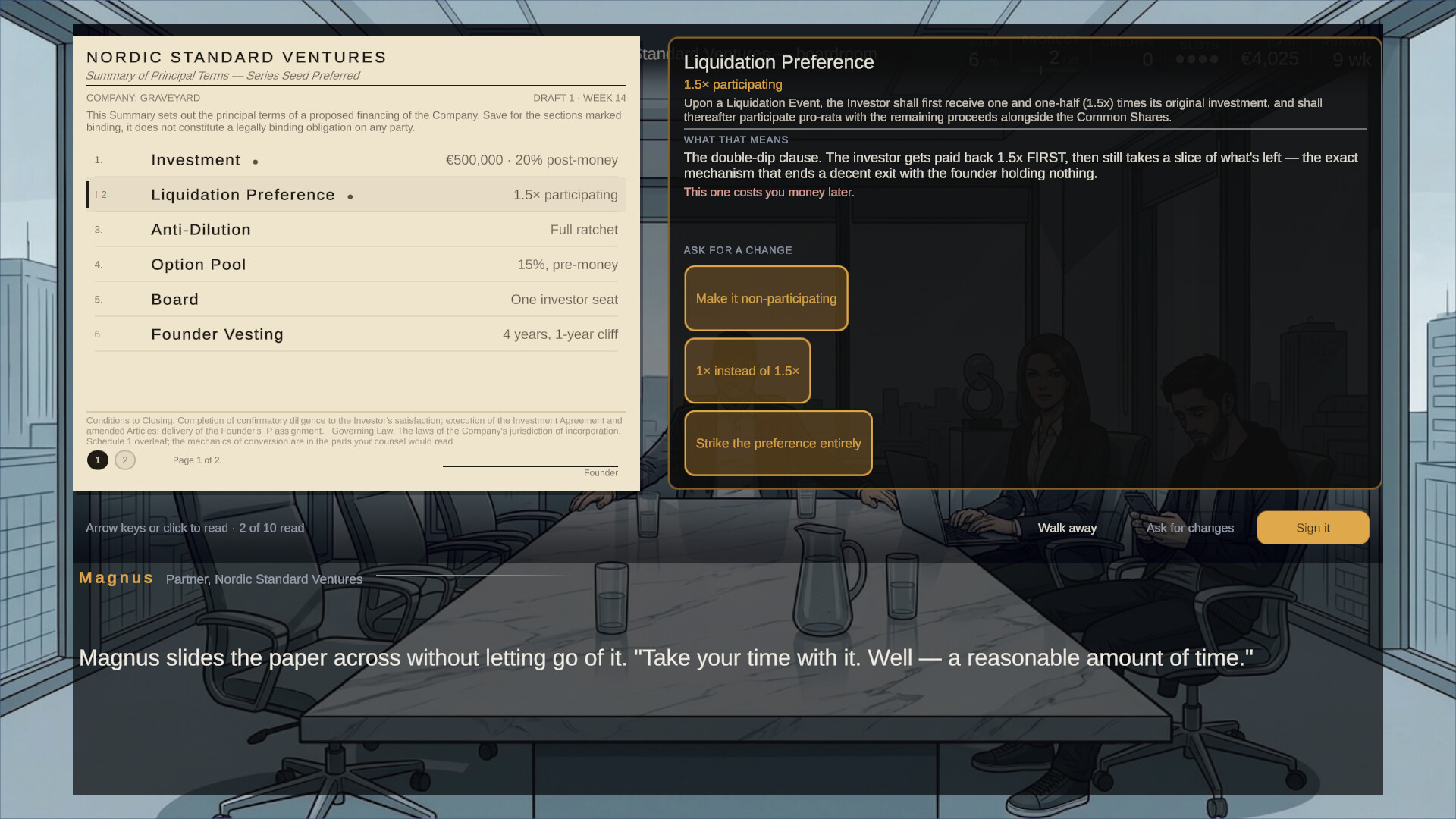
Not a menu. A two-page sheet with ten live terms on it, and the bad ones are not labelled. Liquidation preference, drag-along, a no-shop clause with a date on it. You may only negotiate a term you have actually read.
You will sign a bad one. That is the lesson, and it is cheaper here than it is outside.
FAILURE IS A PUNCHLINE
A losing run teaches you something in under forty minutes. The death screens are better written than the victory screens, on purpose. Every wrong door is open — the game never tells you that you can't, it just sends the invoice.
Somebody will bill you €14,750 plus VAT for a nine-slide deck. You will pay it.
WHAT A RUN LOOKS LIKE
One week per turn, roughly 100 weeks in a full run
Five origins: a garage, a lecture hall, a sauna, a cubicle, a fogged bathroom mirror
Three phases, gated by what you have done, never by the calendar:
SEED — you have an idea and no company
SCALE — you have money and no time
EXIT — you have a company and no control
Twelve endings, and the good ones are not the obvious ones
30-90 minutes for a typical death. 3-4 hours to actually finish.
ACCIDENTALLY EDUCATIONAL
You will finish a run knowing what a liquidation preference is, what your runway is, and why the option pool comes out of the pre-money. Not because a tutorial explained it — because it killed you, repeatedly, and the fourth time you saw it coming.
Available Tables (0)
View available tables...Events Timeline
View full events timeline...Initial Release