Impious
About the Game
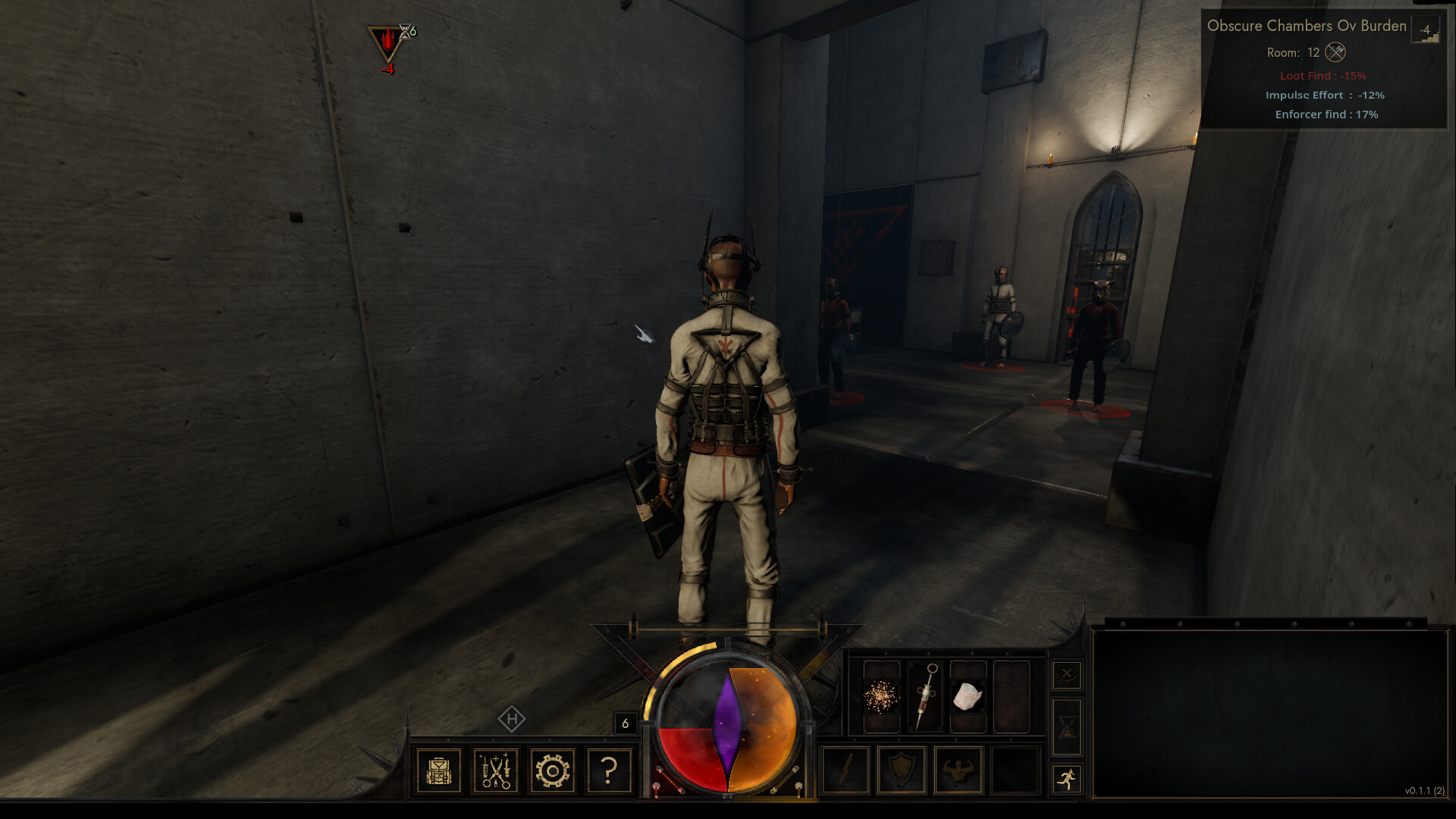
Impious is a dark turn-based roguelite RPG set inside an underground indoctrination center designed to erase the individuality of its captives. You create condemned characters and attempt to guide them through a hostile system where progress depends on decision-making, equipment, and tactical combat rather than reflexes or speed. The game is deliberately paced, focused on tension, uncertainty, and adapting to situations that rarely go as planned.
FEATURES
MAKE DECISIONS UNDER UNCERTAINTY
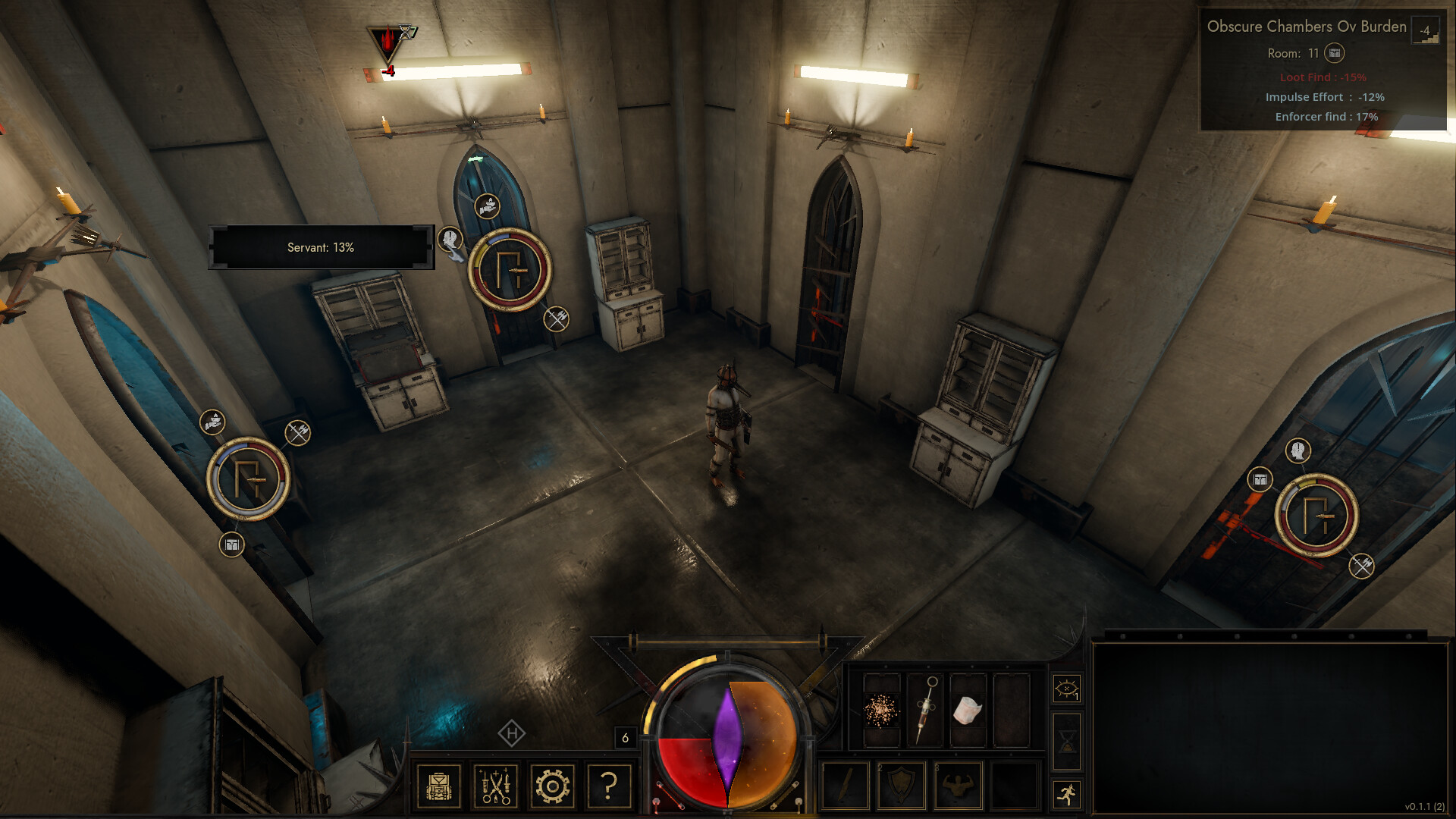
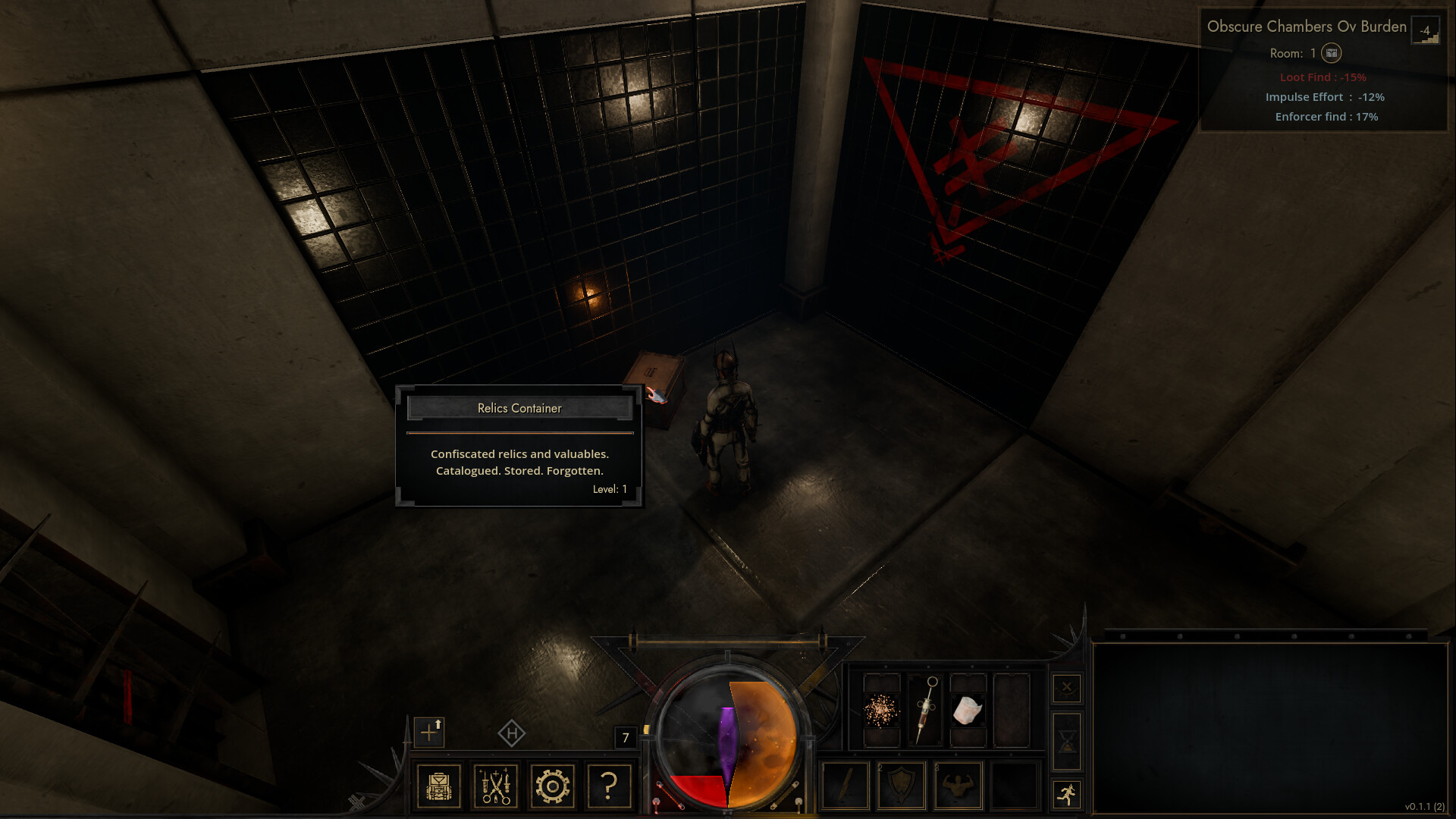
Each run begins in a cell. From there, you decide which room to enter next based on probabilities rather than certainty. Some rooms may contain combat, others traders, shrines, or rare opportunities, and some may simply make things worse. You never fully control the outcome, but you are always responsible for the choice you make. Your build can shift those odds, increasing the chance of certain room types appearing next, but nothing is guaranteed.
Progress is not about finding a perfect route, but about adapting when things don't go your way.
BUILD YOUR CHARACTER THROUGH LOOT AND PROGRESSION
Characters begin with a class that defines their core attributes and initial tendencies, but progression is driven by equipment, skills, and the choices you make along the way.
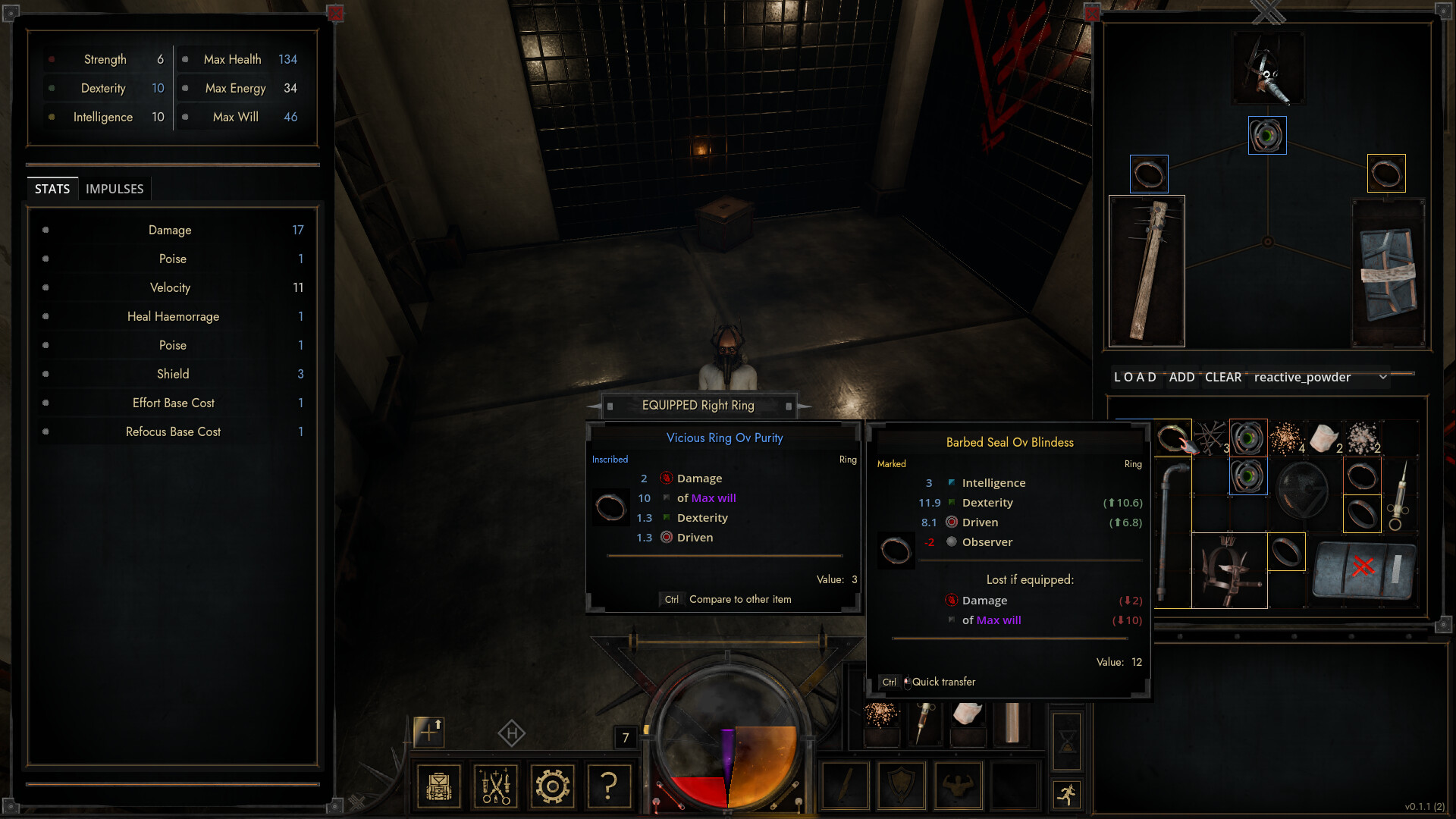
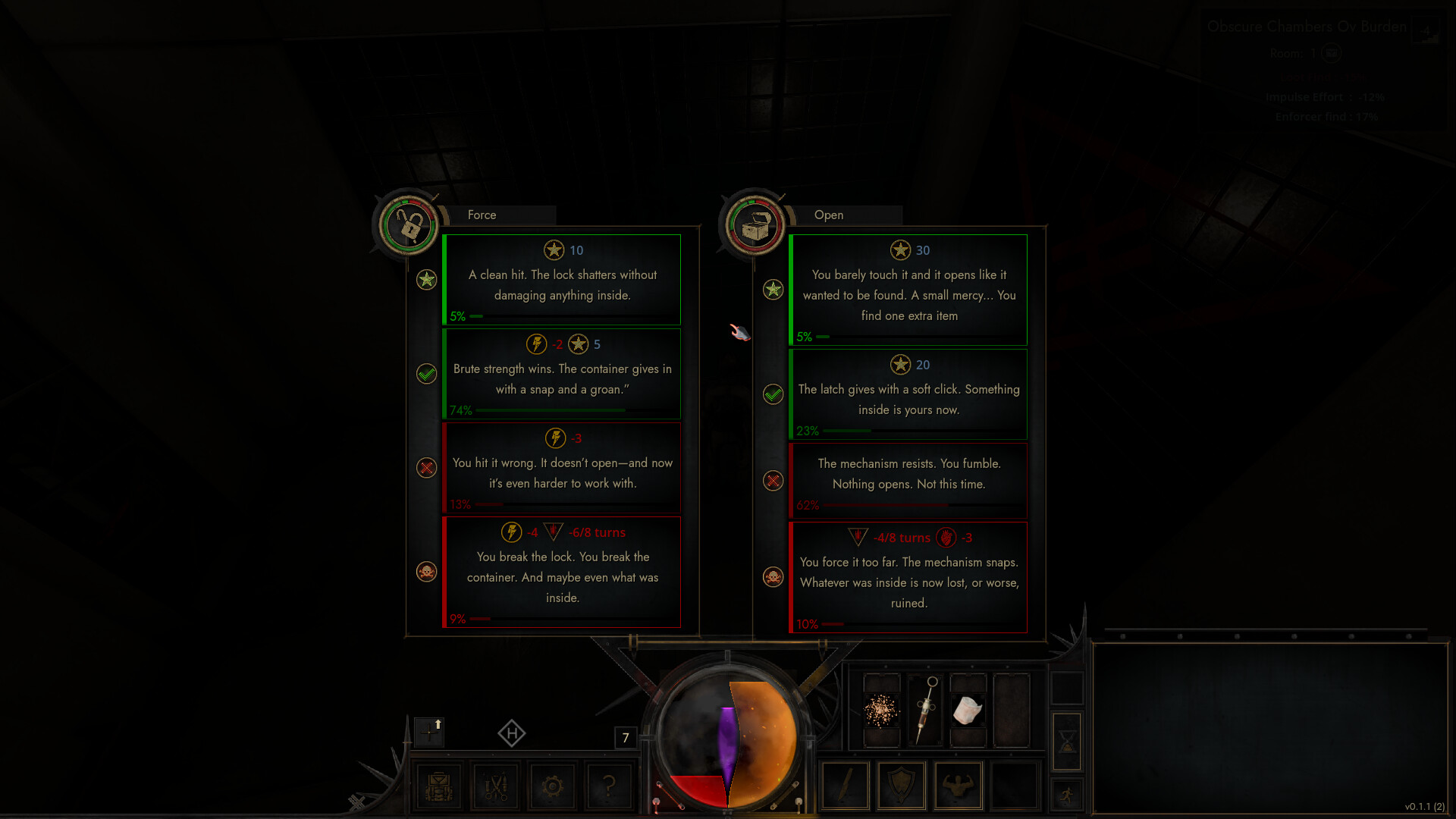
Loot and crafting are central to survival. Weapons, trinkets, and artifacts shape your character's options in combat, while materials can be used to craft cures or traded with NPCs when resources run low. It changes what you can afford to risk and how you approach upcoming encounters.
Classes provide direction, but no run plays out the same. Builds evolve through decisions, availability, and necessity rather than rigid planning.
TACTICAL TURN-BASED COMBAT WITH IMPULSES
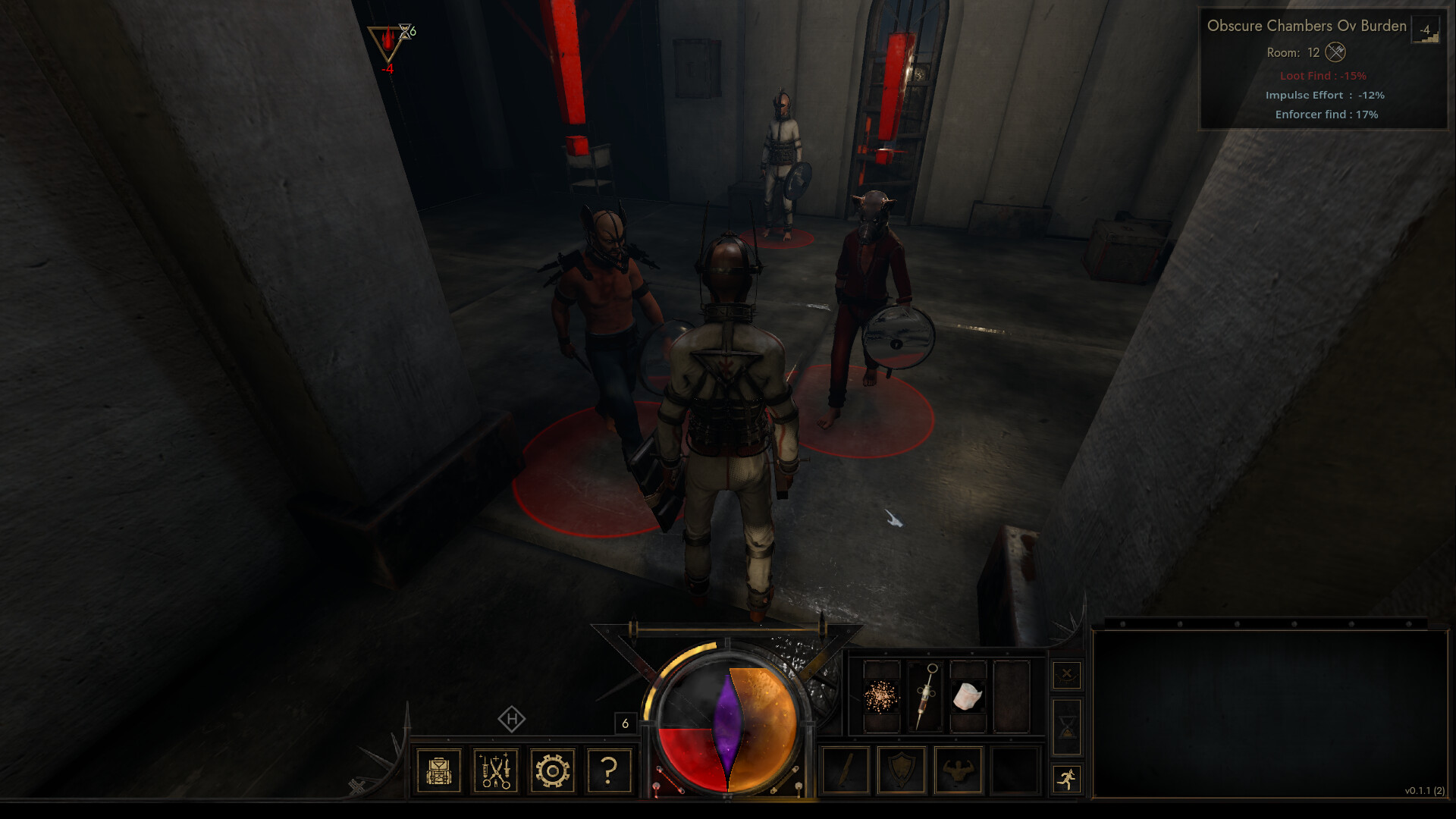
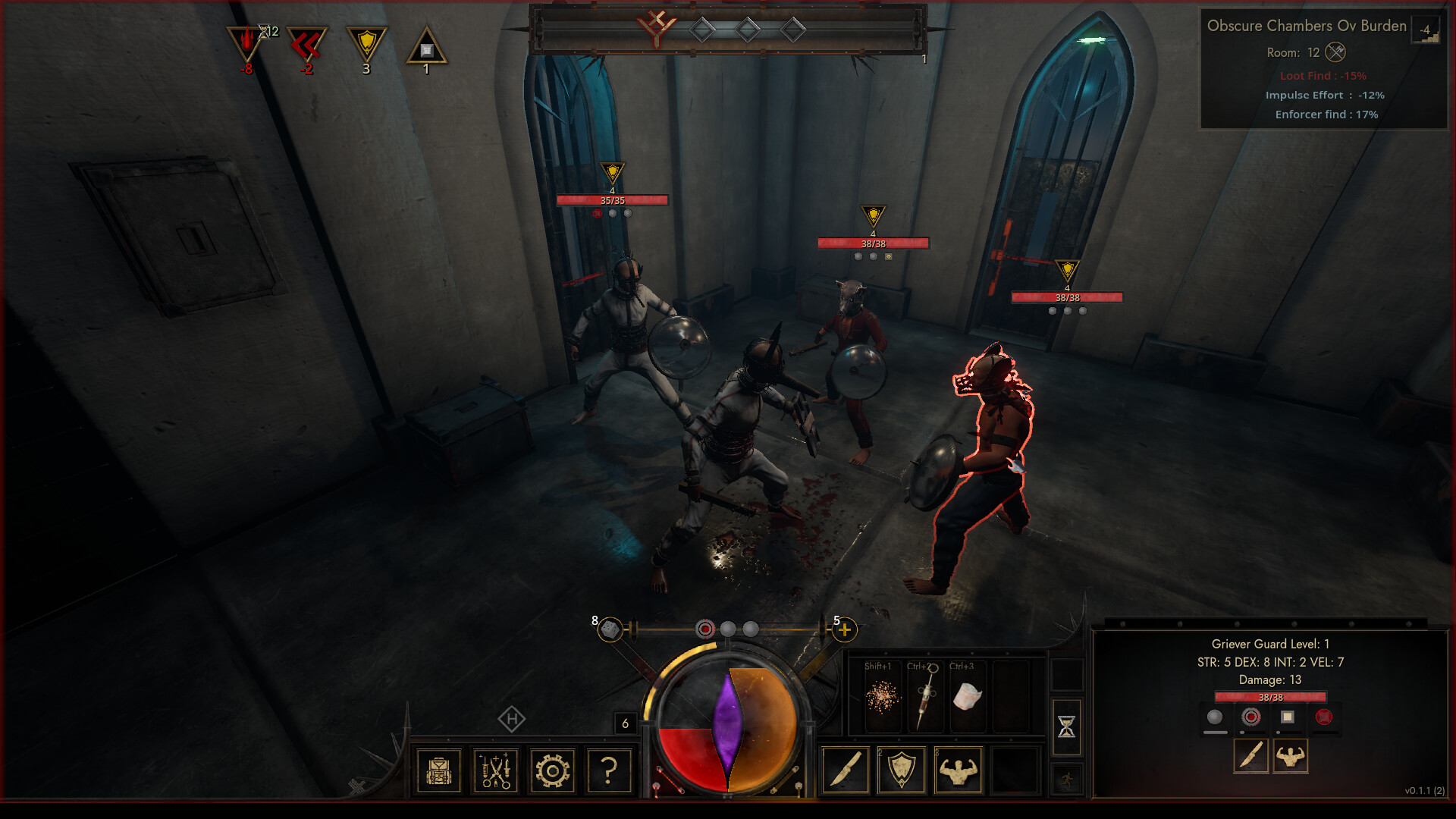
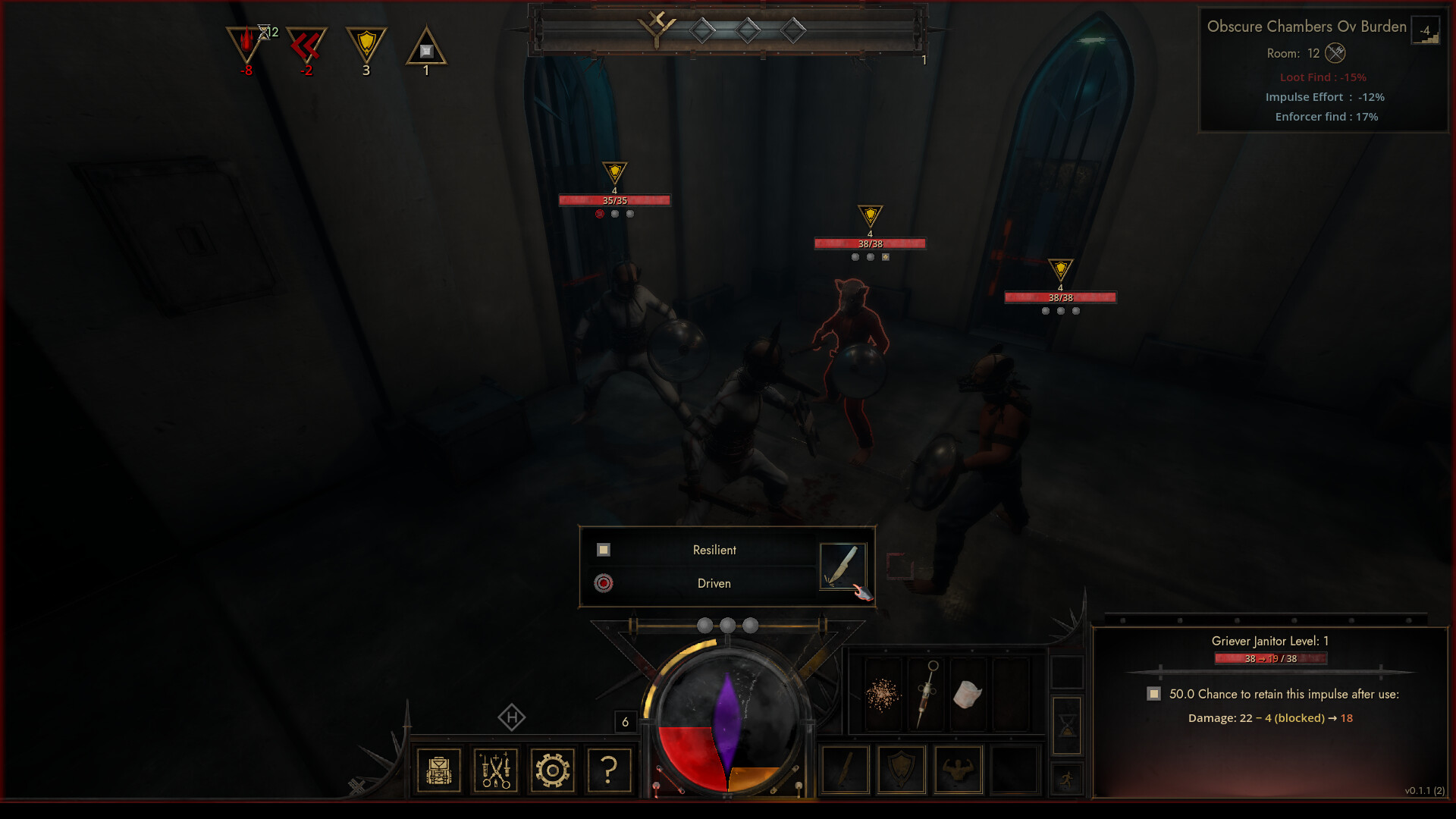
Combat is turn-based and situational. Before acting, you read the battlefield: enemy intent, active effects, and available options. Decisions are rarely obvious, and priorities change constantly.
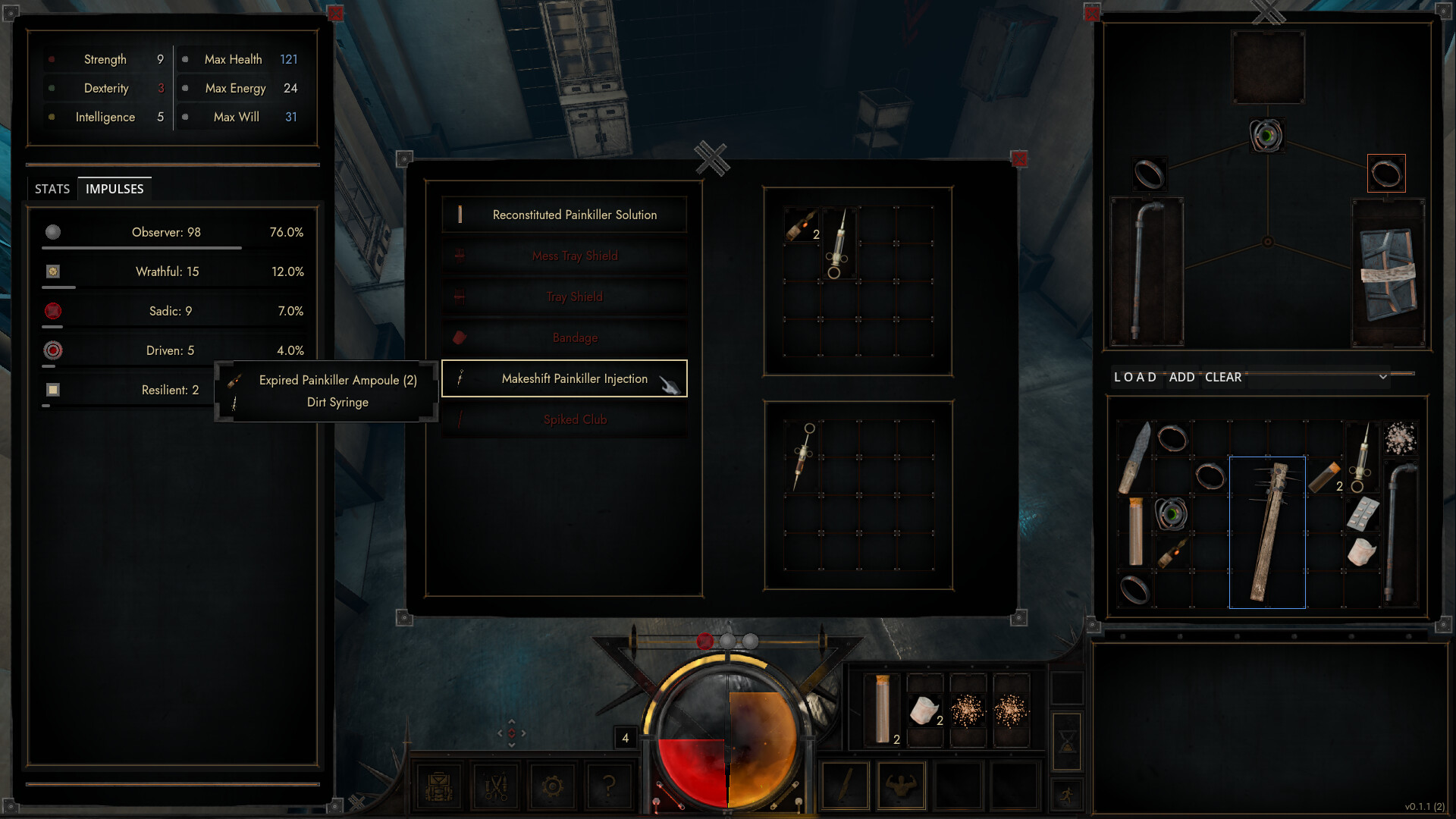
Actions consume impulses, which can be applied to yourself or your enemies to influence the fight. Some impulses disrupt, others reinforce, and many interact with existing states. Managing them is as important as choosing who to attack.
Fights are won by understanding the situation, planning a few steps ahead, and adapting when things don't go as expected.
FAILURE AND WILL
Failure is gradual rather than immediate. Losing a fight does not end a character’s run, but it weakens them. Each defeat reduces their Will, a measure of how close they are to being fully broken by the system.
Managing Will becomes as important as managing health or equipment. Taking risks without preparation can slowly push a character past the point of recovery, while careful decisions can keep them going much longer.
Some characters eventually escape the facility. Others don’t. The difference is rarely a single mistake, but a series of choices made under pressure.
AN UNDERGROUND COMPLEX WITH A PURPOSE
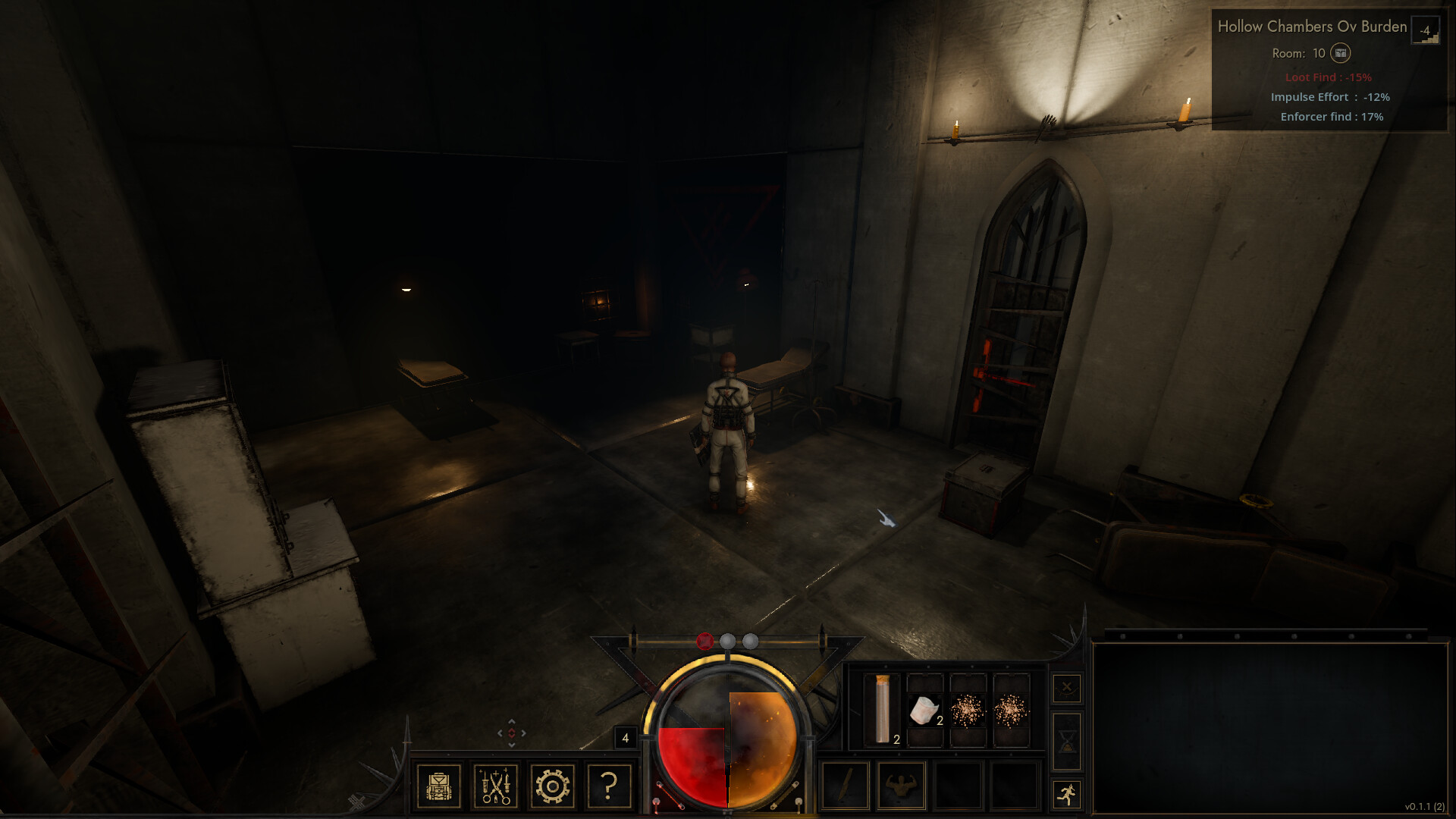
The game is set inside a subterranean complex where every room has a function and every floor represents a different part of the facility, each with its own purpose within that underground society. From communal areas to restricted spaces, the environment reflects a doctrine enforced through routine. You exist within the facility as its doctrine is gradually imposed upon you.
Available Tables (0)
View available tables...Events Timeline
View full events timeline...Initial Release