Dwarven Alchemist
About the Game
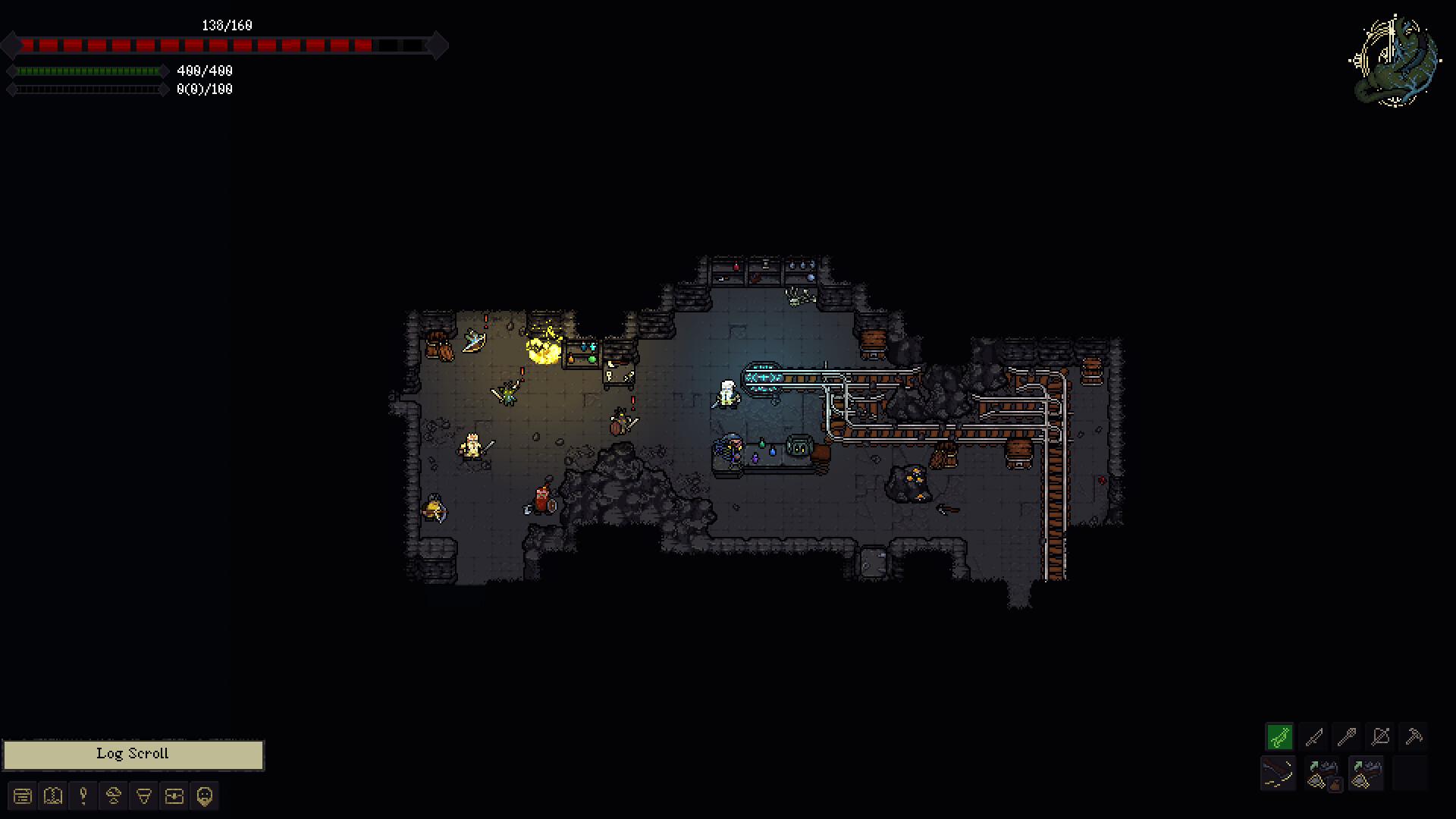
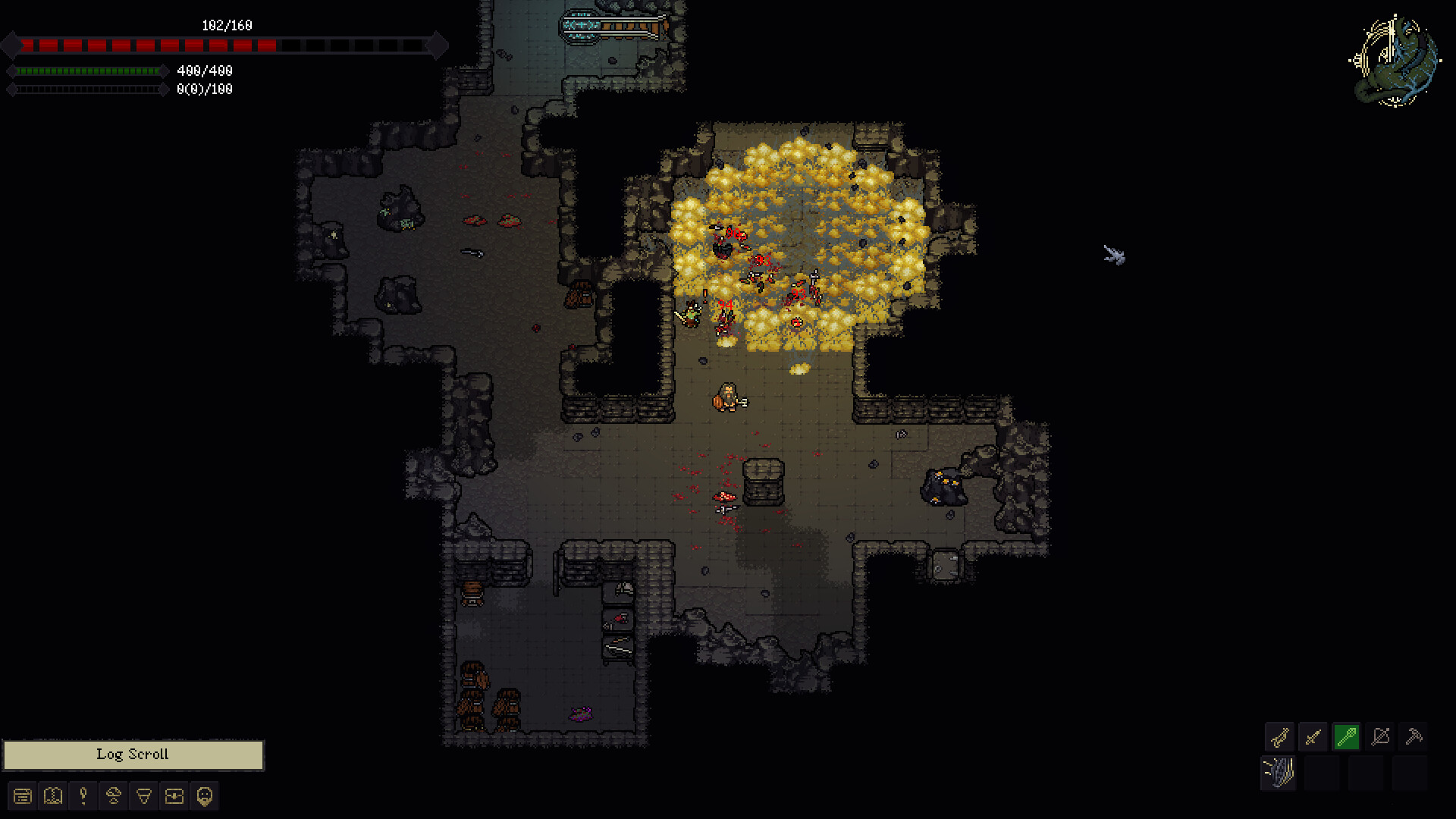
Dwarven Alchemist is a traditional-modern roguelike set in a medieval fantasy world, where you take on the role of a dwarven alchemist striving to earn the title of Master Alchemist.
To achieve that goal, you must brew the legendary Poison of Annihilation - the only weapon capable of slaying the Great Wyrm.
Features
grid-based, turn-based tactical combat
procedurally generated dungeons
blend of classical roguelike and shopkeeping simulator
alchemy is the center of character power, not a crutch
fully destructible environment
stealth is a viable approach
adaptive gameplay: make do with what you have
in-depth alchemy system: create potions, poisons, explosives, gases, or poisonous explosive gases
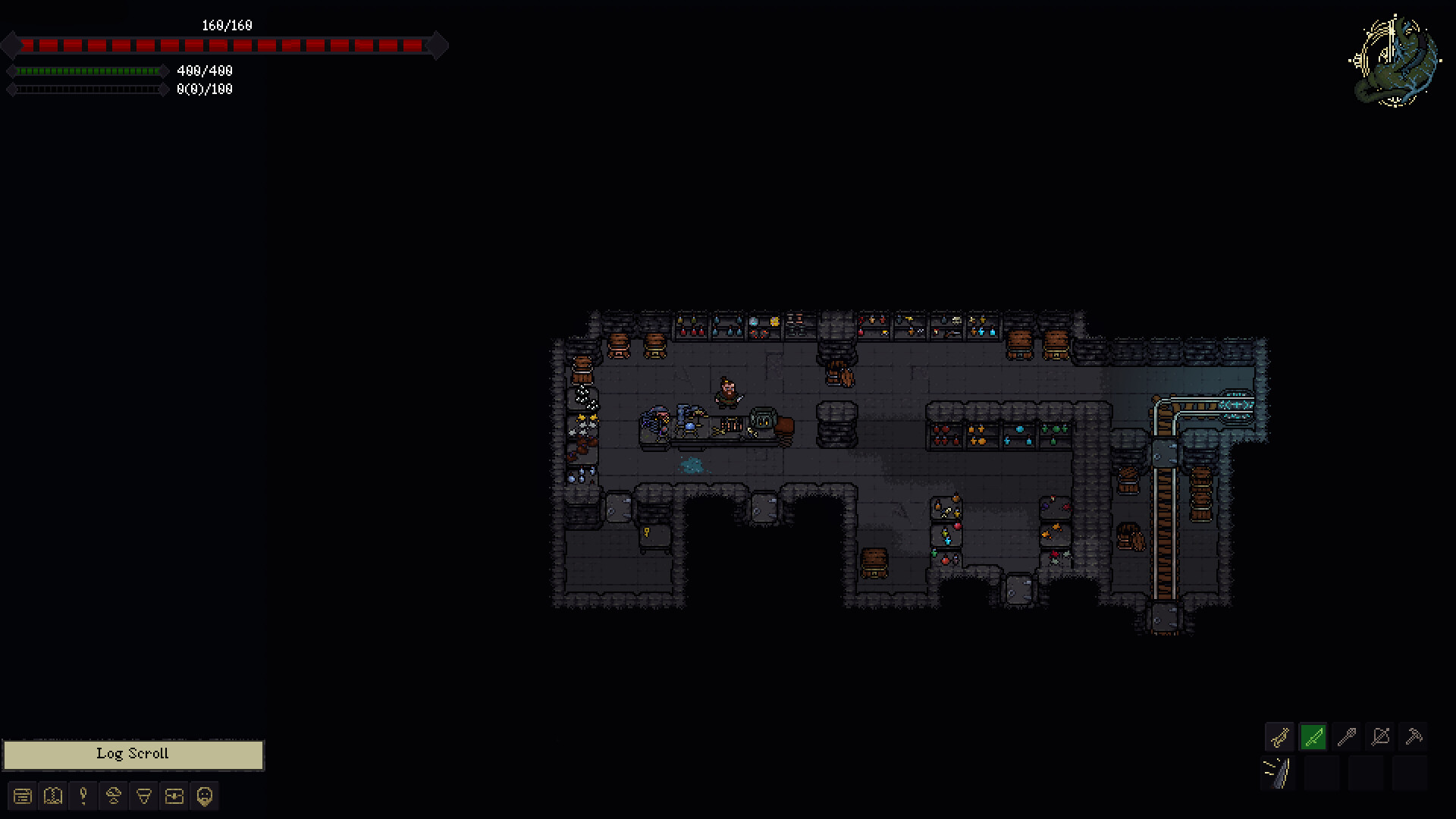
Run your very own alchemist shop
While you have a clear goal to hunt a set of extremely rare but very specific ingredients to complete your main quest - finding those will take time. And more importantly, refining those ingredients into usable form will require top-notch alchemical equipment.
At first your laboratory will be in a rather shoddy state. But through hard work and solid coin you will be able to improve it.
Clients will come to your shop, seeking potions and other mixtures you'll be able to craft for them. Those clients can be dwarves of the town with mundane needs, or adventurers preparing to take some heroic action someplace of no matter to you.
What is important to you, is that their potion requests create organic mini-quests for your own dungeon adventures. You will have to plan your next dungeon run to incorporate collecting ingredients required to fulfill received orders. And that can dramatically alternate the ways you approach certain risks in the dungeon.
And you’ll be able to refine and use any spare ingredients yourself.

Potions are not just goods for sale but tools to be used
In Dwarven Alchemist every alchemical effect has gameplay use for the player.
If a dwarven miner orders a shipment of Explosion powder nothing is stopping you from using that same powder in the dungeon to blast swarms of goblins. An adventurer asks for a Fire Protection potion to fight a dragon? That same potion will come in handy when you wish to venture into the magma caves.
Put simply: in the dungeon you'll be able to use products of your alchemy to fight and survive.

The Art of Alchemy
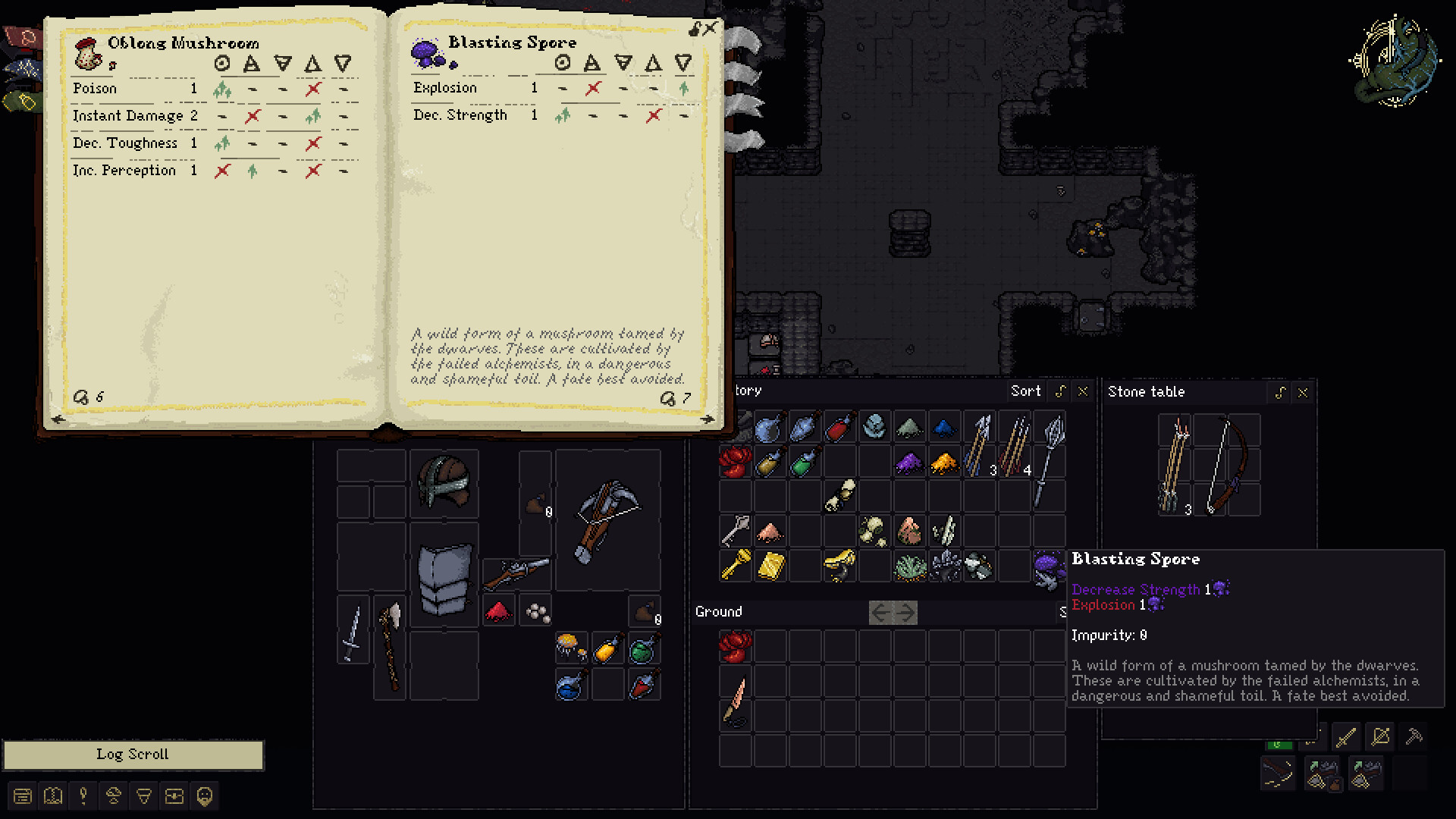
You start by collecting your ingredients. Those carry magical effects in them, like Explosion or Increase Strength. You can manipulate those effects with procedures, making them stronger, or removing them completely.
Procedures involve calcination, fermentation, distillation, dissolution or sublimation. They can be performed in the laboratory, using variety of alchemical apparatus, or triggered by the use of catalysts.
Anti-effects, like Increase Strength and Decrease Strength, purge one another, when mixed together. Use this smartly when choosing which ingredients to mix.
Every alchemical effect has a metal that it will be mutually destroyed with. So using ores and grinding metal junk you find in the dungeon is a part of the alchemy. Coins, keys, nails - anything can be utilized. Same principle can be used in combat. Weapon covered in an effect, that reacts with the metal armor is made of, will more easily pierce it.
Nothing is left to the chance in the art of alchemy. It follows a set of strict, but predictable rules, which when used correctly will always produce expected results. The task for the alchemist is to remove unwanted effects from the mixture, while amplifying the wanted effect to a desirable level. You have to use as little steps as possible, for every step generates unneeded impurity.
You will have to invent your own recipes, and adjust them on the fly as situation demands it. The number of possible combinations is near infinite, and seeing elegant solutions is a game on its own.
Procedurally generated dungeons with a living ecosystem
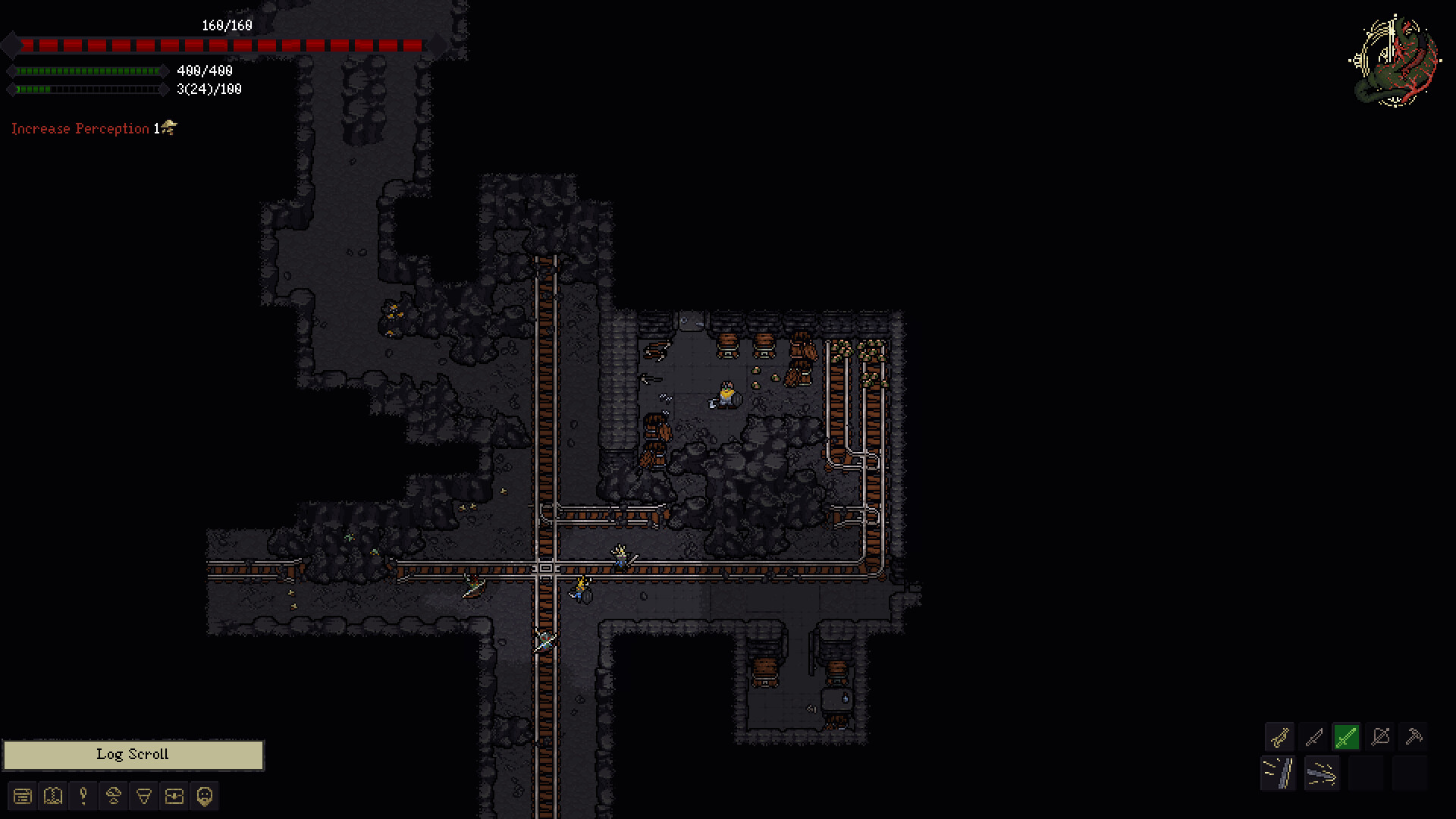
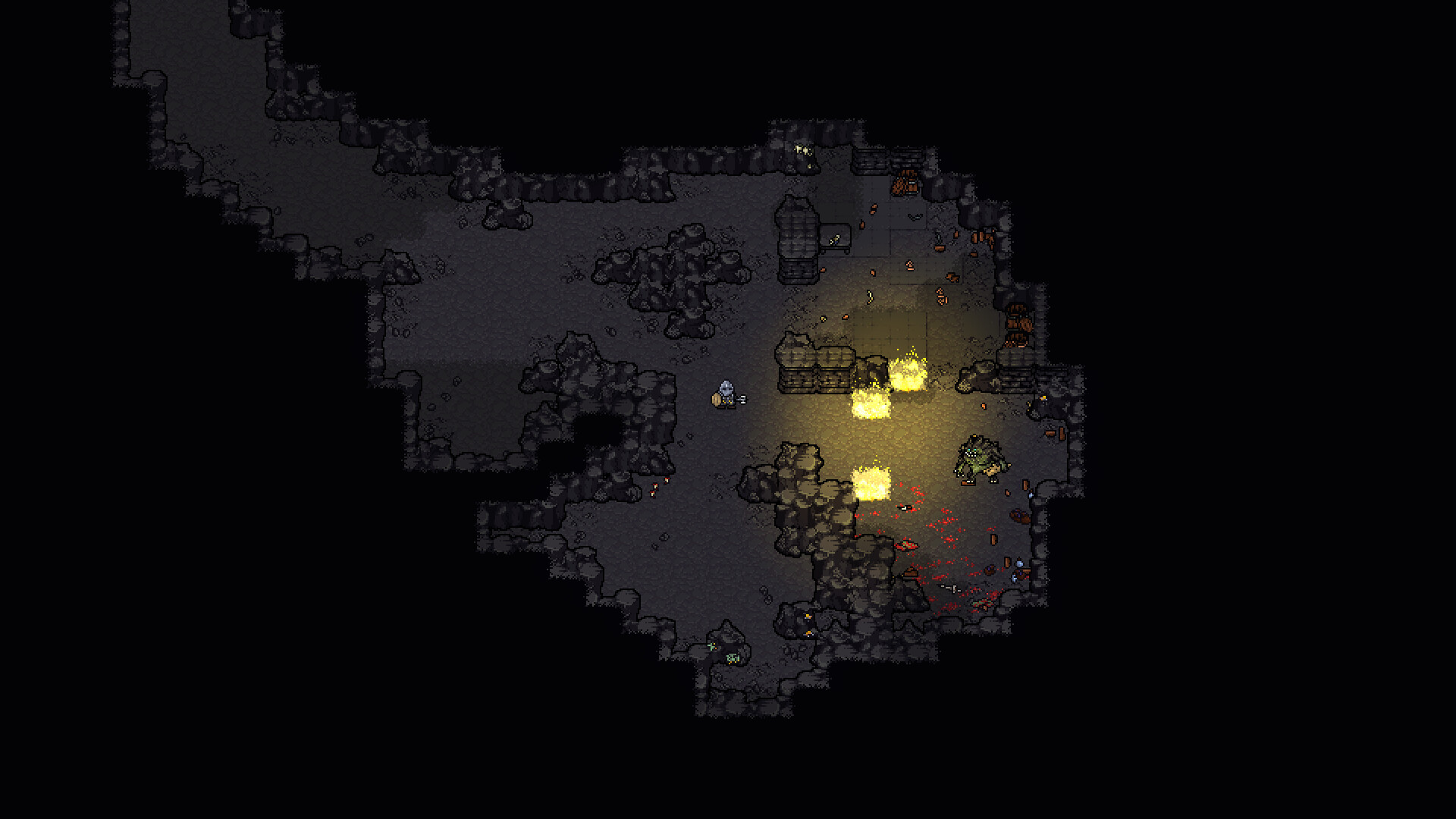
Each day your character can teleport into a random section of a vast dungeon. The dungeon is composed of many biomes, which vary in danger, spaciousness, and ingredients encountered. From collapsed mines, mushroom forests and flooded caves to soiled crypts and parts of ancient fortresses overrun by goblins, monsters, undead or demons.
The dungeon itself is a living ecosystem. Not all creatures inhabiting it are inherently hostile, some will only attack when provoked. Monsters might be hostile to one another - exploit it for your own needs.
Monsters are just one of many kinds of obstacles that may block your way. Locked doors, caved in tunnels, clouds of poisonous gas, traps, and other environmental hazards - all can be conquered through smart use of alchemy.
Every run is an isolated adventure
While the plot of the game is stretched across many descends into the dungeon and many returns to the safety of town, every individual run plays more like a classic roguelike.
Every time you enter the dungeon you start with nothing but your trusty flintlock pistol and a limited set of potions/powders you selected from your workshop. There is also no experience system or character level-ups in general, so power level of the alchemist remains relatively unchanged throughout the entirety of the game. The same goes for monsters: a stone troll will always be a deadly encounter, unless you have an answer in the form of alchemy prepared: which is not dependent on the amount of runs you previously had.
Weapons (excluding your magnificent flintlock!), armor, and other non-alchemical equipment are not preserved between runs and are confiscated by the town guard when you return.
What combination of all those features mean, is that the game in its spirit is very close to the hardcore experience of classical roguelikes, but at the same time it allows for a continuous adventure to take place, and your lab and business to grow and progress.

Adaptive Gameplay
You have no direct control over equipment and ingredients you will encounter on a particular run. Specific ingredients grow in specific biomes, but what exactly you will find, and the amount of it is still chance-based. Potions that you may bring from your lab are few, and will not be enough to last you the entire run. What that means is that you cannot always rely on the same strategy to win, and that you have to utilize ingredients you have available right now to create mixtures required to defeat the next obstacle.
Since you start every run without weapons and armor, those will have to be looted in the field. You adapt to whatever gear you come across in the dungeon, which means that even rusty equipment often finds use, since you simply don’t have anything better in the moment.
The only exception is your spectacular flintlock pistol - a signature alchemist weapon. It always stays at your side, and functions as a makeshift bludgeoning weapon. You will be able to handcraft explosive powders of varying potency for it, and use different metals to craft ammunition that will pierce even thickest of armors. Any poison when crystalized can be loaded in place of buckshot for devastating effect. You might even load it with healing crystals to utterly confuse your enemies. Opportunities are truly endless.
No permadeath, but meaningful loss of progress
The question of "permadeath" is always touchy for this type of game. Because Dwarven Alchemist chains many dungeon runs into a single campaign having "permadeath" as a default option would be impractical. The game is too long for that.
But in spirit, it is a game with "permadeath", because every individual run still has a potential to end in a complete disaster. And there will be consequences. Powering through failed contracts and missed opportunities is part of what should make Dwarven Alchemist a fun game. But in normal mode those consequences will not result in completely ending your campaign.
For experienced players willing to take it a step further there will be a true permadeath mode with one life for entire campaign. More importantly, we design the game with true permadeath in mind. It should be realistically beatable with only one life. But only if you know what your are doing.
Available Tables (0)
View available tables...Events Timeline
View full events timeline...Initial Release