Dear Nobody



About the Game
A war you never see. A love that exists only on paper. A pen that has started to answer back.
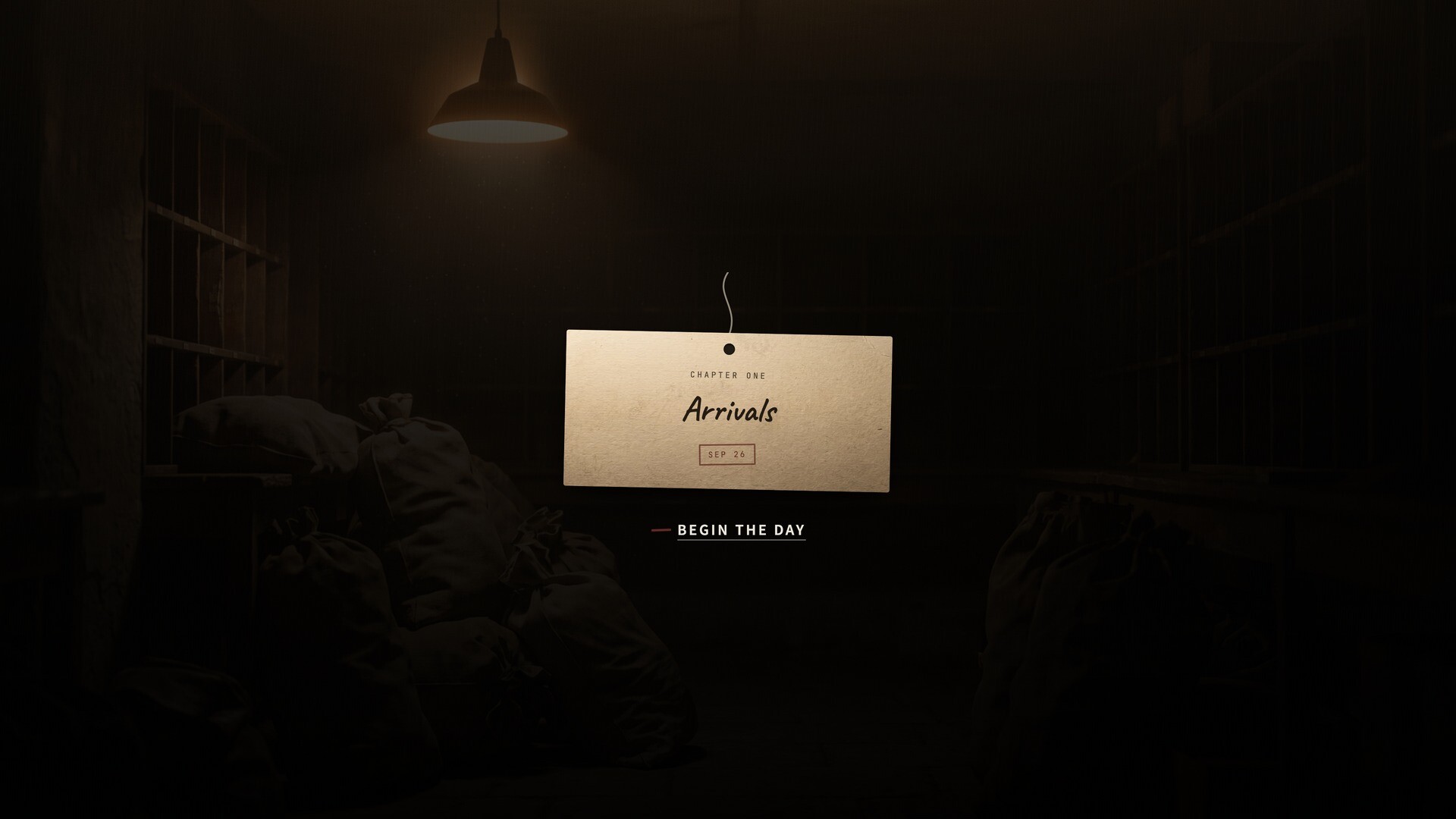
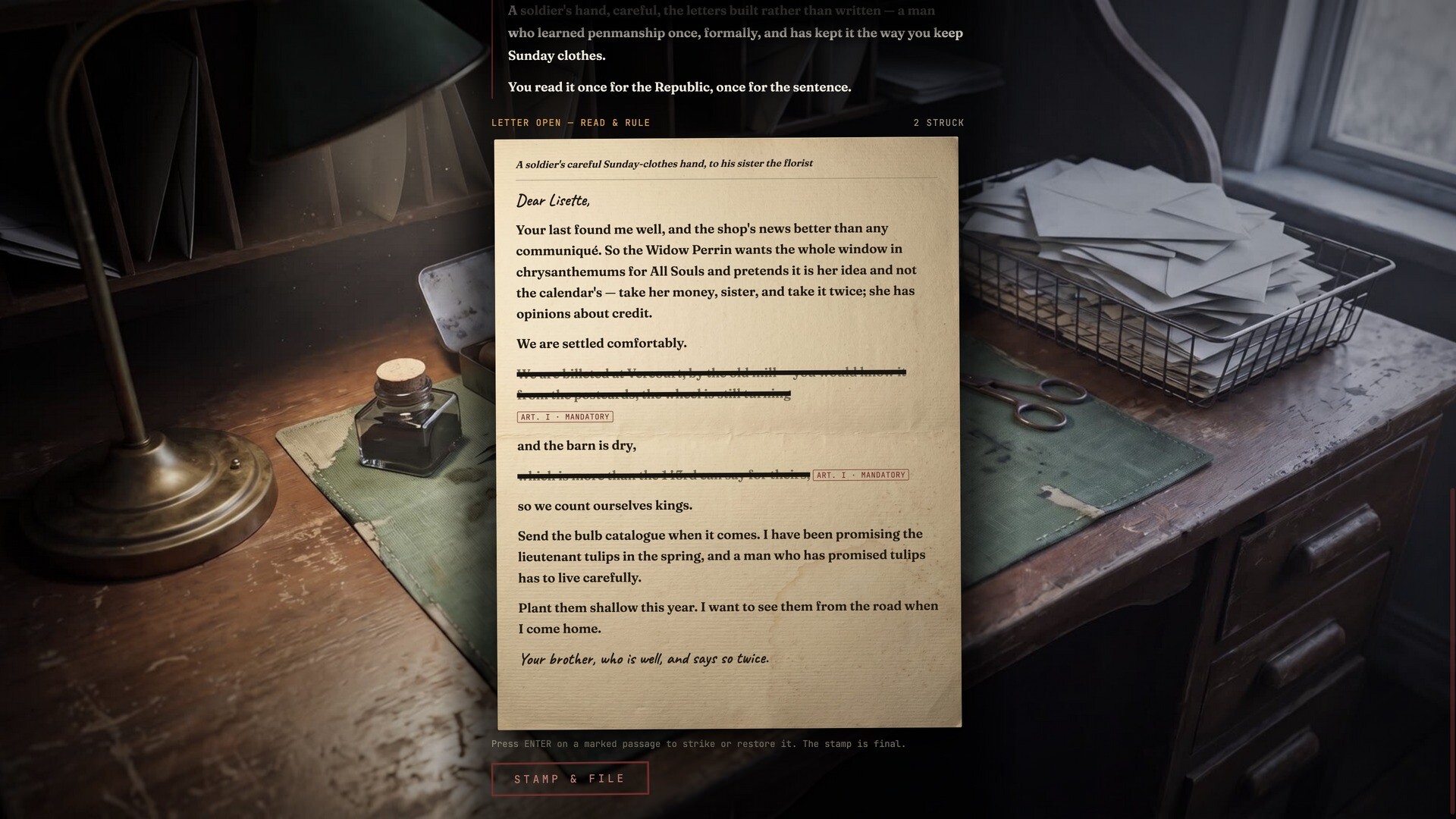
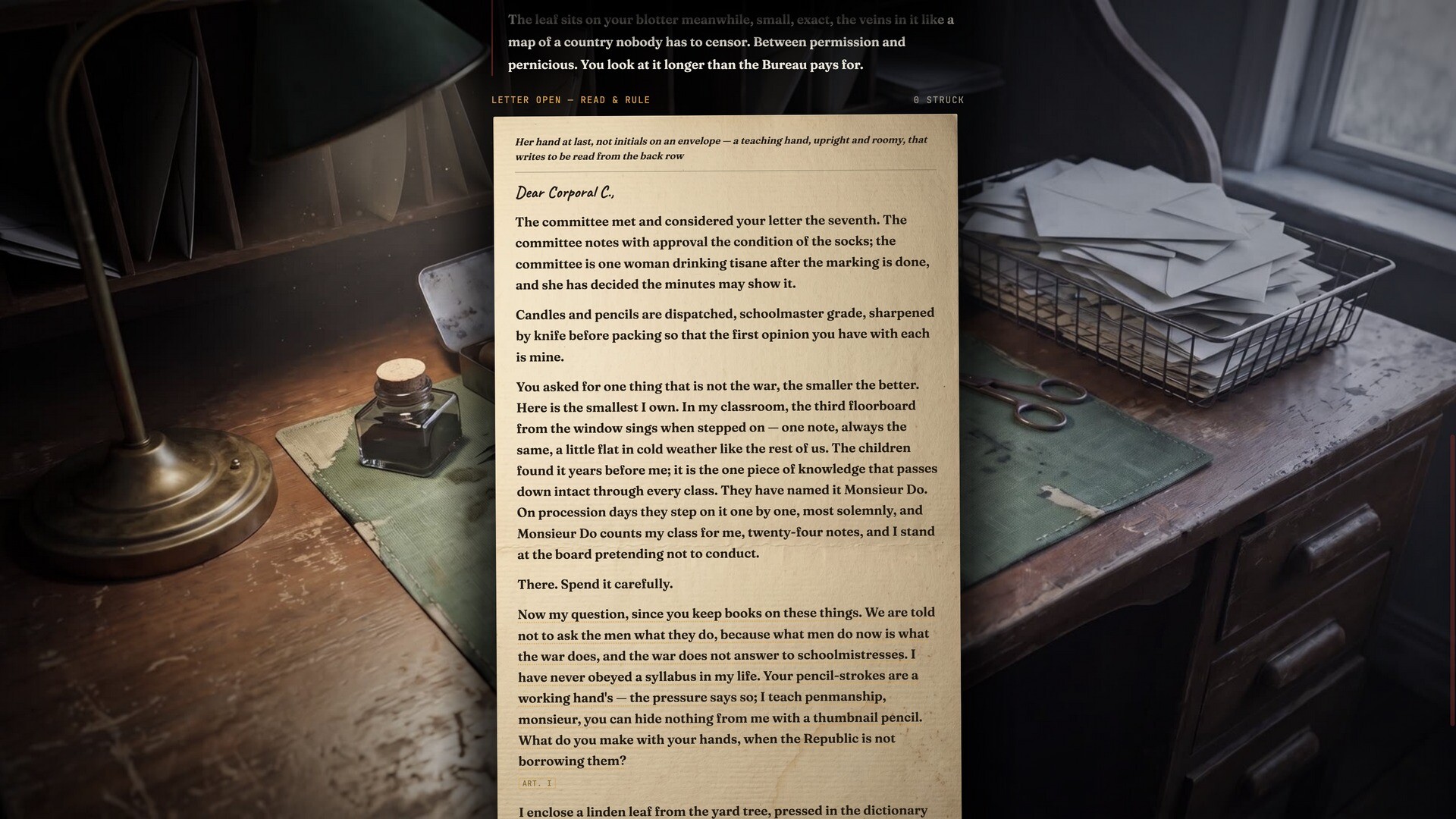
You are a woman at a censor's desk, far behind a nameless front. The men are gone to the war; the sorting hall is staffed by women who read other people's mail for a living. Across your desk pass the letters of two strangers — pen-pals who have never once met, who know each other only through the words they send. You hold a stamp, a pen, and a book of regulations, and it is your work to strike out anything a soldier must not know.
But these two have nothing but the letters. Their entire relationship is the paper on your desk. So the choice is never abstract: cross out a line and it is gone from their love, not just from the page. Keep a tenderness in and you let it reach the other side. Strike it and you have decided, quietly, that it never existed. The restraint is the whole mechanic — what you leave standing is what their love is allowed to become.
Then something begins to go wrong with the correspondence. A letter answers a question you only asked with your pen. A line you struck weeks ago comes back, uncrossed, in another hand. And one thread stops writing to the front at all — and starts writing to you. The game never tells you whether the paper is haunted or whether you are simply coming apart at your own quiet desk.
What you do
• Read, and rule. Open each letter, strike the words that must not pass, and stamp it on its way. What you keep and what you kill shifts two fragile things at once — the bond between the lovers, and how closely the office is watching you.
• Keep what you cannot bear to lose. A copybook lets you save a single line from a letter before it leaves your hands forever.
• Answer, if you dare. As the correspondence turns toward you, you are given a pen of your own — and a few words you may leave standing in reply.
• Live with it. Every ruling is filed. There is no undo at the desk, only the record.
Features
• A redaction mechanic you feel in your chest. Censorship as a love language — and a weapon. The most intimate choices in the game are the ones you cross out.
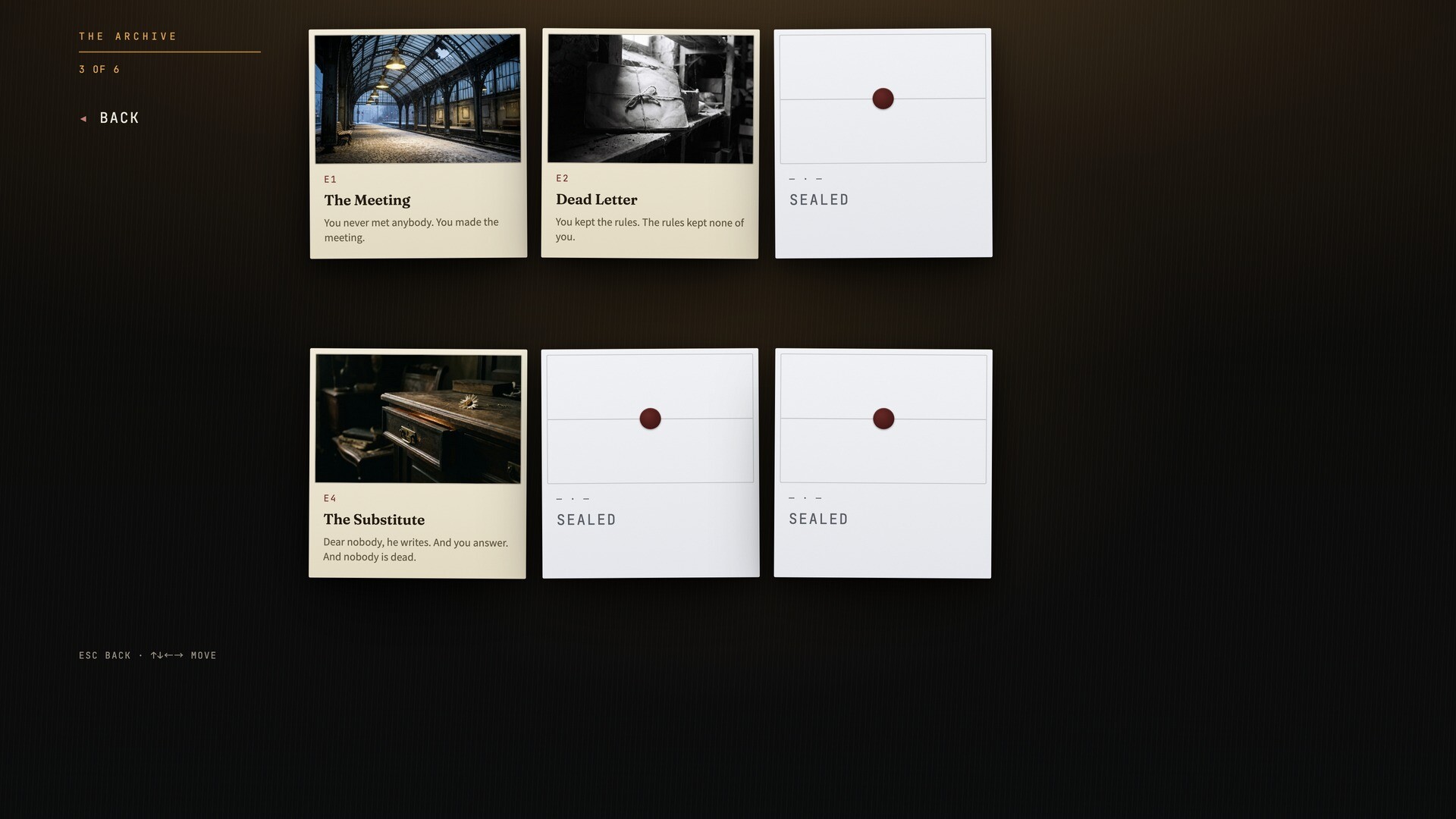
• Six endings drawn from two fates at once — what becomes of the lovers, and what becomes of you.
• A quietly uncanny story that never explains itself. Realistic on the surface, wrong underneath.
• ~30–45k words of prose, letters, and marginalia — a single sitting or two.
• A world that feels old and European and never names itself — ink, gaslight, sorting halls, a waltz through a café wall.
• Available in eleven languages at launch.
Single-player · text-based · choice-driven · roughly 2–4 hours.
Dear Nobody's prose is human–AI co-written and human-edited under the author's direction. Its illustrations and ending vignettes are pre-generated with AI image tools and then curated and edited; some music and sound is composed with AI assistance. Nothing is generated while you play.
Available Tables (0)
View available tables...Events Timeline
View full events timeline...Initial Release