Dead Market


About the Game
The market will lend you anything. It writes all of it down.
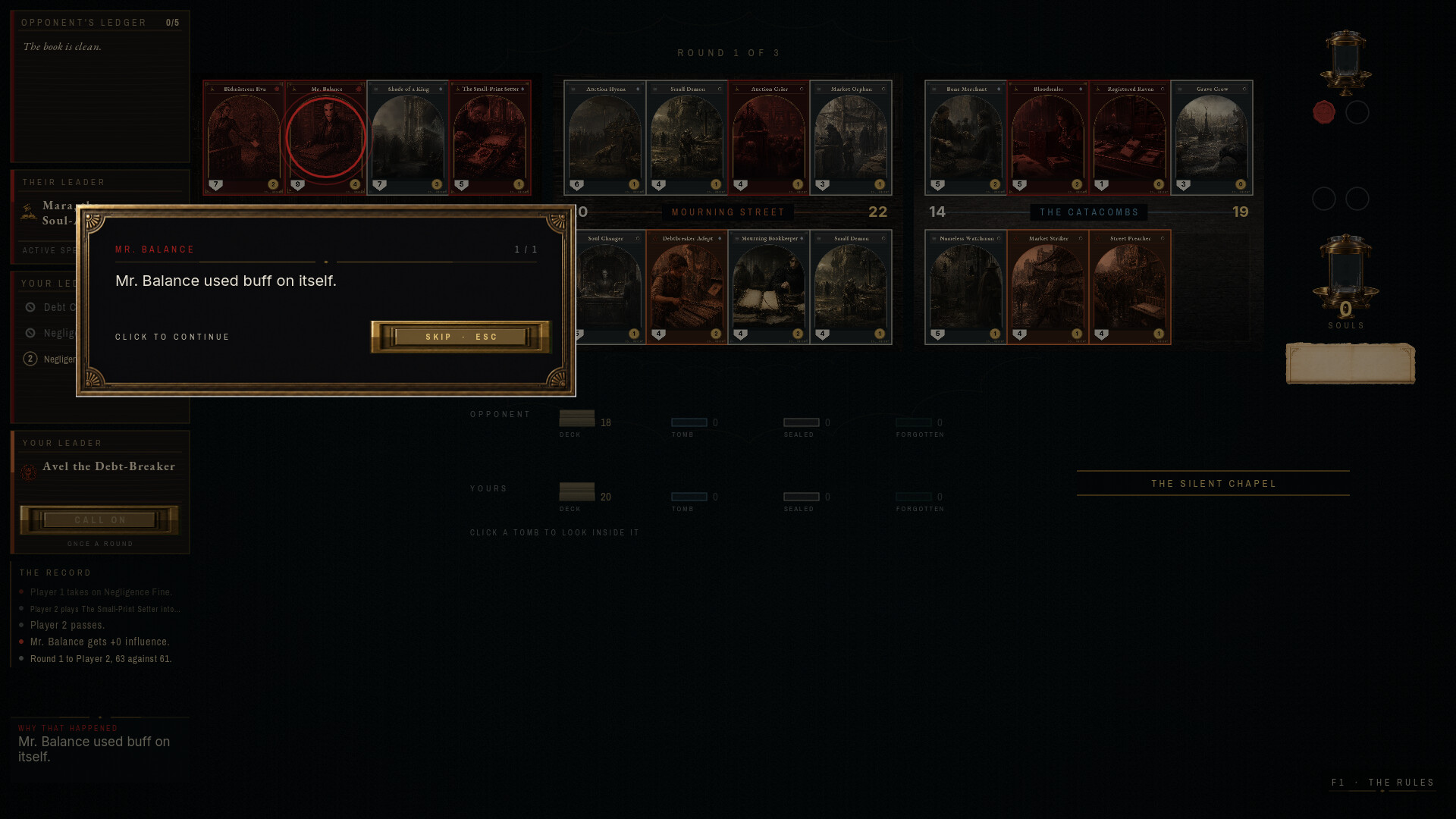
Dead Market is a card game about debt. You win a match by taking two of three rounds across three districts — but almost everything that wins a round is bought on credit, and the credit goes into a book that sits beside the board
for the whole match.
The Ledger is the second board. Up to five lines, each with an amount in souls, a timer in turns, and sometimes Interest. Both players can read both books. The timer counts down at the start of your turn and nobody else's, and
when a line comes due you either pay it or default.
Defaulting is a move, not a mistake. Sometimes it is the correct one: against a small penalty it is often right to refuse, and against a large cost late in a round you are already losing, refusing is simply cheaper. The game is built around that decision being genuinely open.
And the book has a floor under it. Take a sixth line while five are open and the line still goes in — but your oldest debt is called in that instant, whatever its timer said. A full Ledger is a loaded gun, and it is the most common way a new player loses a round they thought they had won.
Five factions, and each one uses the book differently
The Red Notaries — debt as a weapon. They put lines in your book and profit from them being there.
The Grave Sovereigns — the Tomb is a resource. They kill their own units to trigger Last Wills, then buy them back. Killing their units is doing them a favour.
The Candle Children — they Seal instead of killing, and they strike lines out of Ledgers. The only faction that reliably undoes debt.
The Hungering Deep — they do not eat the dead. They eat that anything ever lived. Emptying your deck is a real win condition, and what they take is gone in a way the Tomb never is.
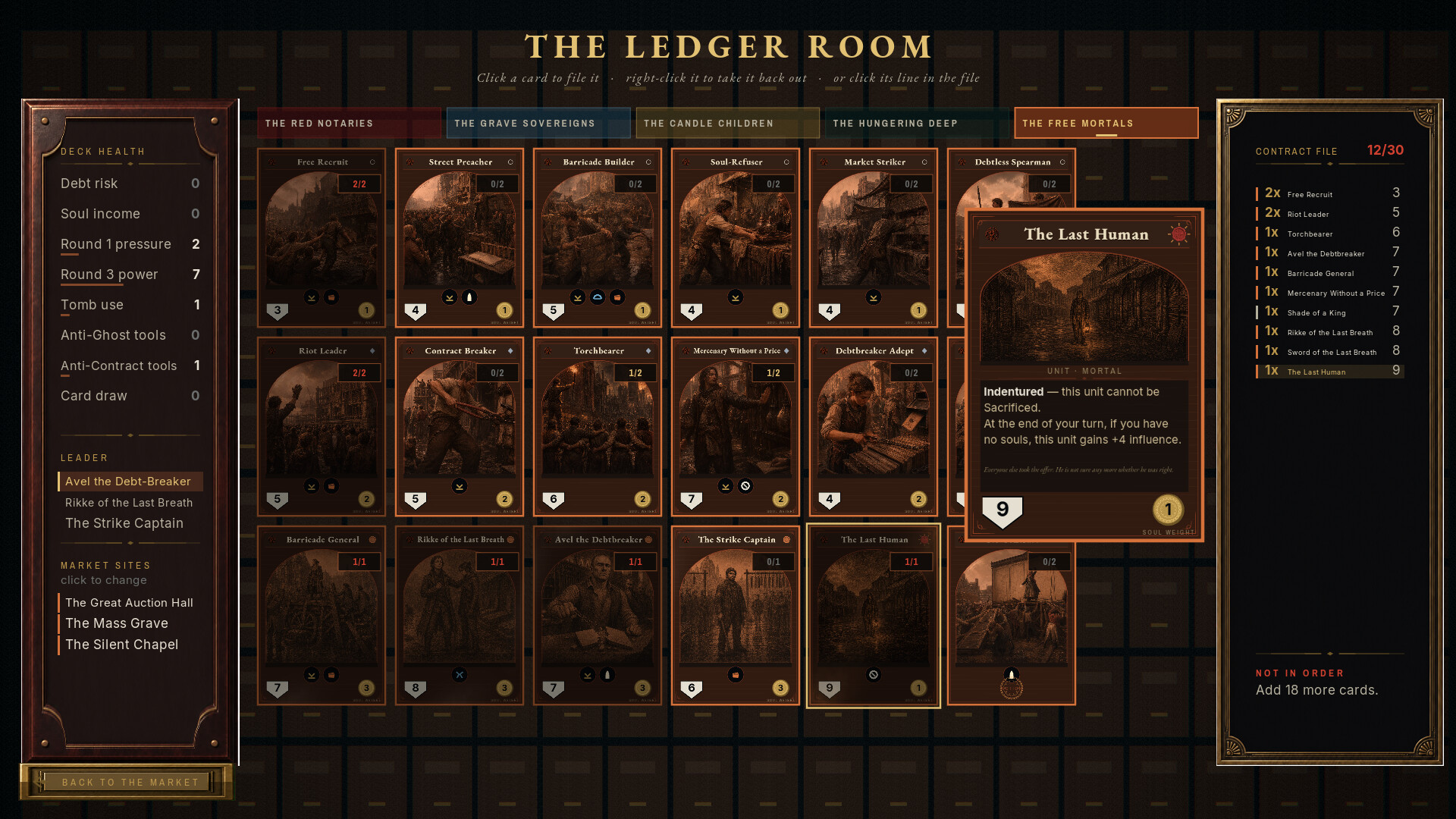
The Free Mortals — numbers and refusal. Cheap bodies, wide boards, and cards that strike the opponent's book clean out of spite.
What is in it
247 playable objects, 190 of them collectible, every one with its ownillustration.
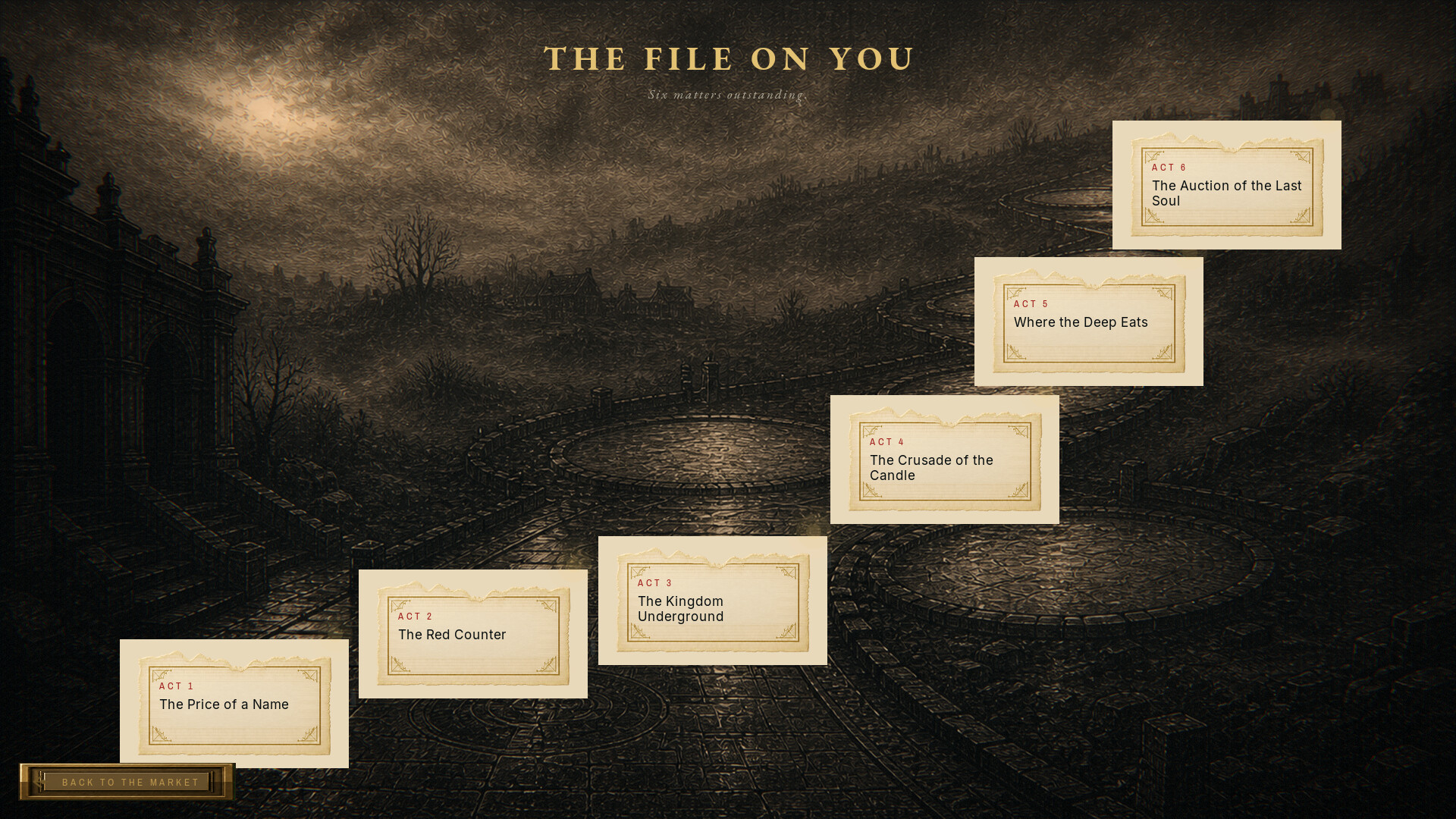
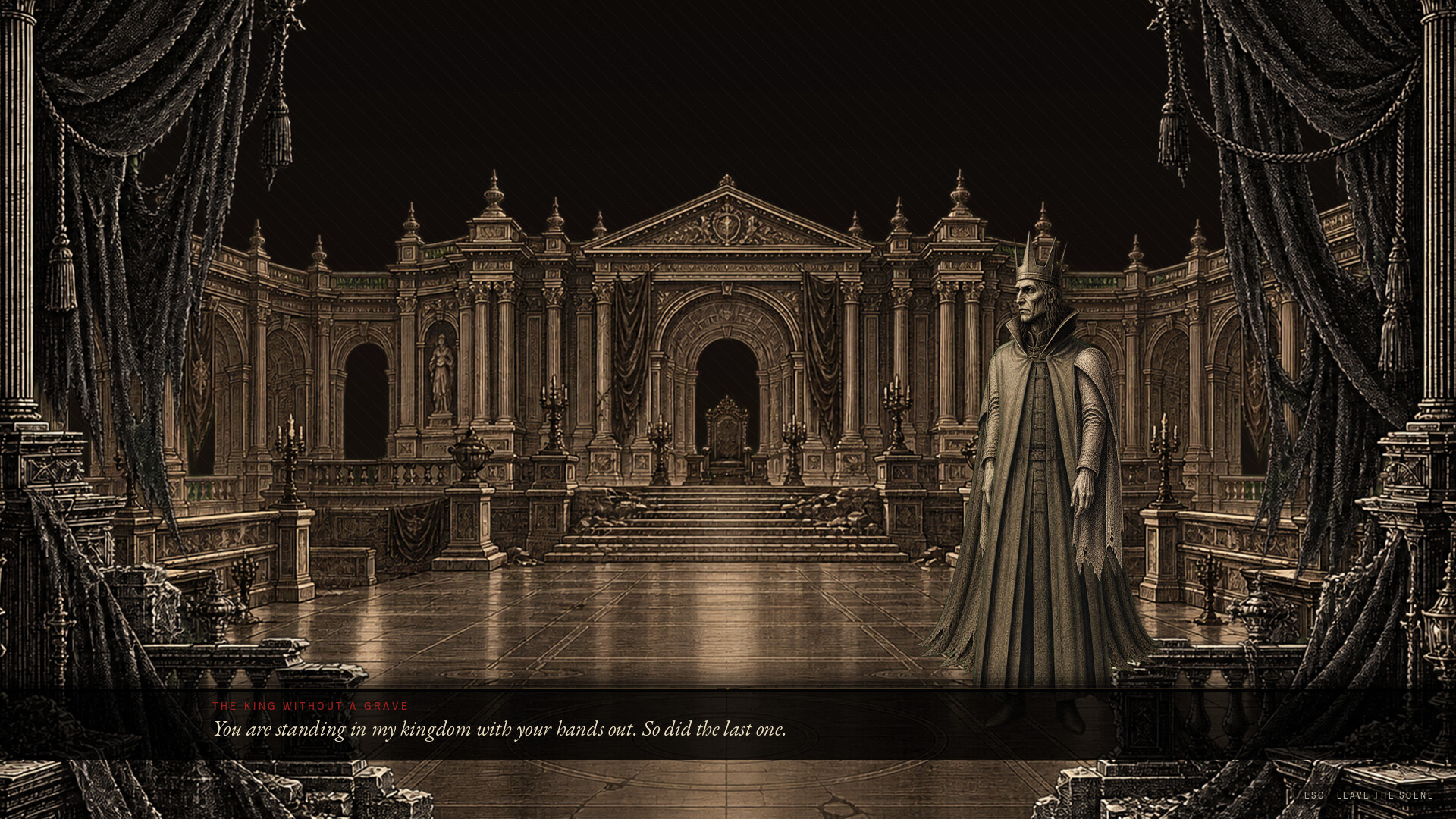
A six-act campaign with six bosses who each break one rule of thegame, and five endings that depend on clauses you initialled hours earlier.
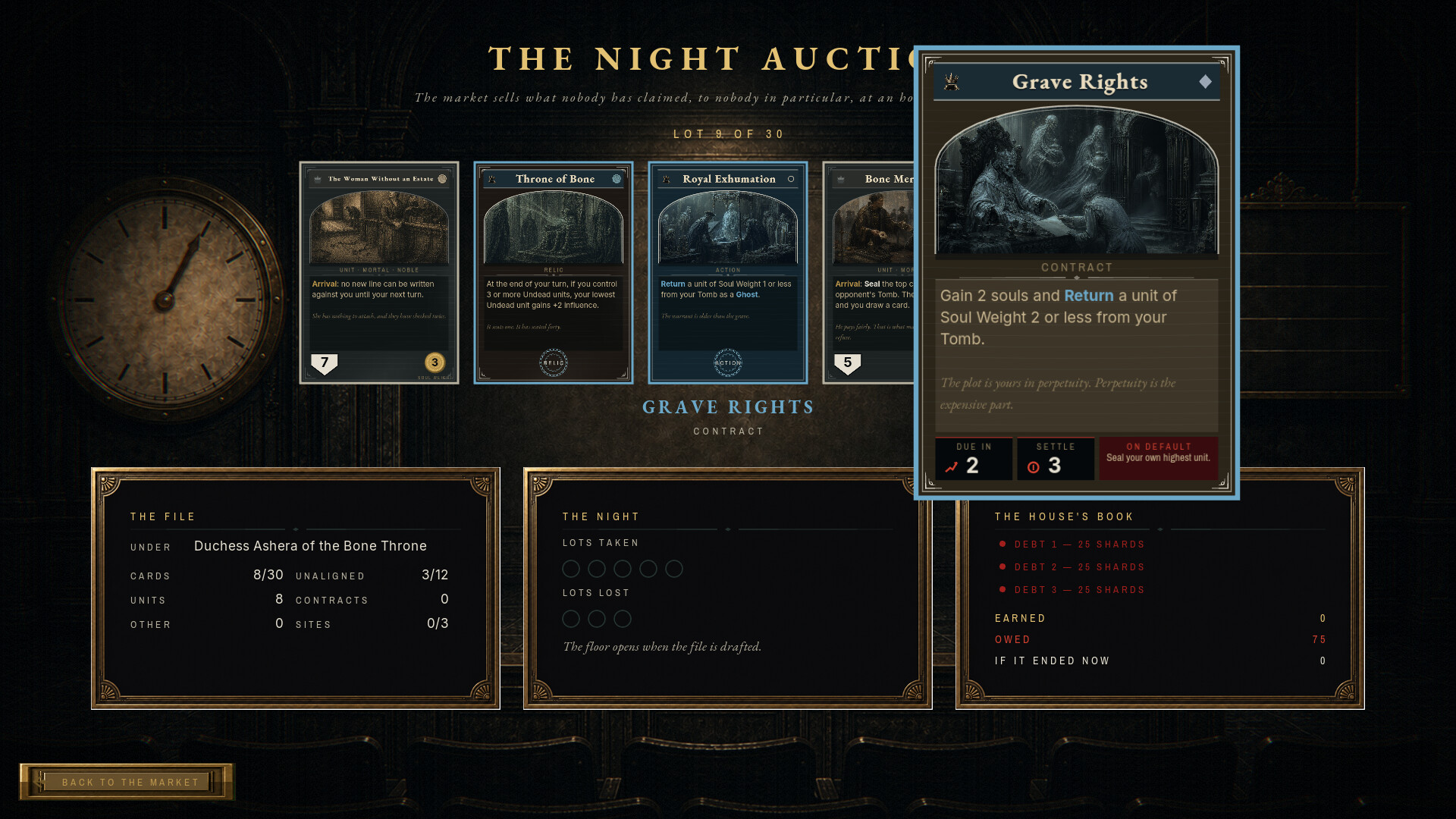
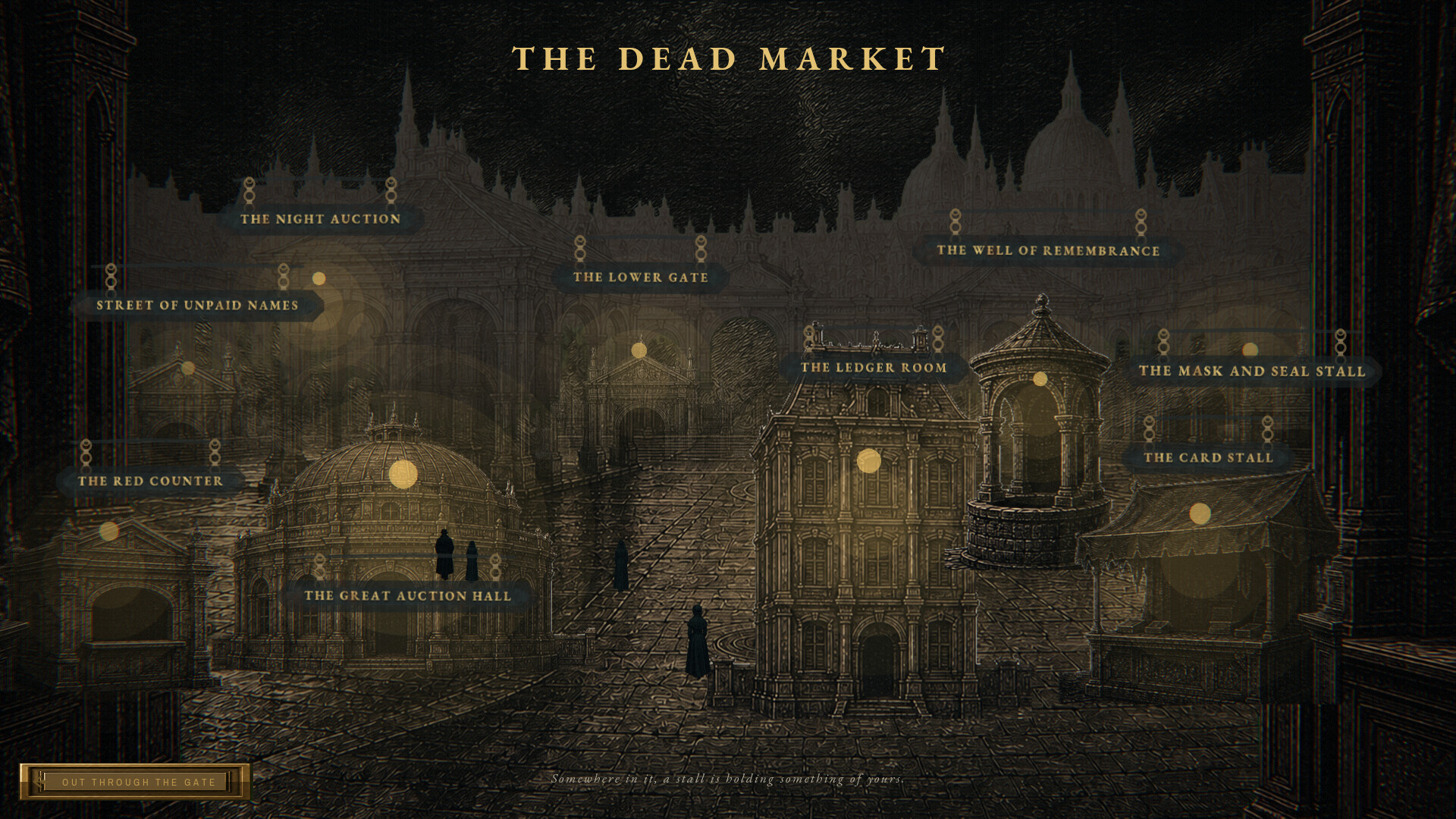
The Night Auction — a draft run. Lots come up, you take one card fromeach, and then you play the night out with a file the market lent you. Thehouse keeps a book on you while you do it.
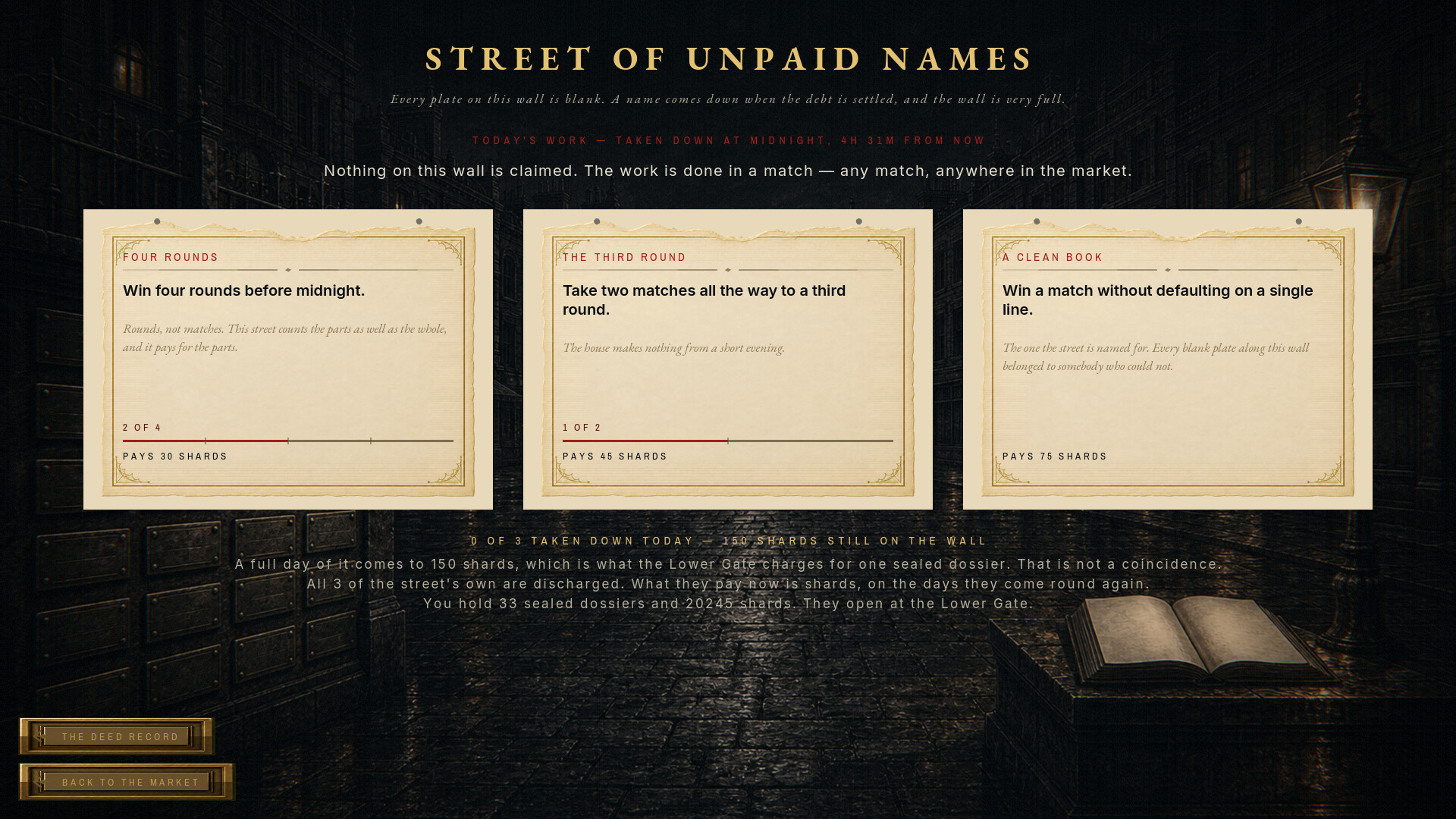
The Street of Unpaid Names — three standing contracts that neverexpire, and three more re-papered every day. No stamina. No waiting. Nothinghere is on a clock you have to come back for.
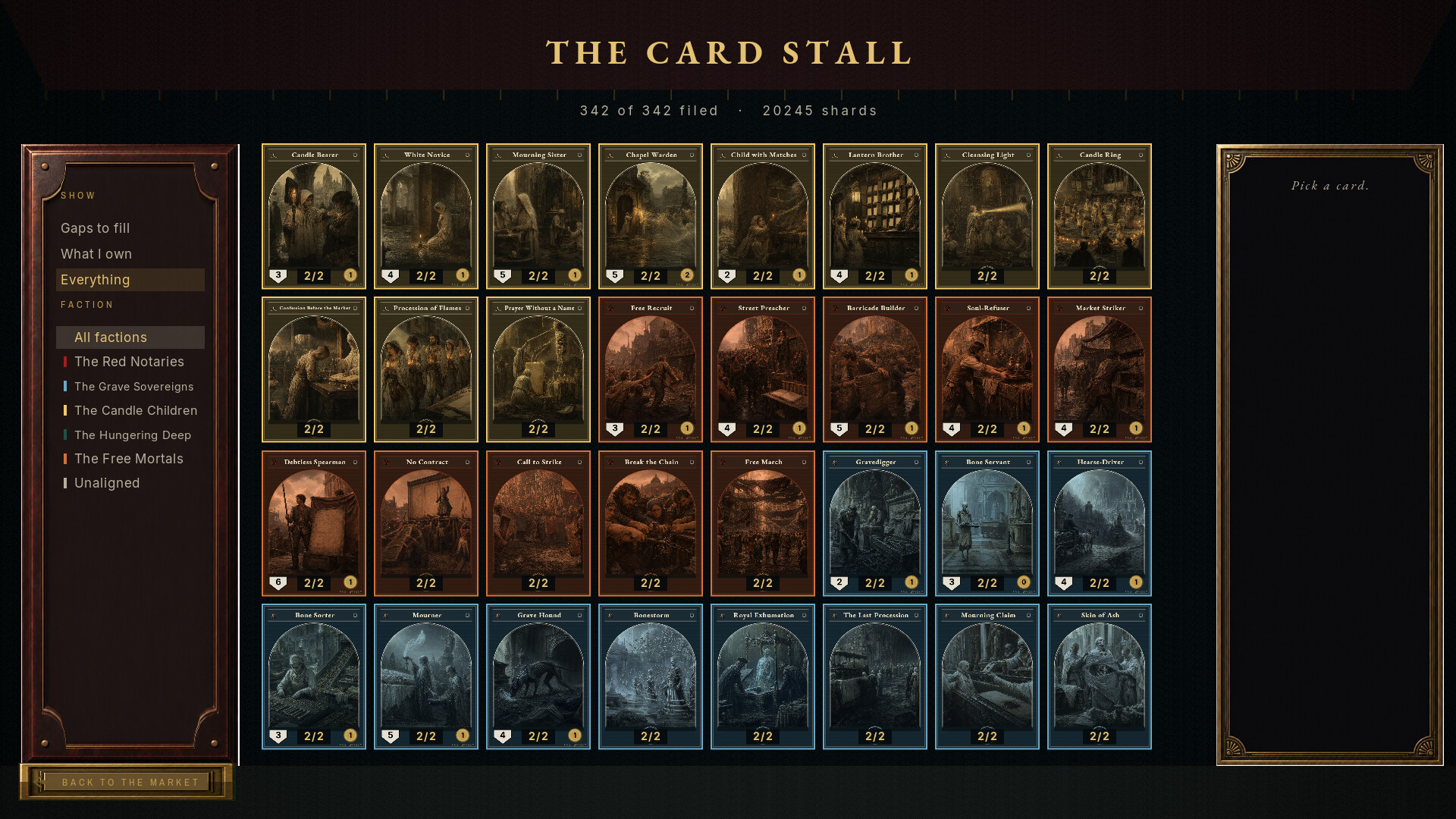
A ranked ladder of nine grades, and a card stall that opens on whatyou are missing rather than on what you have.
A first lesson that actually teaches: 53 steps over one scriptedmatch, dealt rather than shuffled, so every sentence it tells you is true twominutes later.
It explains itself
A player's guide of 26 sections that is generated against the rules themselves, so it cannot drift from them. A round end that reads itself out — every effect that fired, one at a time, ringed where it happened. And a line under the board
at all times answering "why did that just happen?".
Accessibility
Colour-vision profiles, high contrast, UI scaling, large card text, reduced motion, screen-shake and flashing toggles, subtitles, sound-effect captions, mono audio, a high-frequency reduction and a night mode. Seven separate volume
buses. Everything that carries meaning carries it in more than one channel.
No account, no network, no telemetry
It is a single-player game. It collects nothing and sends nothing anywhere.
Available Tables (0)
View available tables...Events Timeline
View full events timeline...Initial Release