CENTAVO
CENTAVO

About the Game
Every cent is always in someone's pocket
The city starts empty, and the amount of money in the world is fixed: nobody prints it, nobody erases it. The wage a resident takes home came out of the market's till, which came out of a customer's pocket, which came out of another wage. Every payment has a side that pays and a side that gets paid, and you can open both.You don't build. You zone and you govern.
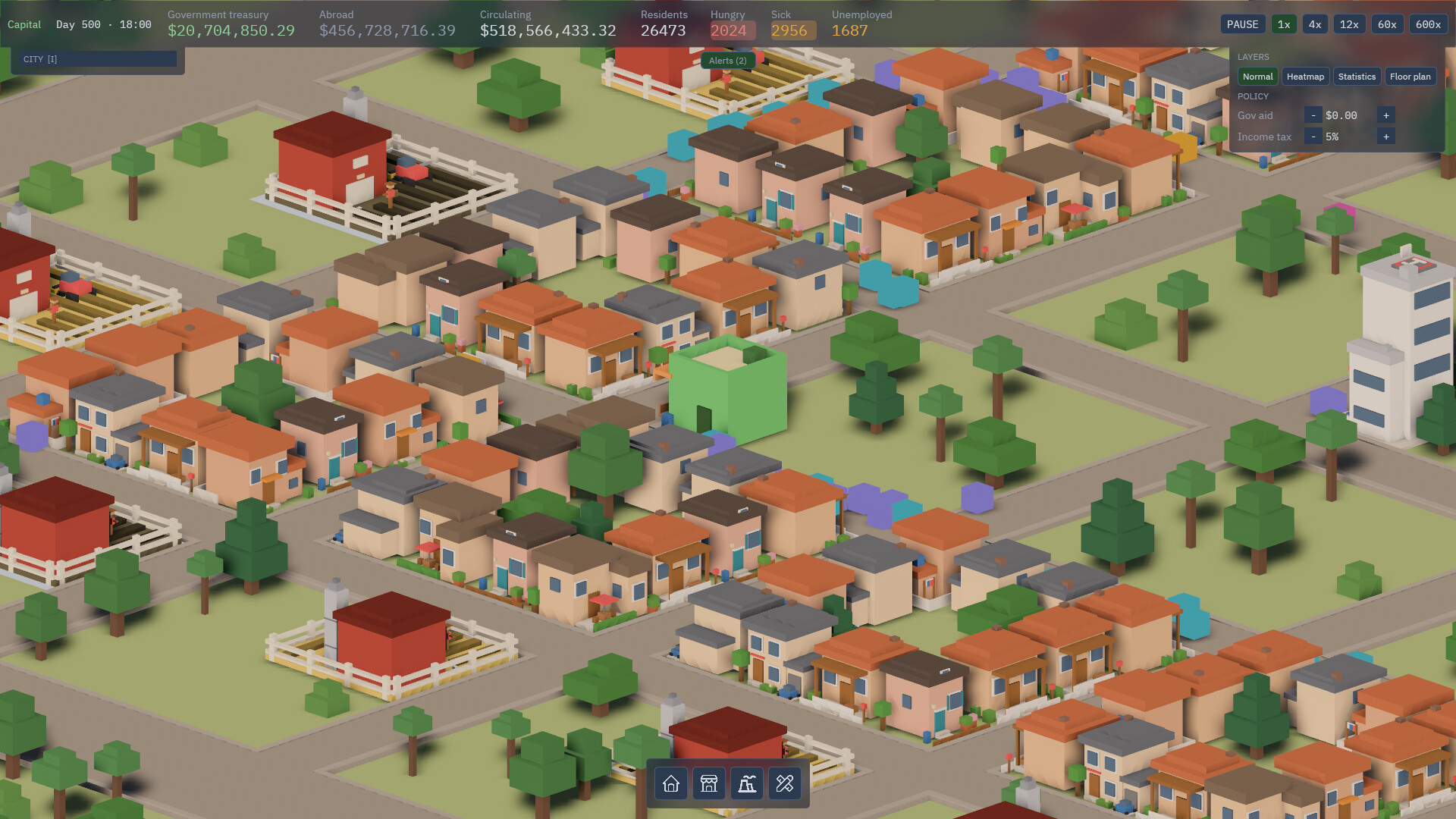
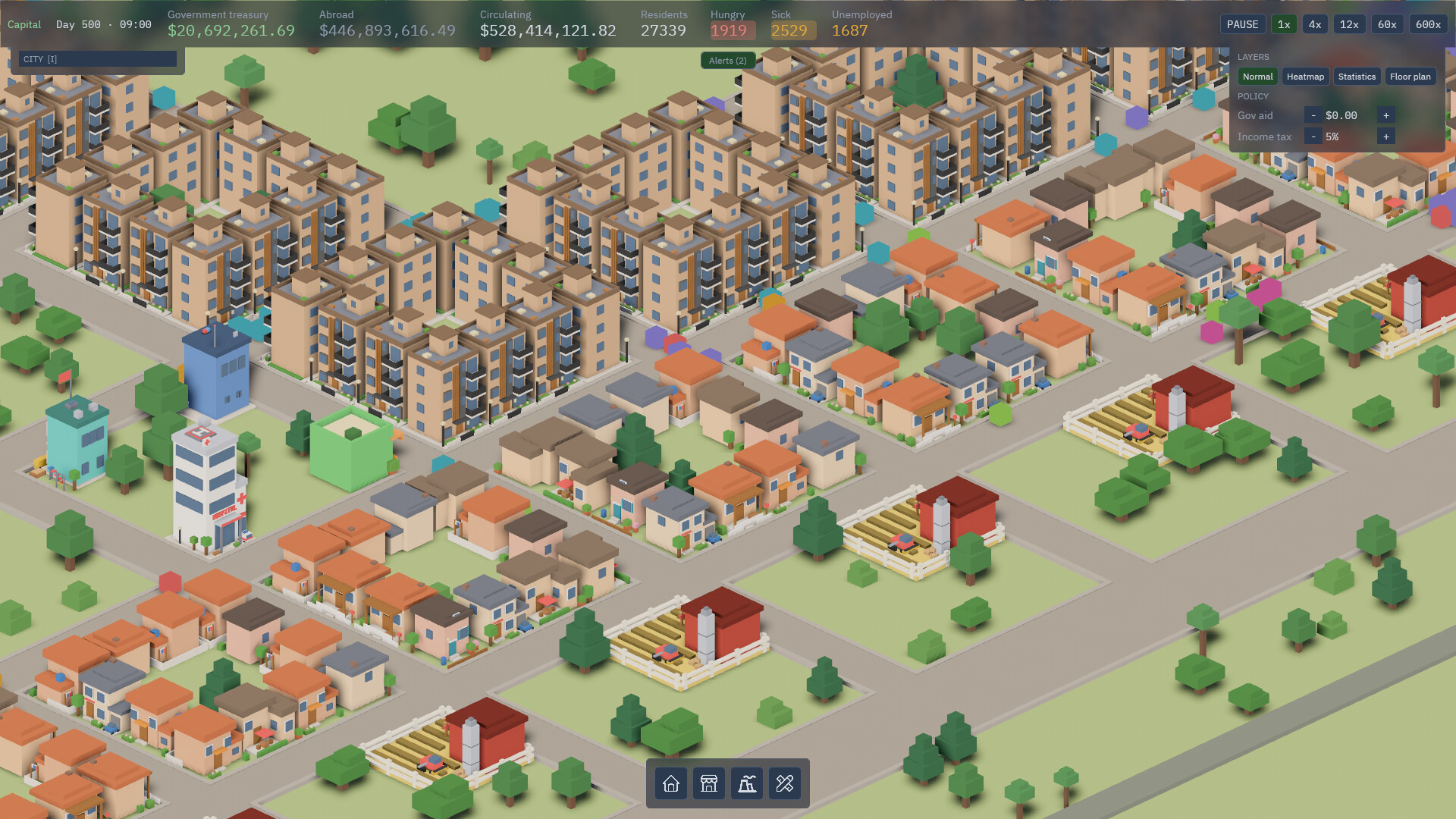
- Lay the streets and zone the lots as Housing, Commerce and Services or Production. The one who buys the lot, pays for the construction and opens the doors is a resident with money and an idea. If the business can't make the numbers work, it closes; you demolish and zone again.
- Building consumes real materials. Without a hardware store in town, the construction site imports from outside and pays more for it.
- Two levers of government: income tax and government aid. The public coffers live on taxes and lot sales, and they can run dry.
- Expropriate buys a resident's house above market price and rehouses the family before the demolition. If there is nowhere for them to go, the family refuses.
People who actually walk
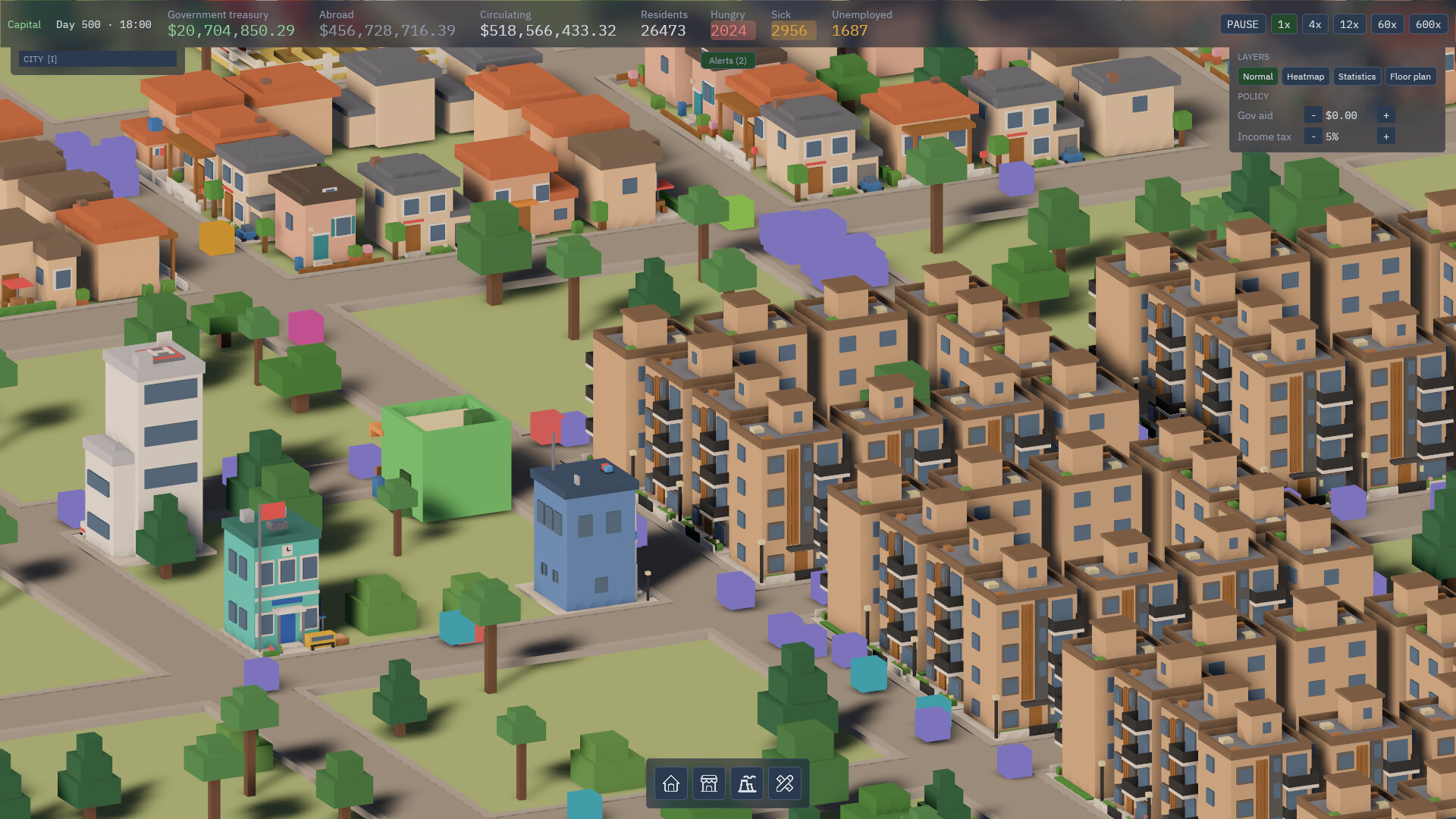
Every resident walks to work, to the market and back home. Nobody teleports, and distance costs time. They get hungry, fall ill and pay the hospital, marry, support their children, grow old and die. A dead resident's house passes to the spouse or a child; a dead owner's business passes to someone who worked there. Those who find neither work nor food leave, and take their money with them. Those who arrive from outside come because there was a job that paid and an empty roof.Prices nobody programmed
The market buys from the farm and sells to residents, and the price reacts to the shelf and to the queue: an empty shelf gets pricier, idle stock gets cheaper. A town with a single market has queues, and queues turn into hunger. No price is set by decree: the Prices tab shows the history of each one.Open the city like a ledger
- Click any resident or building: Wallet, Vitals, Work, Housing, Family and the complete statement, entry by entry. The counterparty of every line is a link: jump to whoever paid or whoever got paid, and follow the chain.
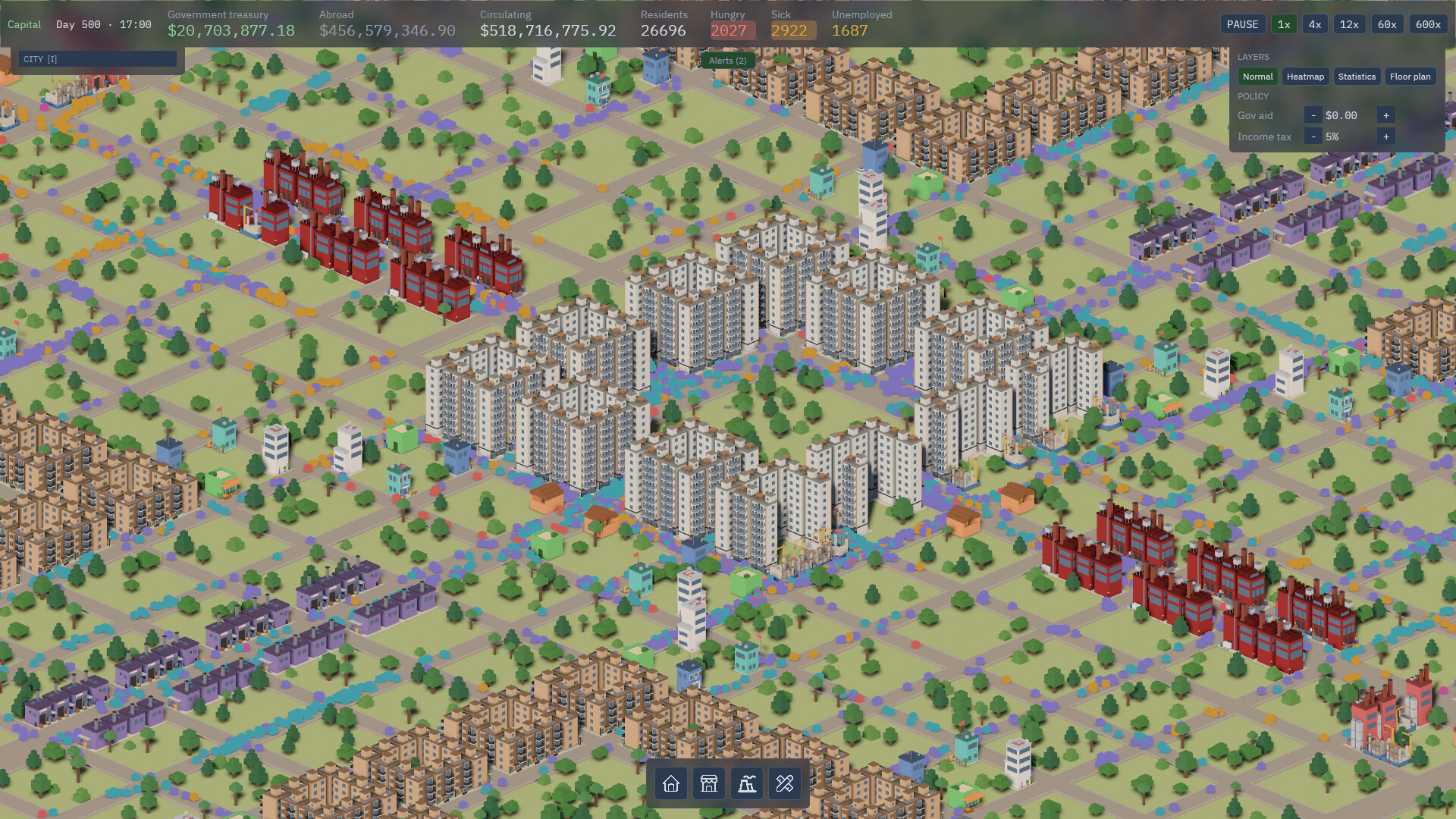
- Heat maps: Well-being, Income, Land value and Money flow, which lights the map exactly where money is leaving.
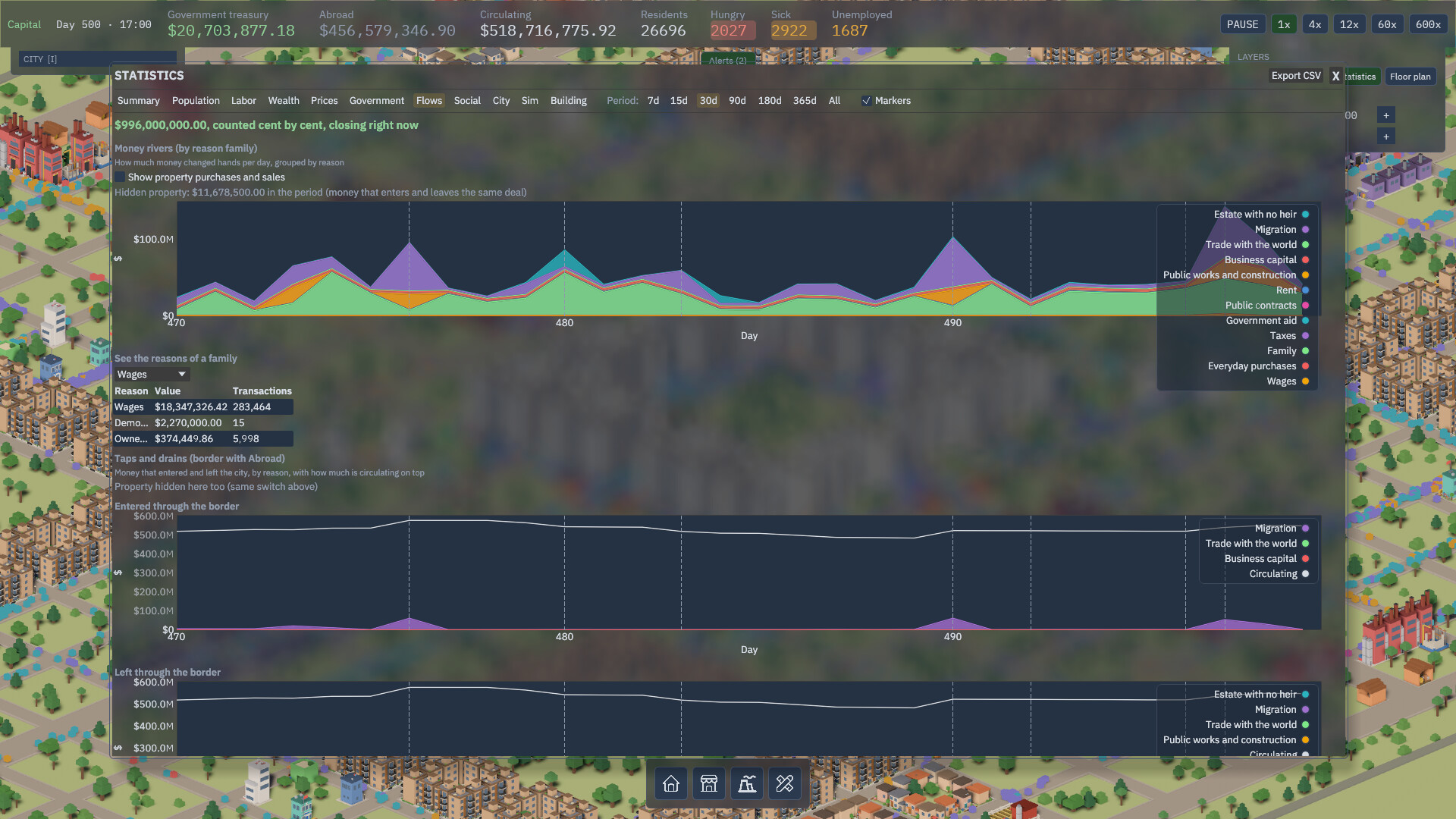
- Statistics for the whole city: Population, Labor, Wealth, Prices, Government, Flows and Social, with series going back to day one.
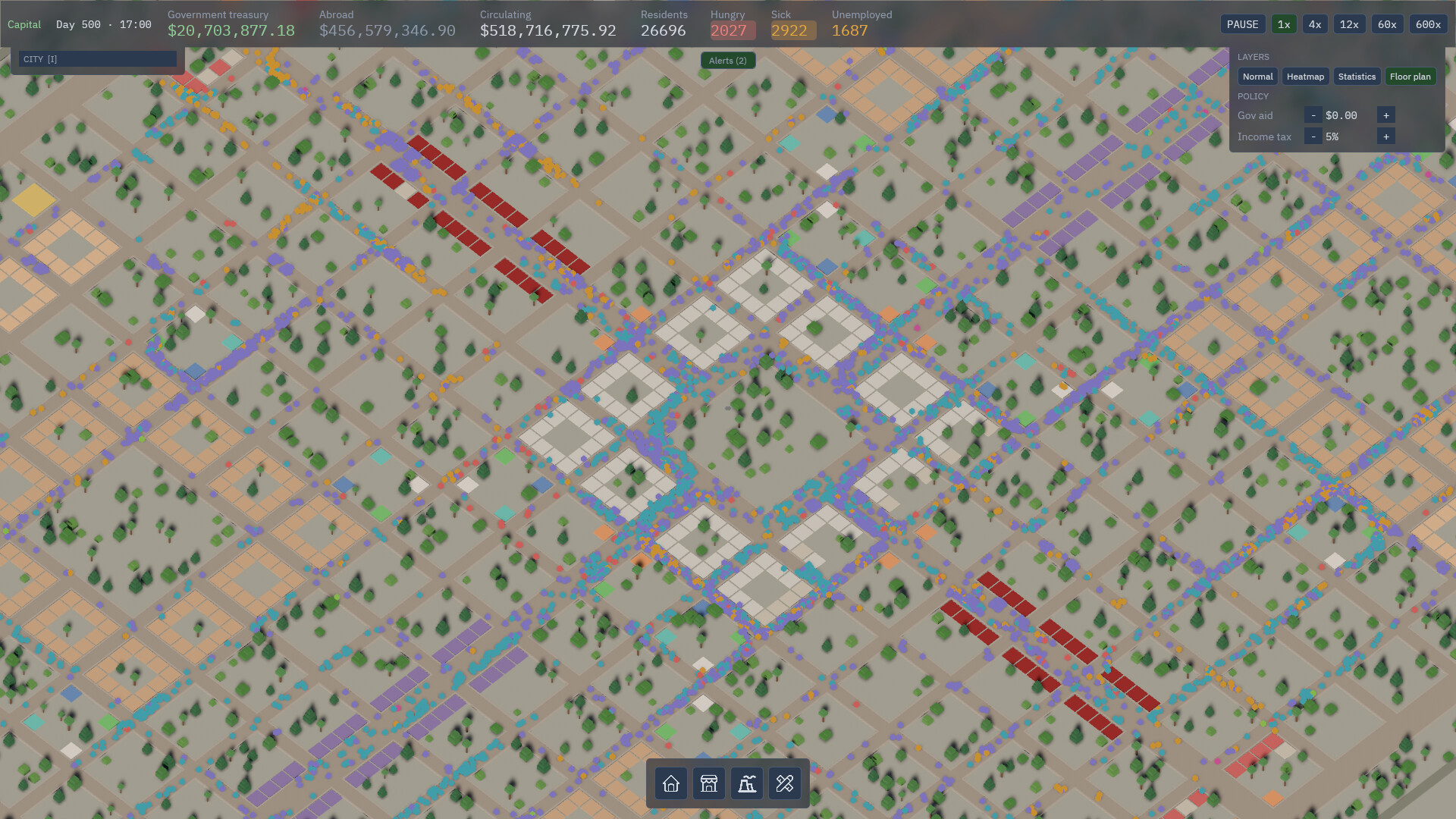
- Floor plan layer: the city seen from above, like a blueprint, to read the streets behind the buildings.
From Camp to Metropolis
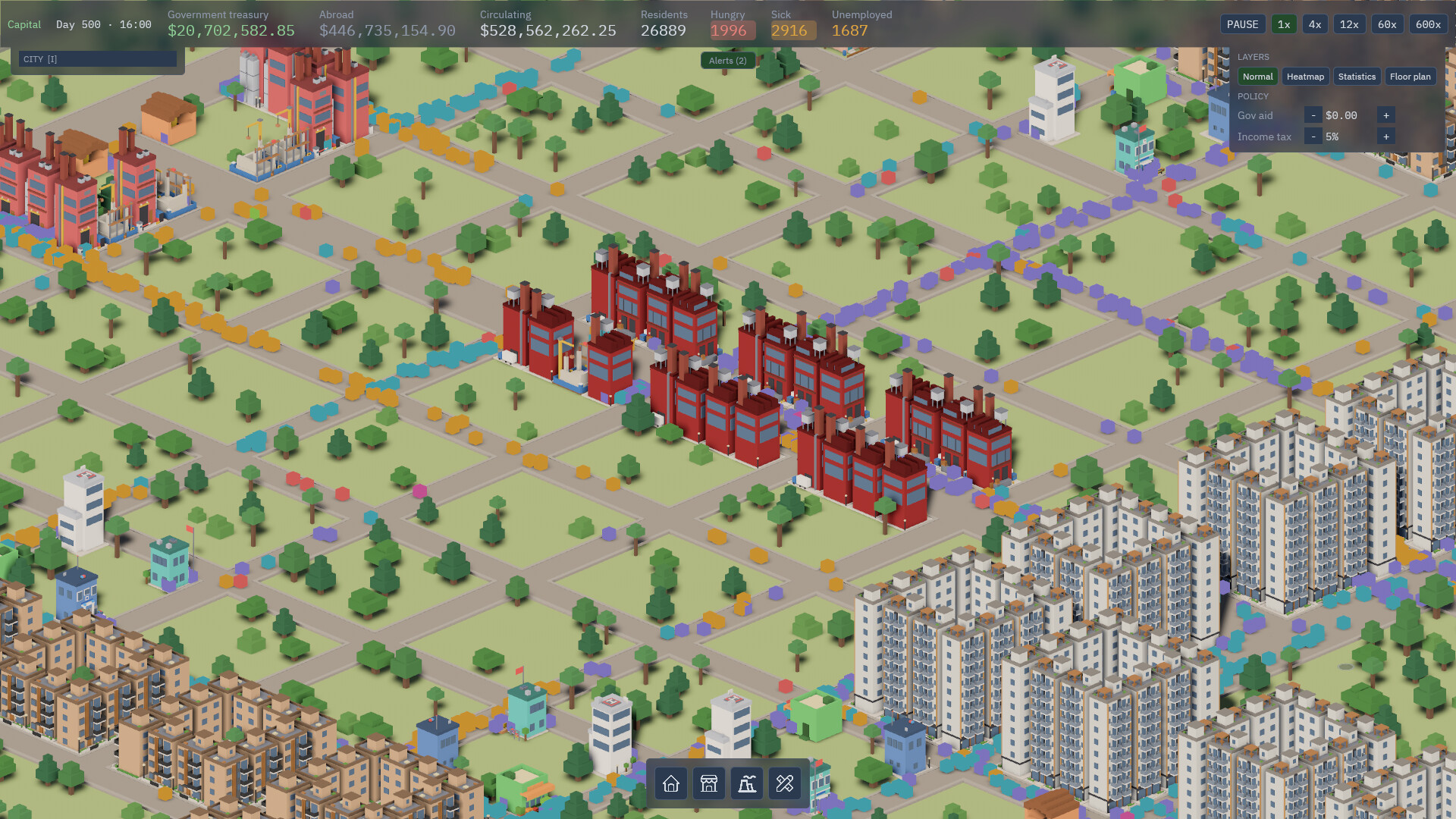
The city climbs seven steps: Camp, Hamlet, Village, Town, City, Capital and Metropolis. Each step unlocks new kinds of construction to zone and shows the next goal in residents, buildings and money in the city. Note the wording: the goal is how much of the world's money lives in your city, not how much sits in the government's coffers. Full coffers and poor residents don't level up.And the city can end: by exodus, by starvation, or by coffers that ran dry and never recovered. When it ends, you can restart the same city, with the same seed, and try something else.
Made by one person
CENTAVO is made by a single developer. Everything described on this page is already in the game; what is still going to change is in the Early Access section.Available Tables (0)
View available tables...Events Timeline
View full events timeline...Initial Release