CAPITALIUM
About the Game
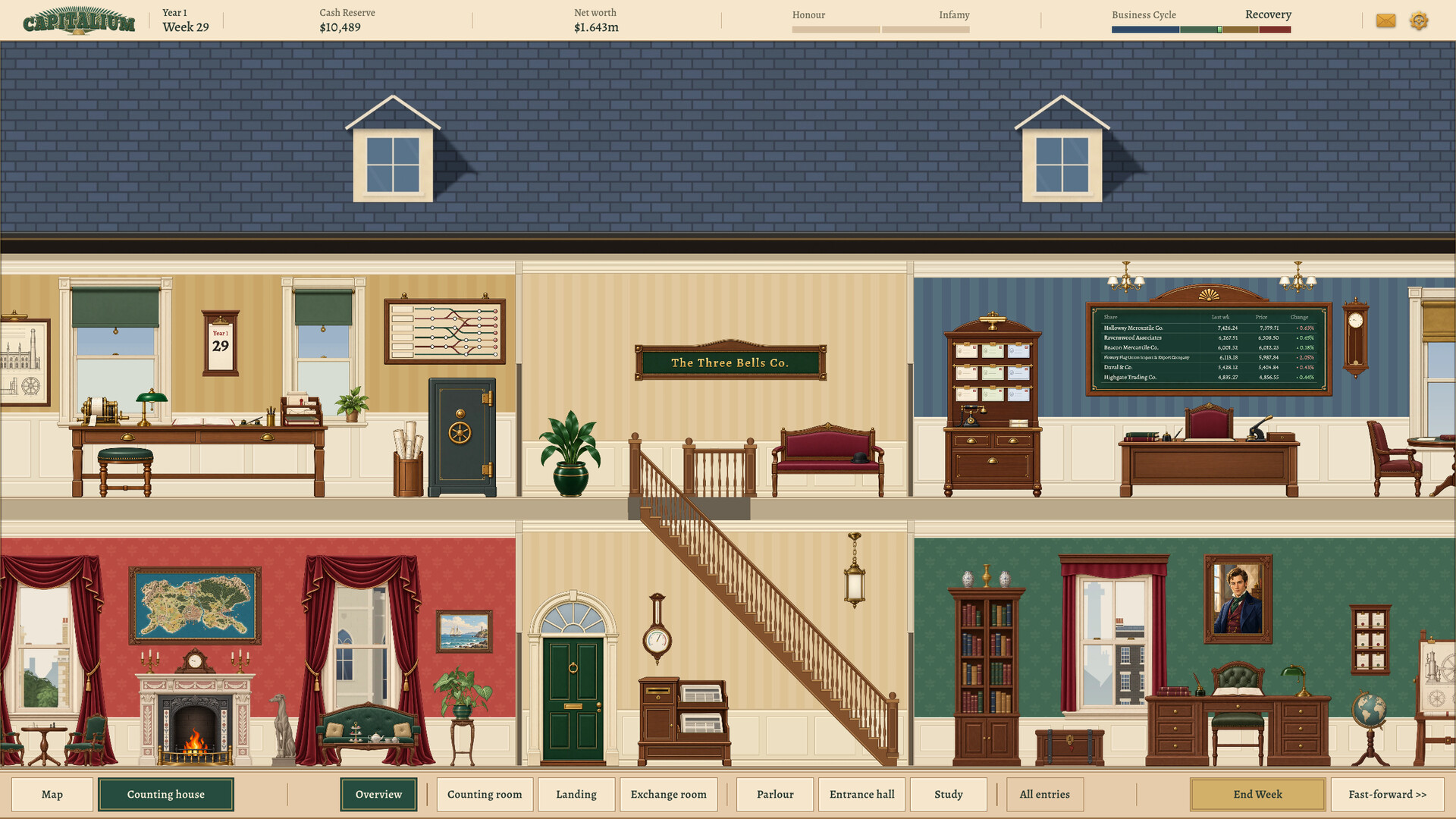
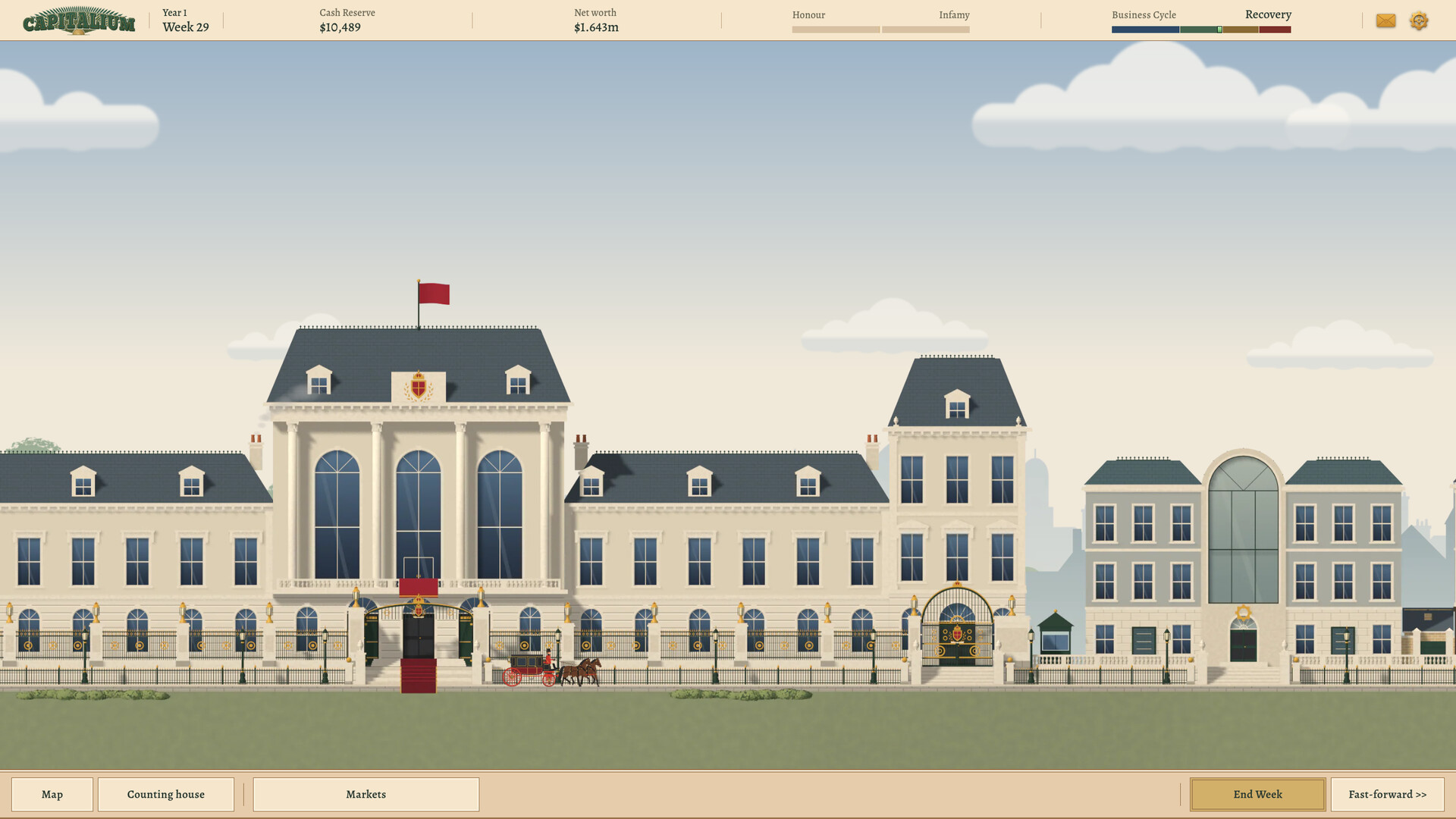
CAPITALIUM is set in a kingdom in the middle of the Industrial Revolution. You start out with a small company registered at the Commerce Hall. Each turn is one week: set prices, sign contracts, raise funds and build factories, then use the money you have made and the connections you have built up to sway Parliament. Nothing in the market is scripted; supply and demand, the economic cycle and government policy drive it all.
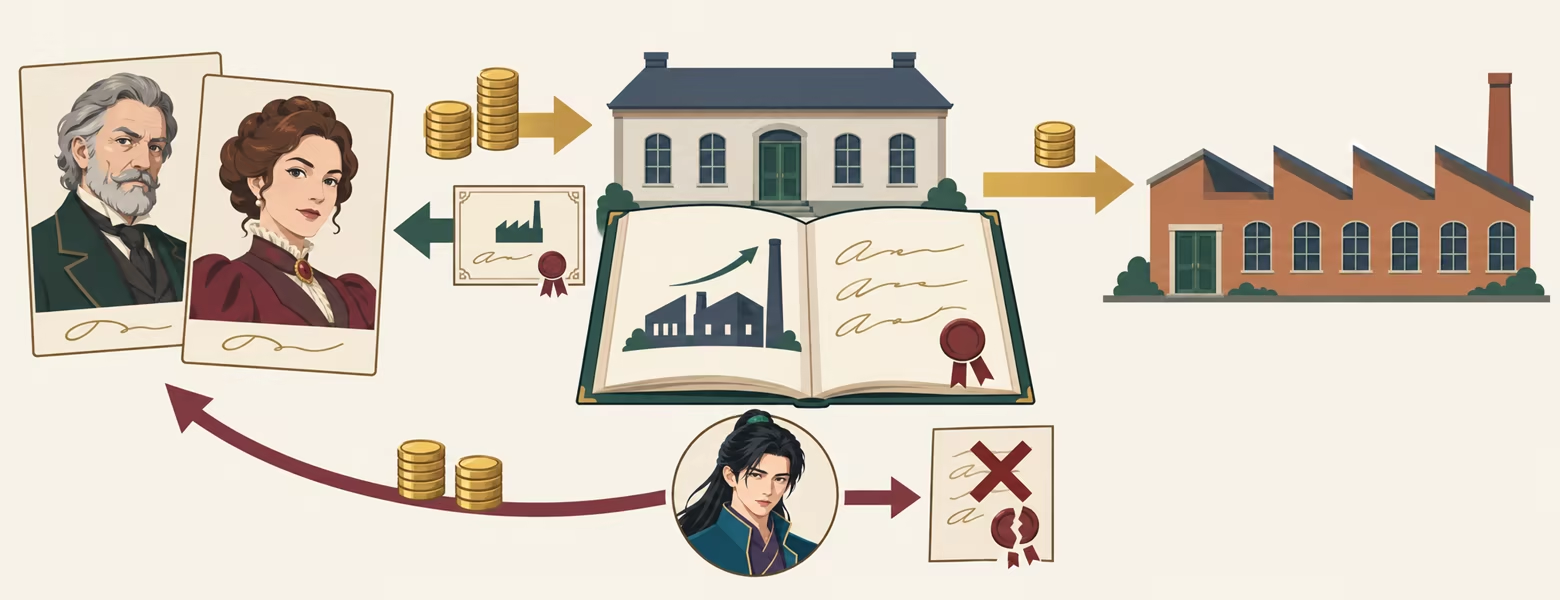
Punch Above Your Weight
If your own capital runs short, use other people's. When you found your company, you write a prospectus and raise money from investors; miss the results you promised, and the forfeit clauses make you pay. Each of the seven banks has its own appetite for lending. When cash is tight, you can issue Commercial Paper and borrow from merchants and firms with money to spare – set the interest rate too low and no one will take it up.
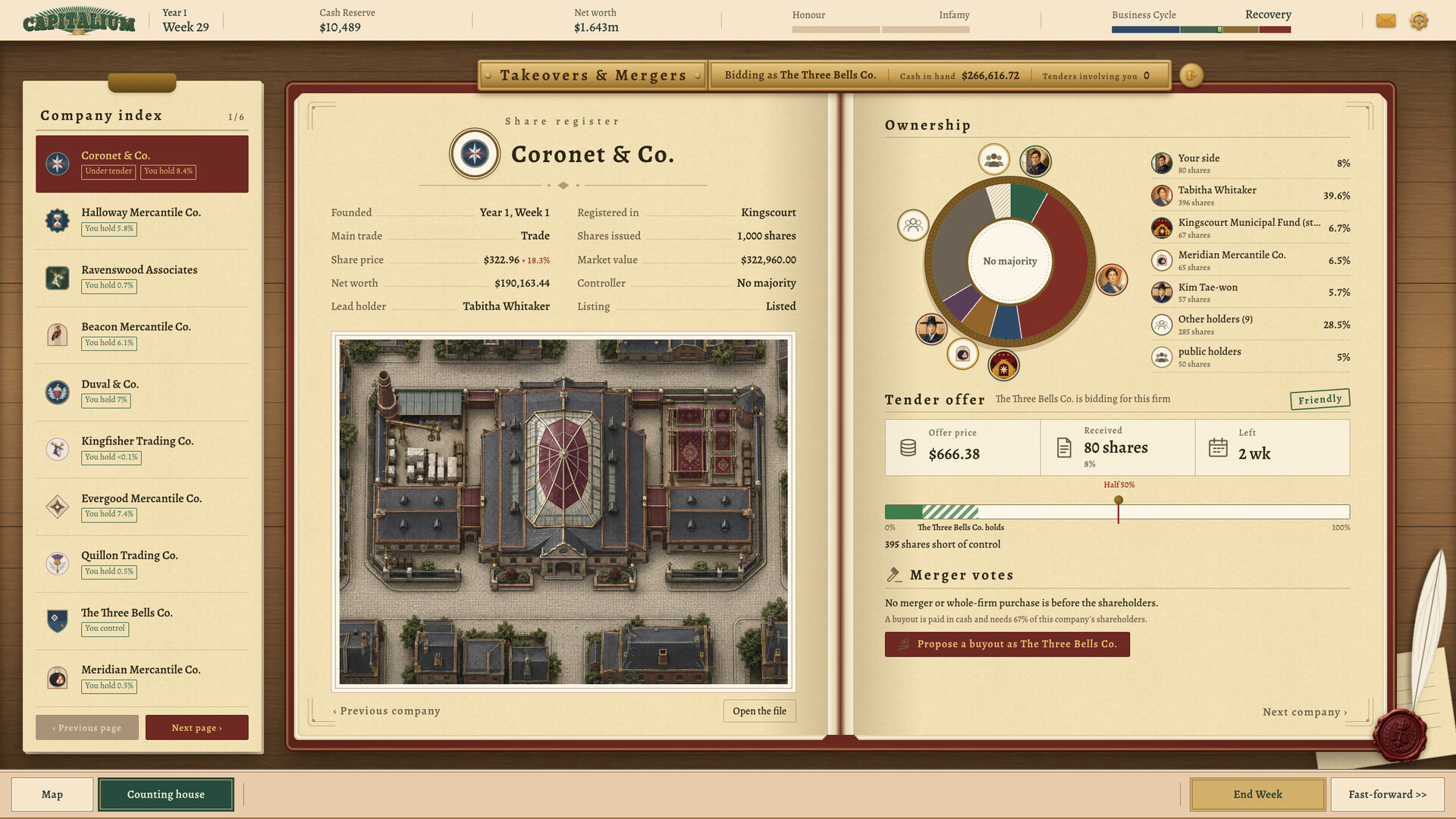
Money goes into factories, profits go into the next deal, and the whole thing snowballs. When your share price rises, a new share issue brings in another round of funding. If another company catches your eye, you can buy up its shares bit by bit, then launch a tender offer and take control. The more leverage you take on, the faster you expand; but once your cash flow seizes up, the shares you have let go become the stake someone else uses to take you over.
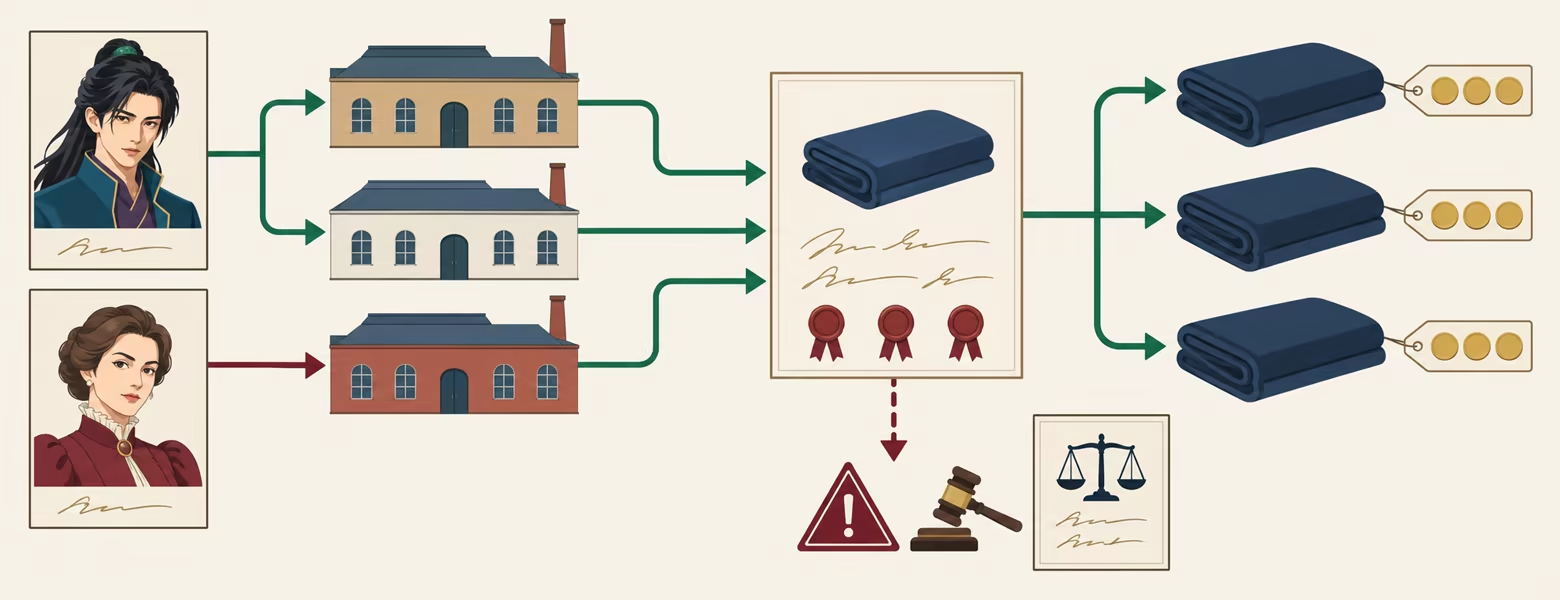
Monopolise an Industry
The fewer sellers a good has, the more room there is to set its price. You can sign a trade accord on prices with other sellers at the Commerce Hall, lock up upstream supplies before anyone else, or simply buy out your competitors and hold an entire supply chain in your own hands, from raw materials to the shop counter. Your rivals are doing the same. Grow too big, and you will also have to watch out for antitrust suits.
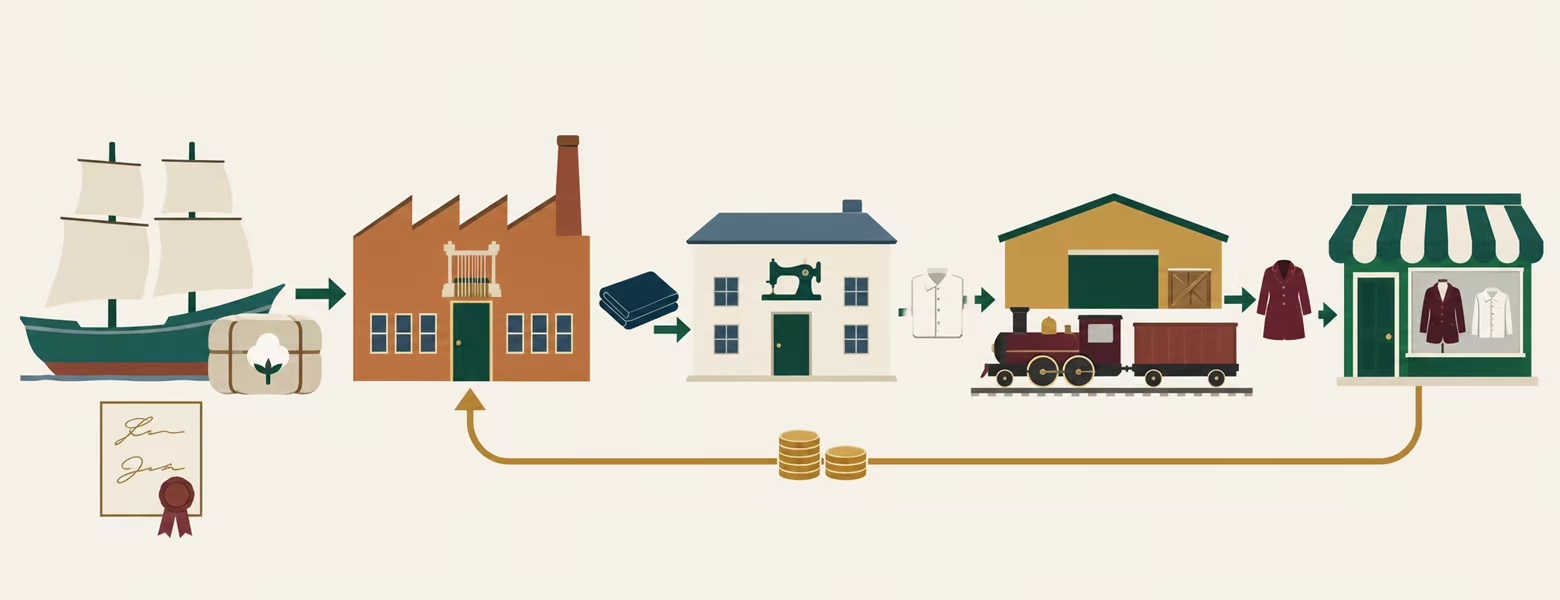
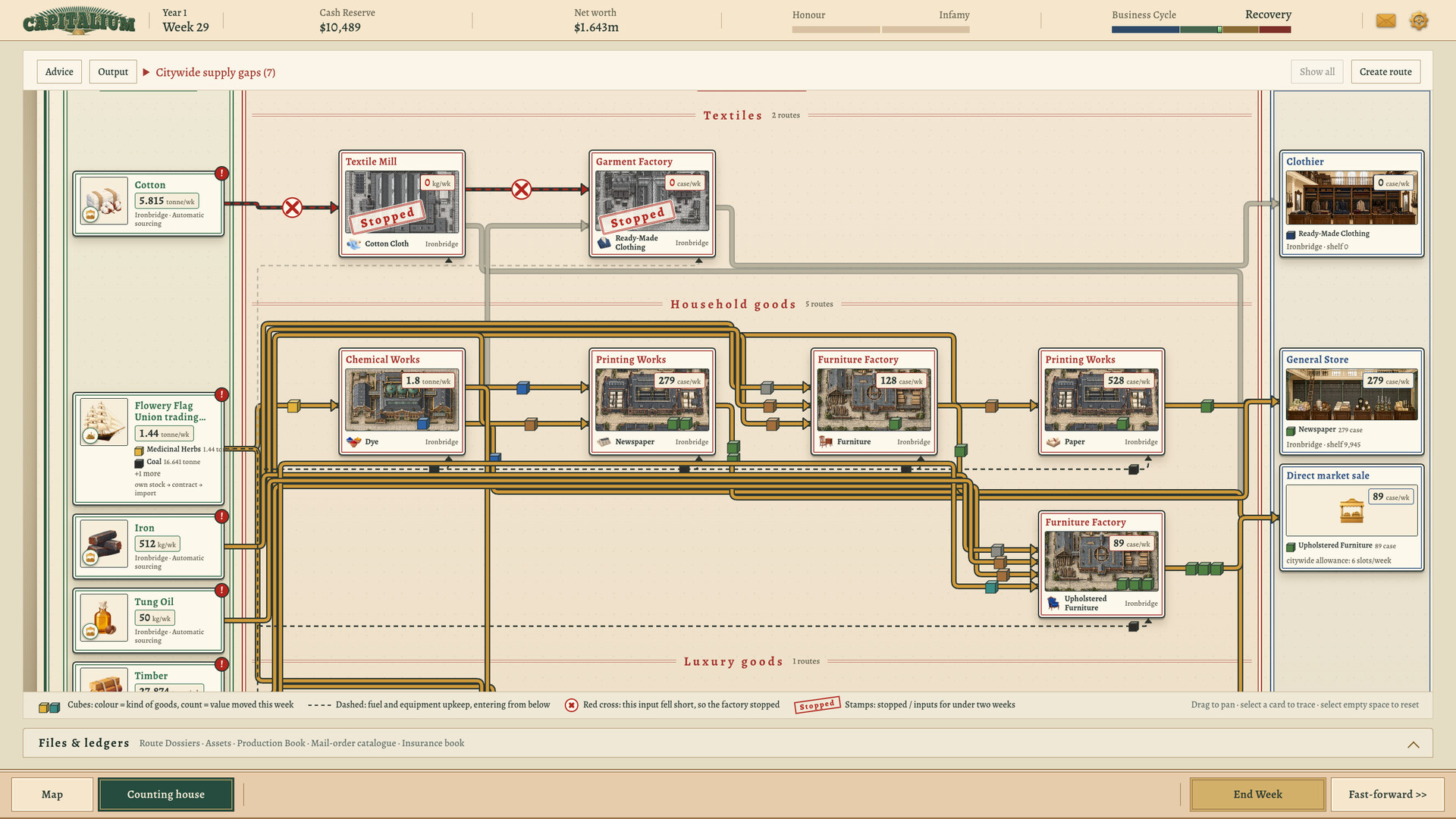
From Factory to Supply Chain
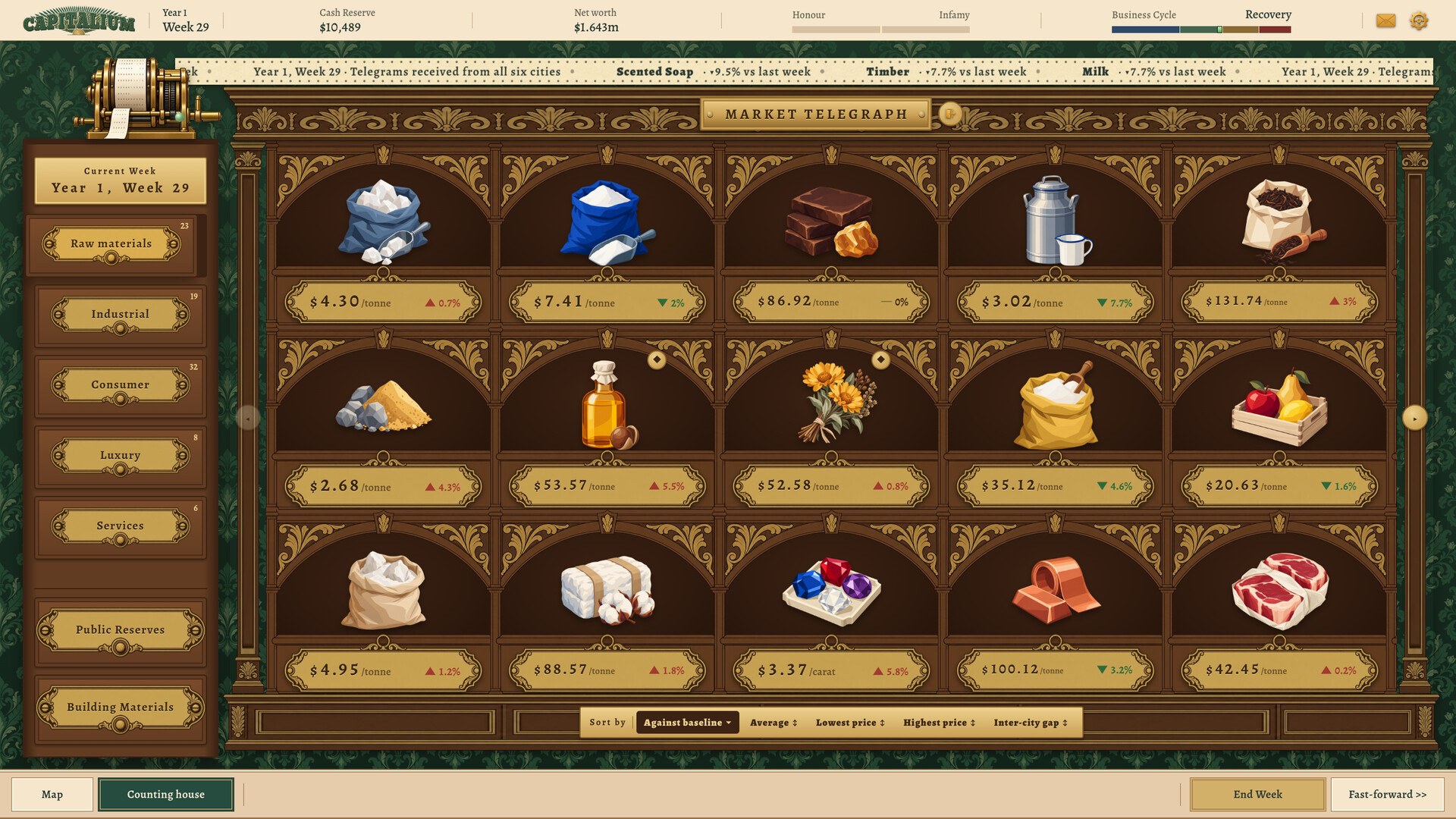
Nearly a hundred goods, and every city has its own population, demand and industrial base
Factory power from steam to electricity, and production from Handwork to the Assembly Line and on to Scientific Management
Sign supply contracts, arrange storage and transport, and run your own freight and passenger services on the railways
Move downstream into shops, housing and services
Expanded capacity, shifting demand and new competitors can all turn a good business into one that no longer pays.
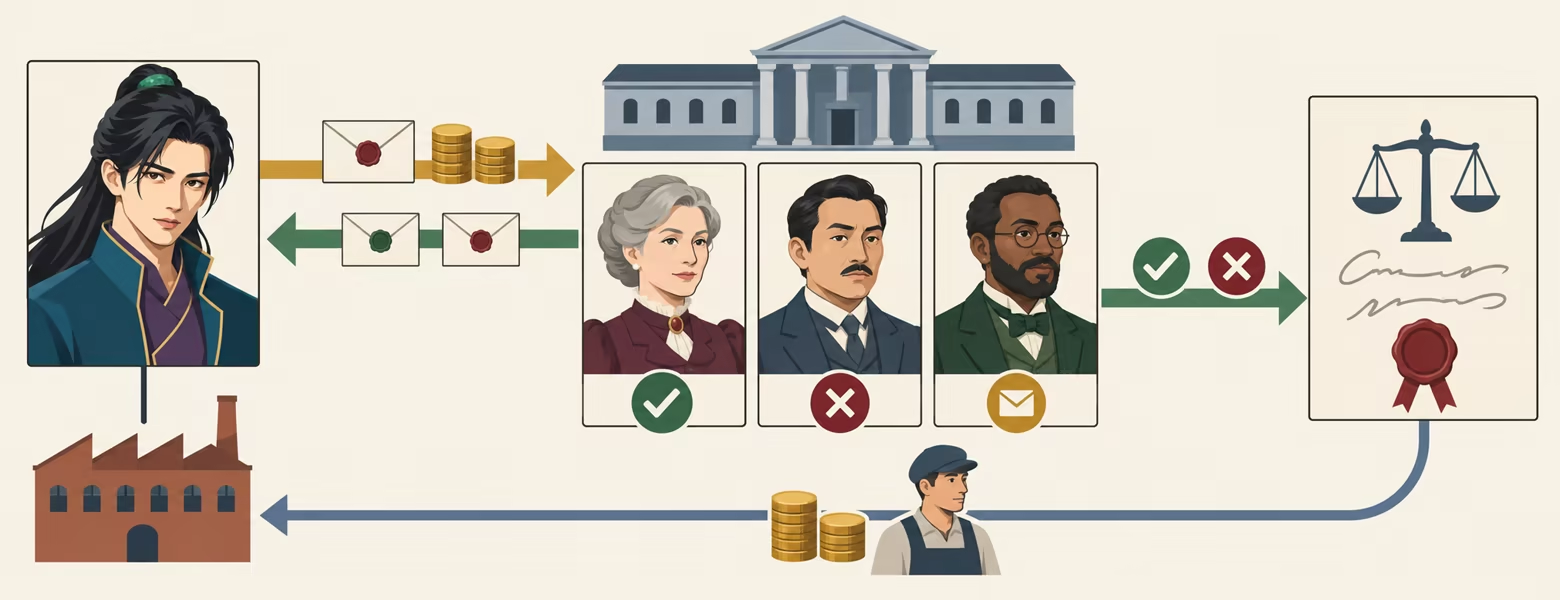
Parliament and Favours
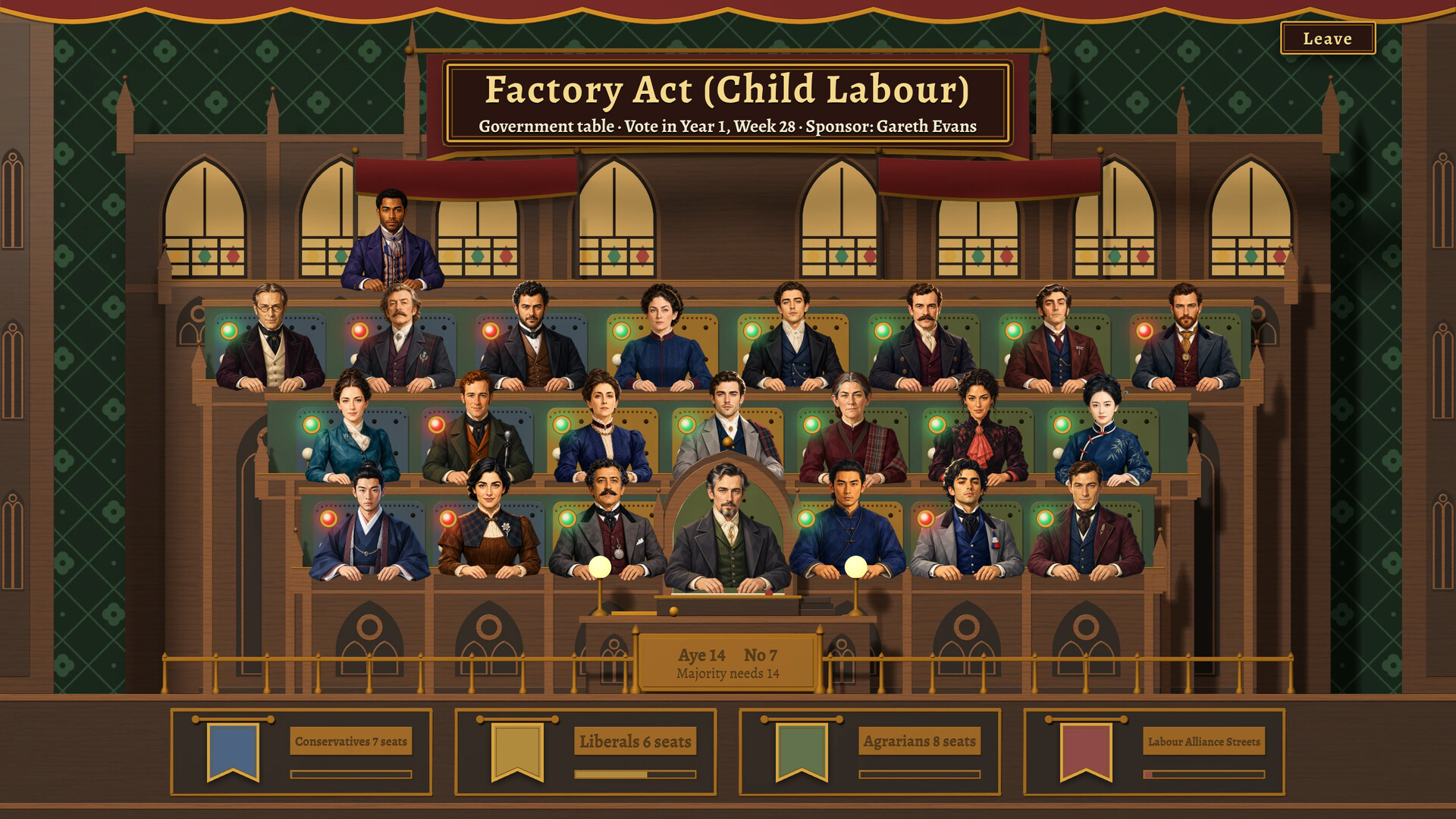
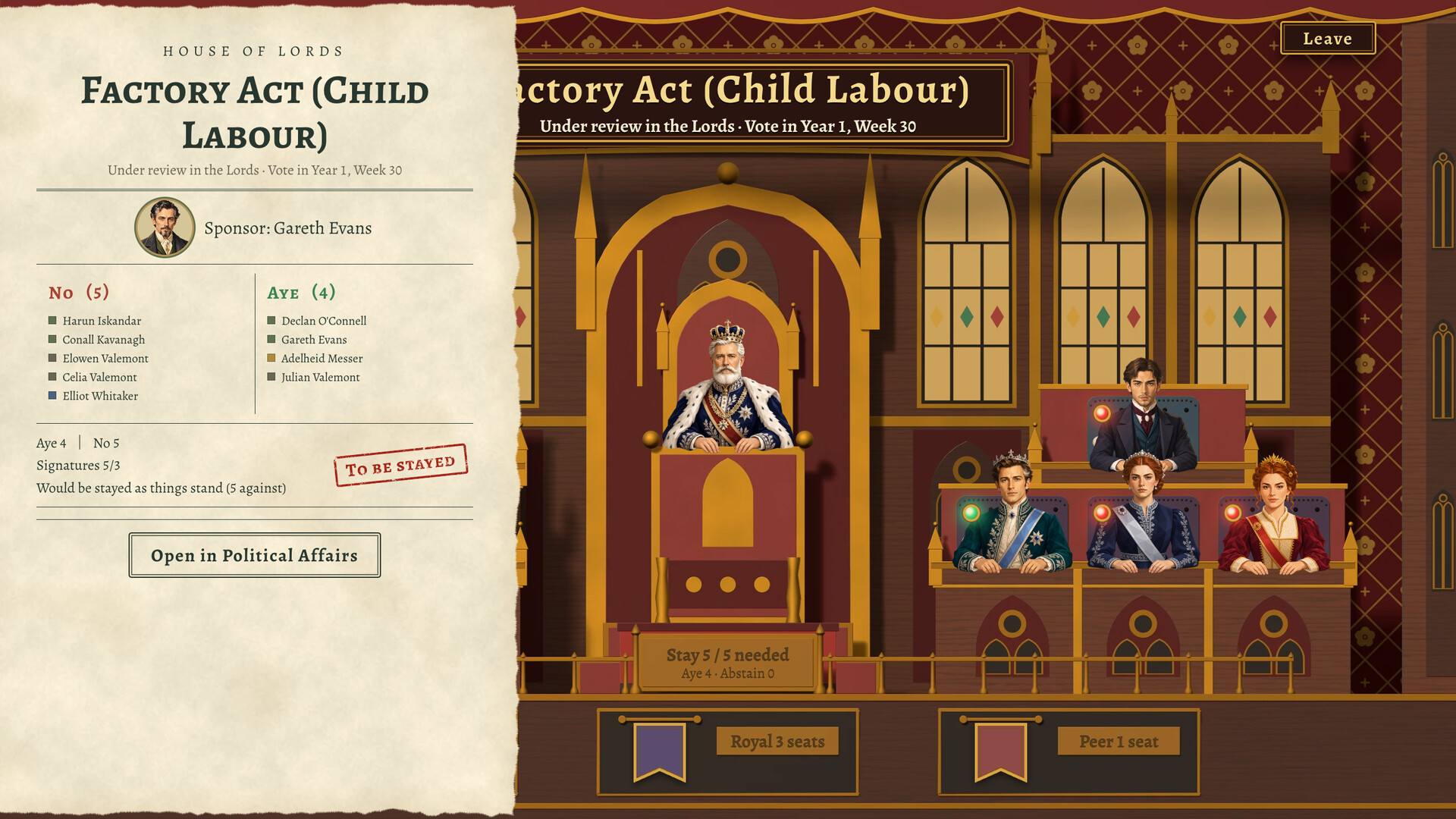
Tax rates, labour laws and public works all bear on your costs. You can fund candidates, declare your position before a bill is voted on, pay for lobbying and make promises to MPs, and you can also cultivate your relationship with the Crown. MPs have businesses and shares of their own, and when they vote they often side with their own interests.
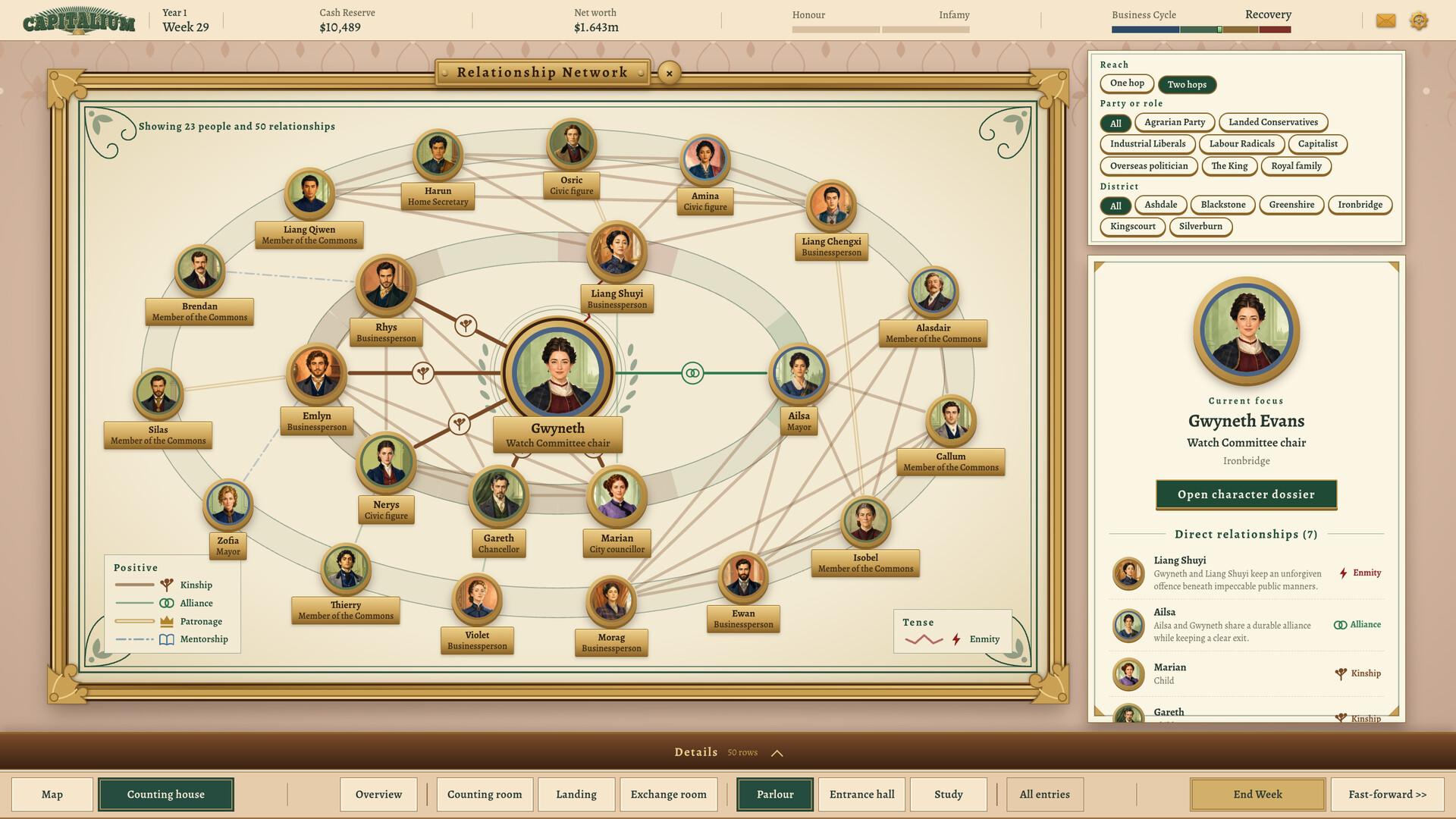
The game has 125 named characters: merchants, MPs, workers' representatives, bankers and members of the royal family. When you put terms to them, they accept, refuse or haggle. They remember who has helped you and whom you have let down.
Eras and Endings
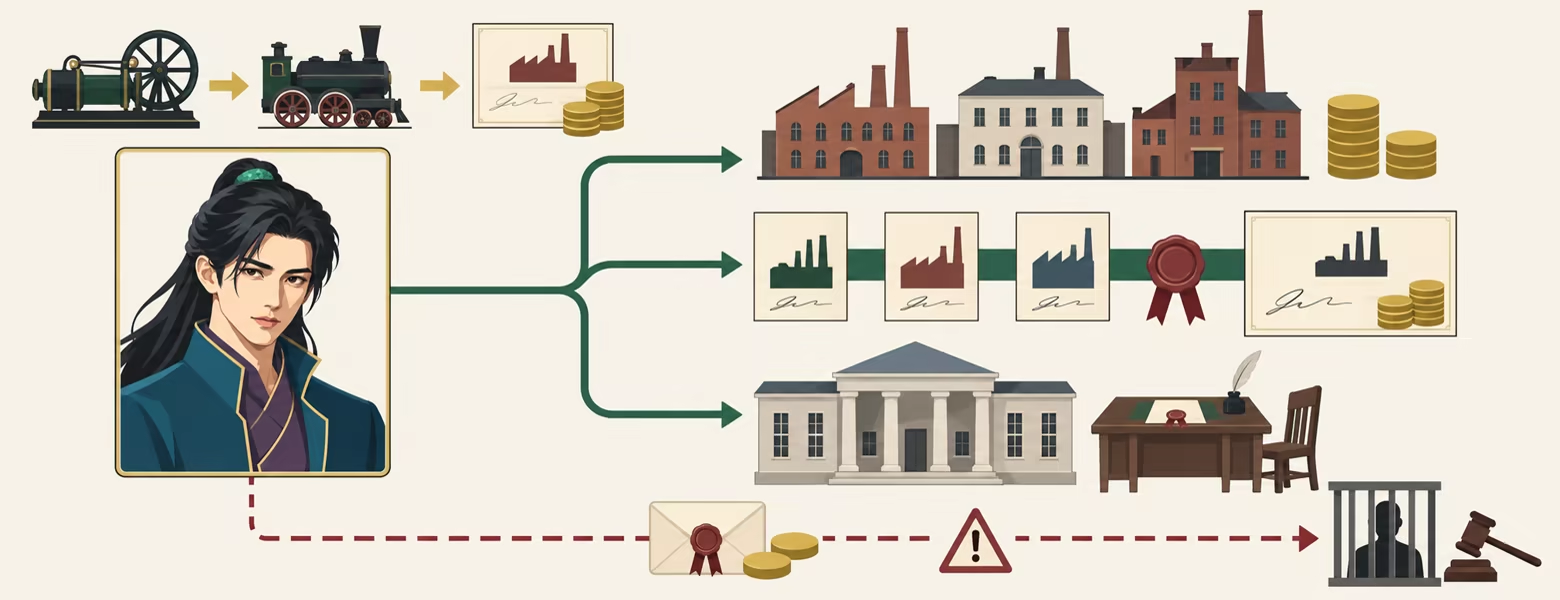
The game begins in the Age of Steam, passes through Railway Mania and enters the Age of Finance. You can concentrate on building up real businesses, monopolise an industry, or put your energy into Parliament and the Cabinet. Different paths lead to different endings.
Cutting wages, employing children, evading regulations and paying bribes in private all make money faster, but they hand others something to hold over you, build up your Infamy and bring strikes and inspections, and in serious cases a prison sentence.
Available Tables (0)
View available tables...Events Timeline
View full events timeline...Initial Release