BABEL: Invent a Way

About the Game
BABEL: Invent a Way is a two-player adventure game about creating a language from scratch.
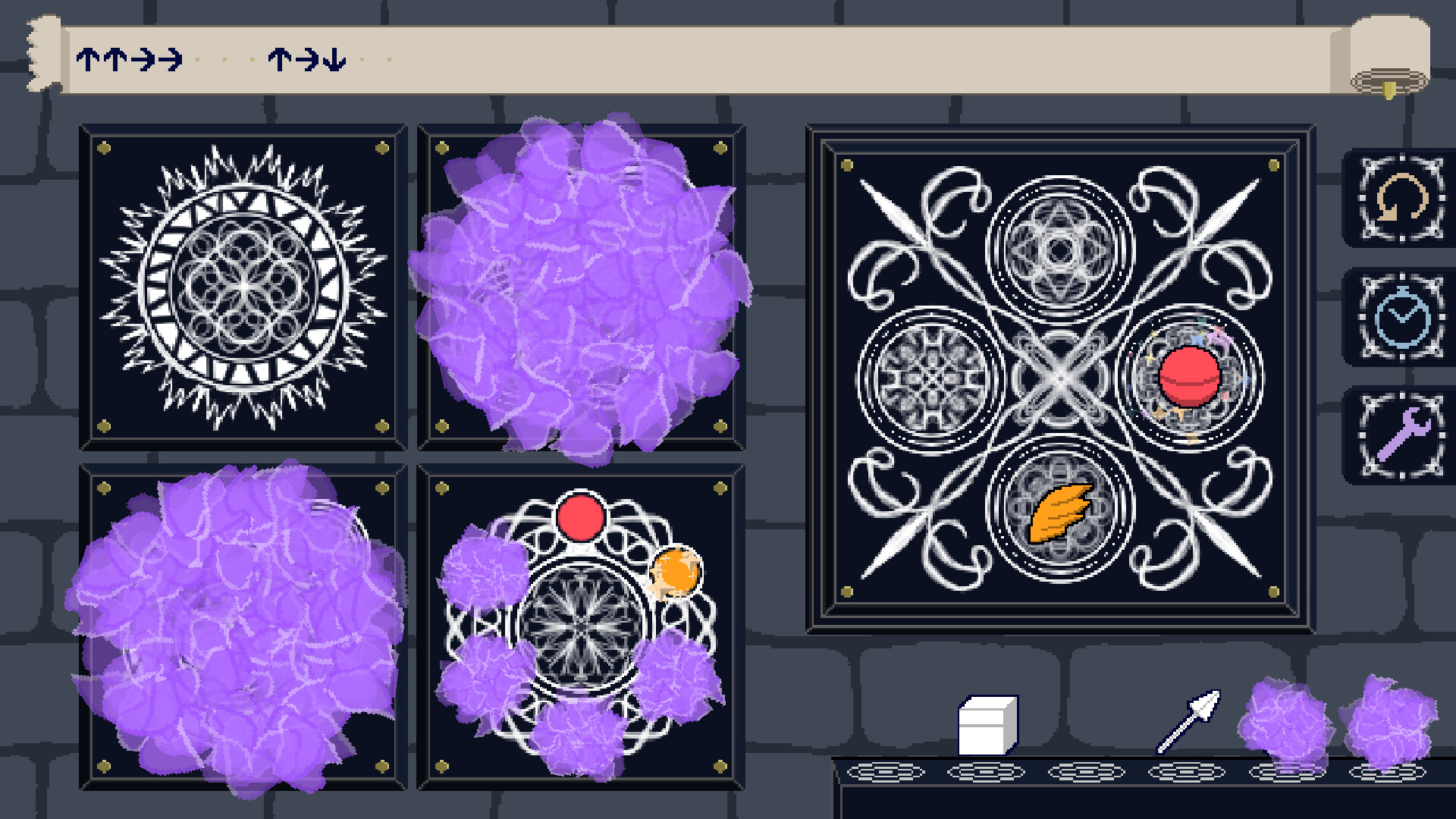
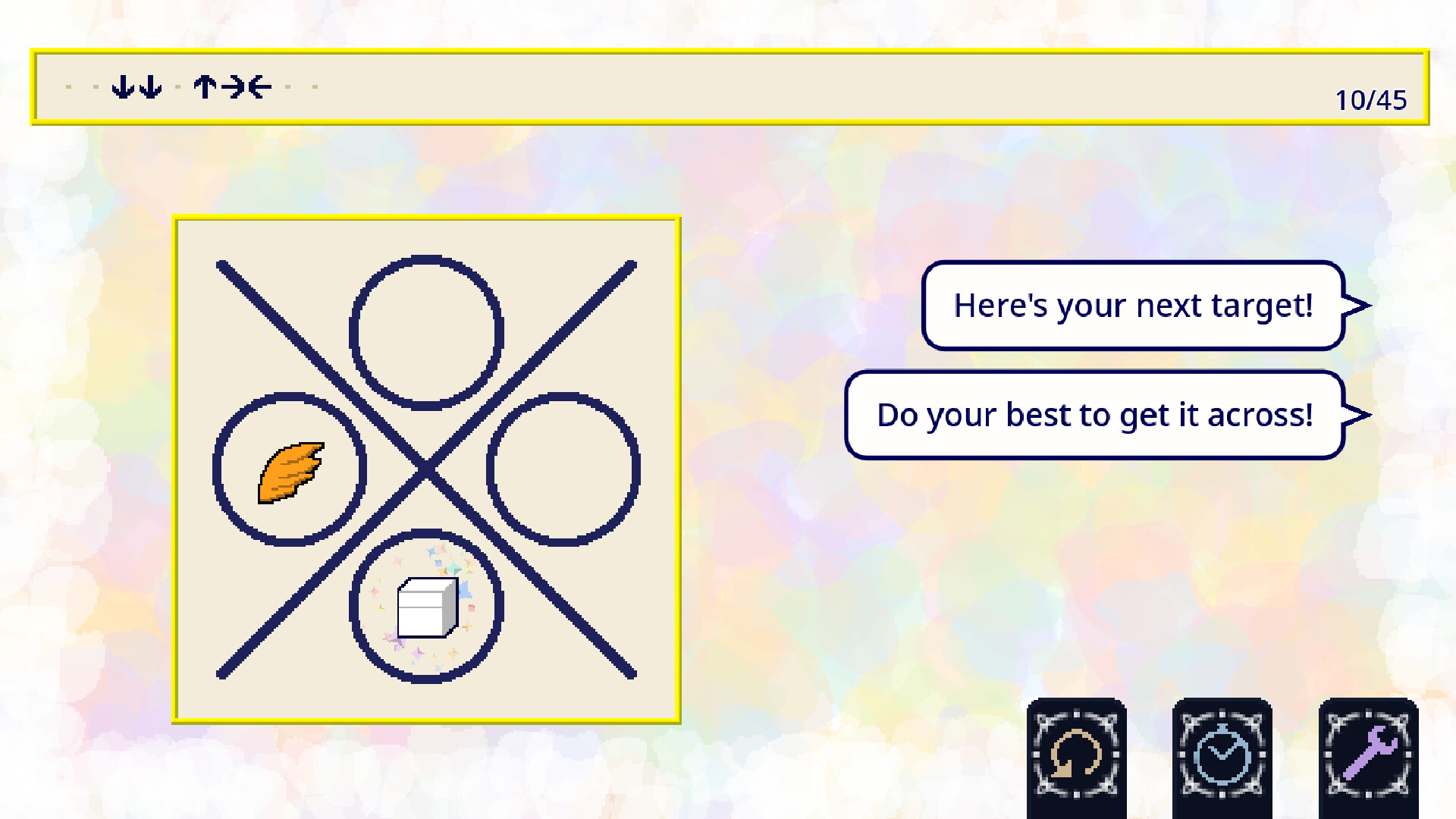
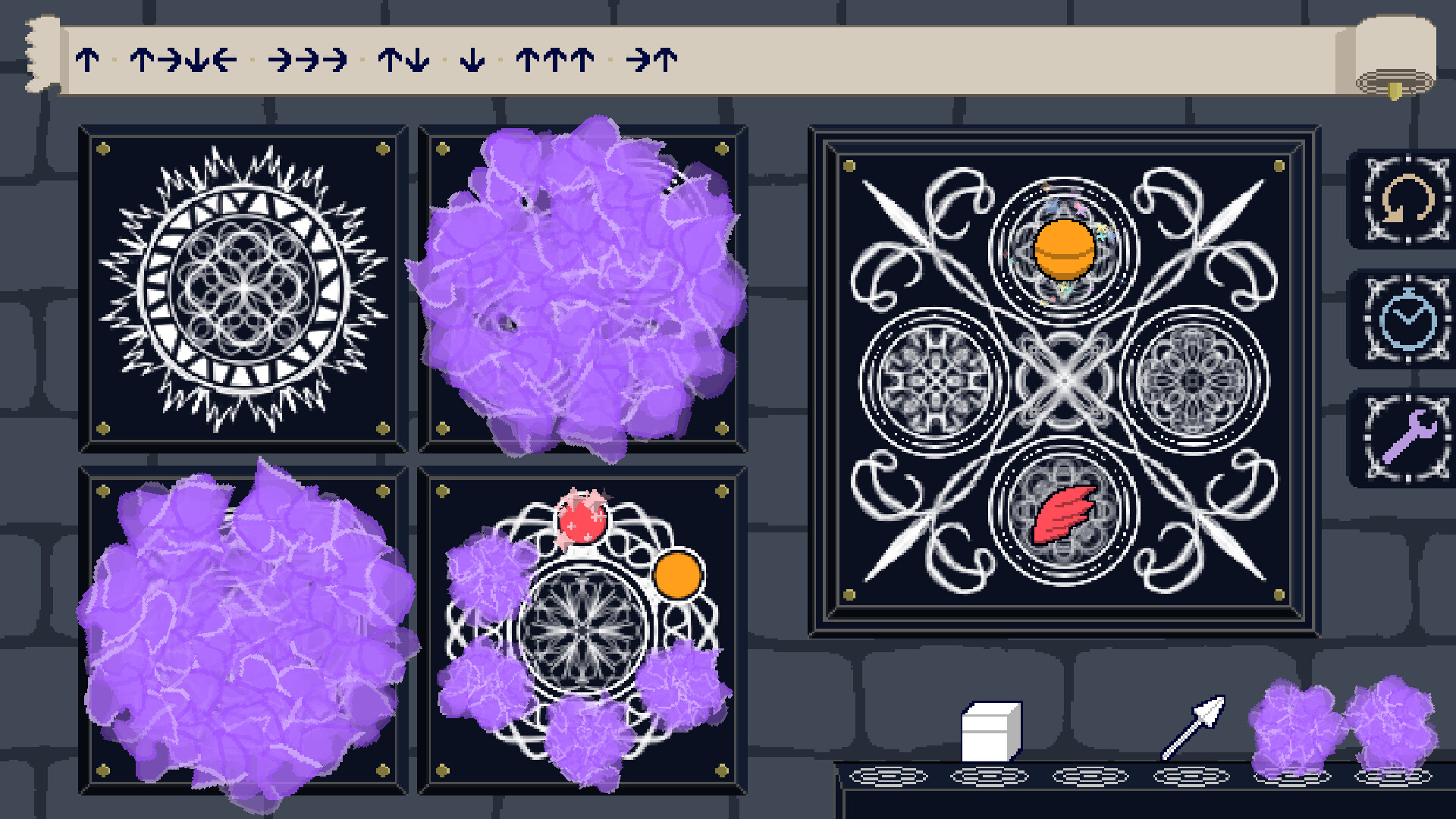
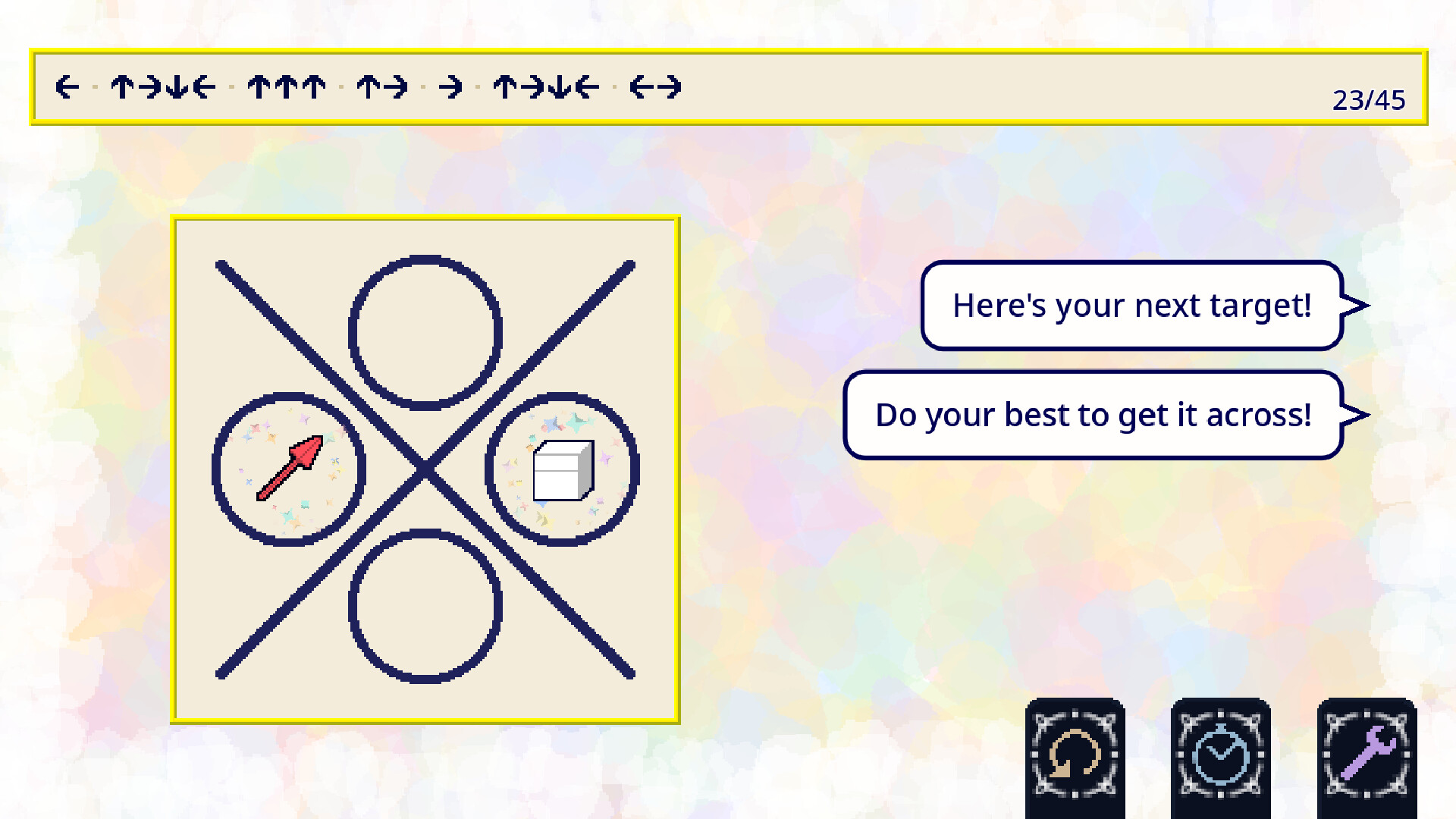
The two of you are trapped in separate rooms, unable to speak to each other. The only thing you can do is arrange five symbols—“↑”, “↓”, “←”, “→”, and “•”—like a sentence and send them to your partner.
In this situation, you must successfully complete magical rituals in order to break the seal. Somehow convey the information only you can see, decipher the strings of symbols your partner sends back, and perform each ritual correctly.
There is no “correct language” waiting to be deciphered in this game.
At first, the five symbols have no meaning at all. But through repeated exchanges, meaning gradually begins to emerge between the two of you. One symbol may come to represent a color. A sequence may represent an object. Before long, you may find yourselves communicating complex actions and instructions.
What kind of language emerges is entirely up to you. Another pair facing the very same challenges may end up creating a completely different language.
Creating a language from nothing may sound almost impossible.
But once you try it, you may be surprised by how naturally two people can begin to understand each other—even without words.
The game is designed to be completed without using any external voice or chat tools.
About Streaming
The heart of this game lies in the one-of-a-kind language created between two players.
For that reason, you are free to stream, record, or upload videos of the entire game.
When streaming, however, we strongly recommend muting any external voice chat while you are actively attempting each stage.
Trying to understand one another without words—and the moments of confusion that come with it—are part of the experience.
About a Second Playthrough
There are no stages or additional features exclusive to a second playthrough.
But after finishing the game once, something remains with you: the one-of-a-kind language you created together.
Take that language with you and start again with someone other than your first partner.
If they, too, have already created their own language with someone else—
you may find that an entirely different kind of communication begins.
Available Tables (0)
View available tables...Events Timeline
View full events timeline...Initial Release