Academy Soccer Manager
About the Game
You are the manager of a Japanese high school soccer team. You develop your players and take them from the prefectural qualifiers to the national tournament.
■ Training
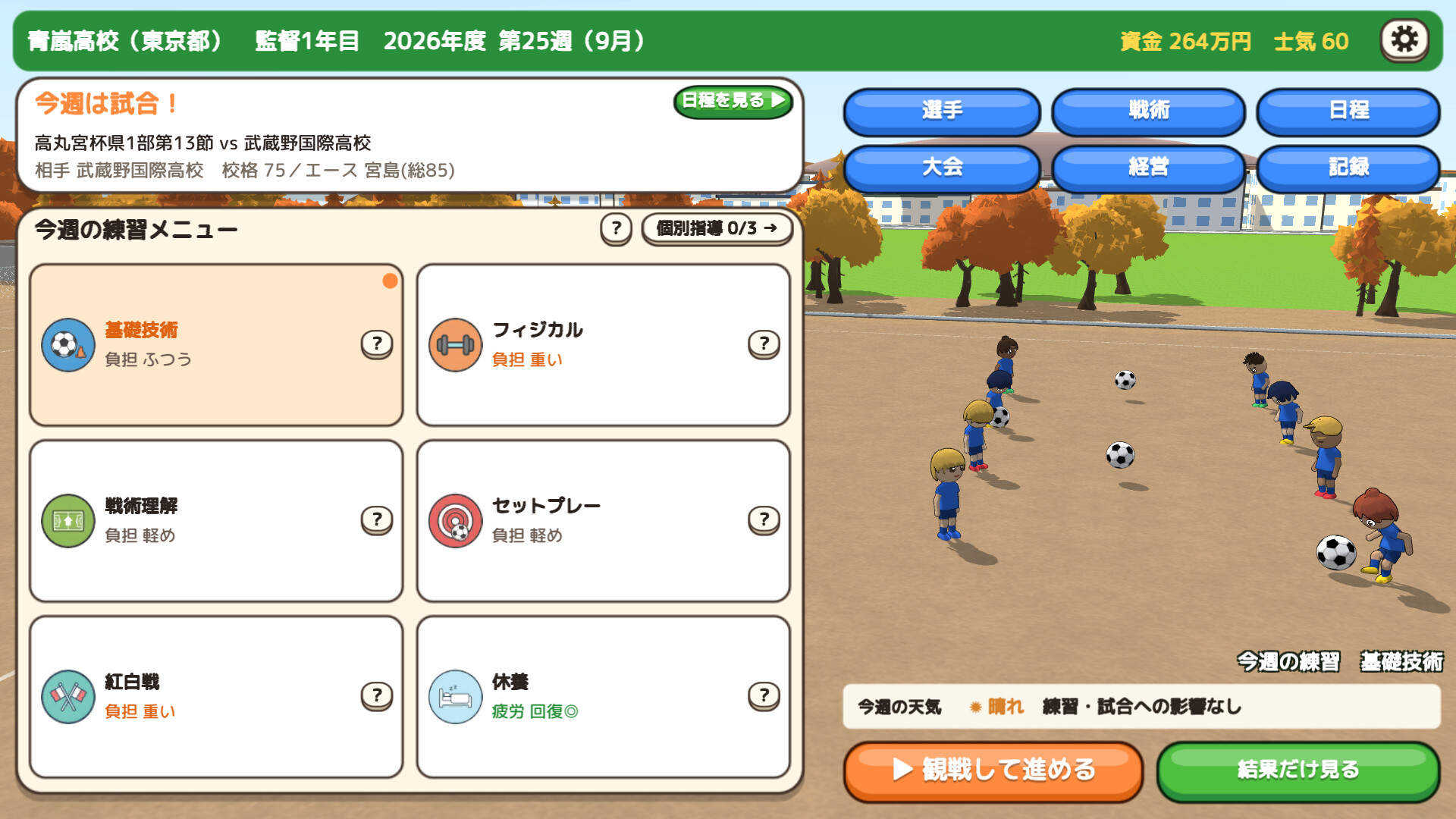
You choose a training session each week — technique, physical work, tactical understanding, set pieces, a practice match, or rest. What you pick decides which attributes come on. Players who build up fatigue get injured more easily, and players who rest too much stop improving.
■ How players develop
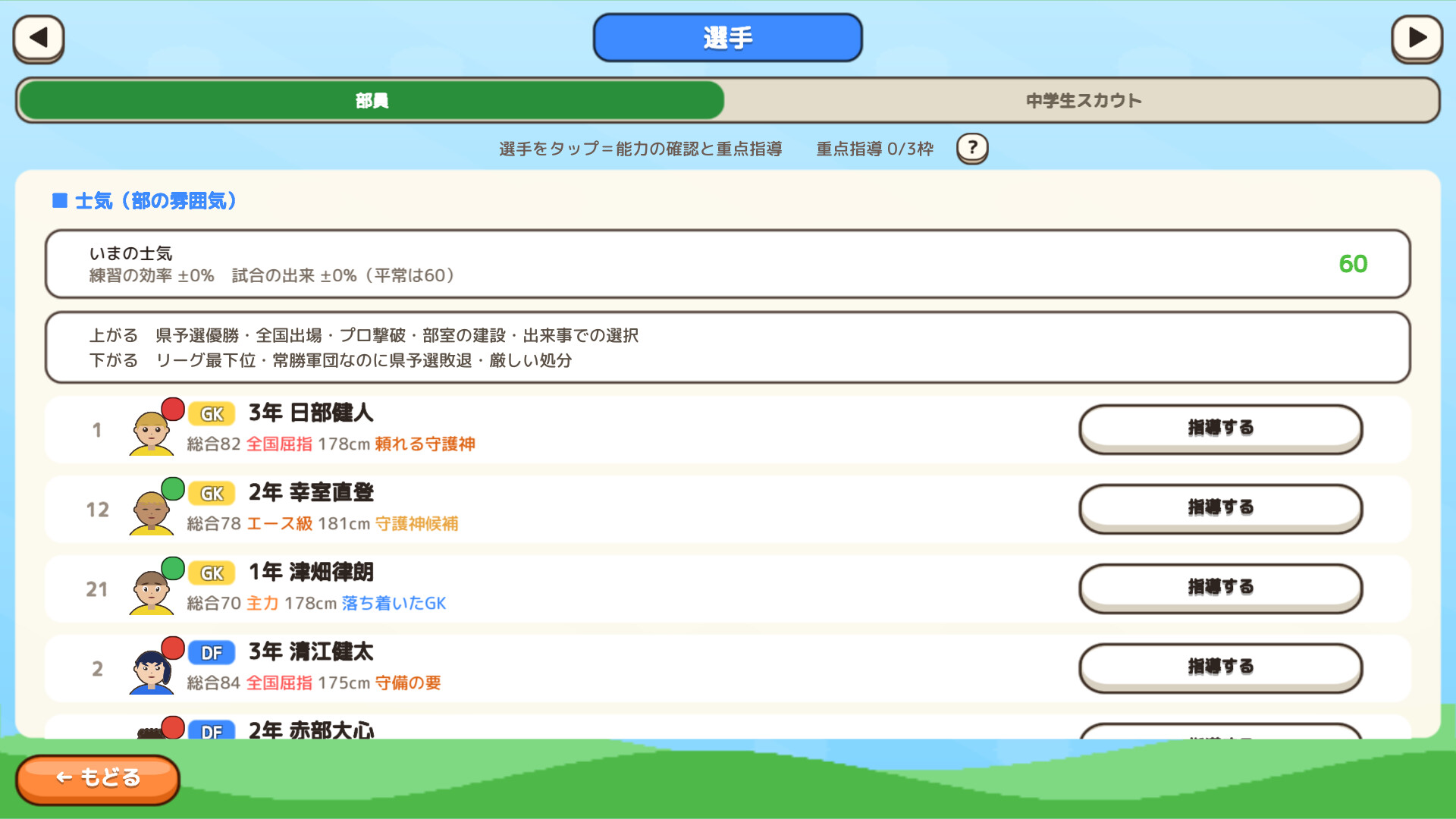
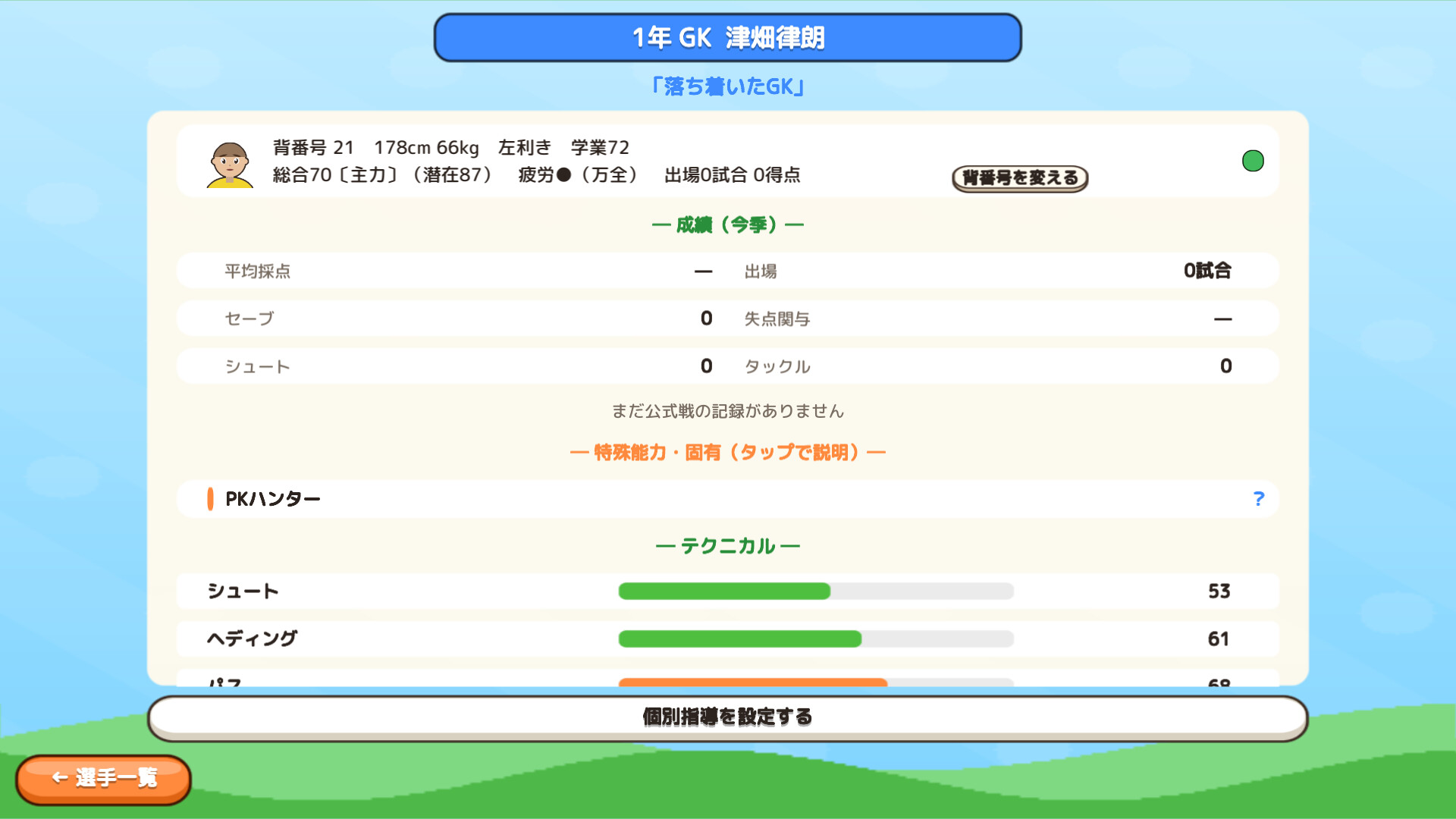
Every player has his own growth curve (early, normal, late) and his own ceiling. In one-to-one coaching you either bring on a whole group of attributes or narrow it to a single one. Players pick up special abilities that show up in matches, and some have an ability of their own — those get a nickname that stays in the club's records after they graduate.
■ Matches
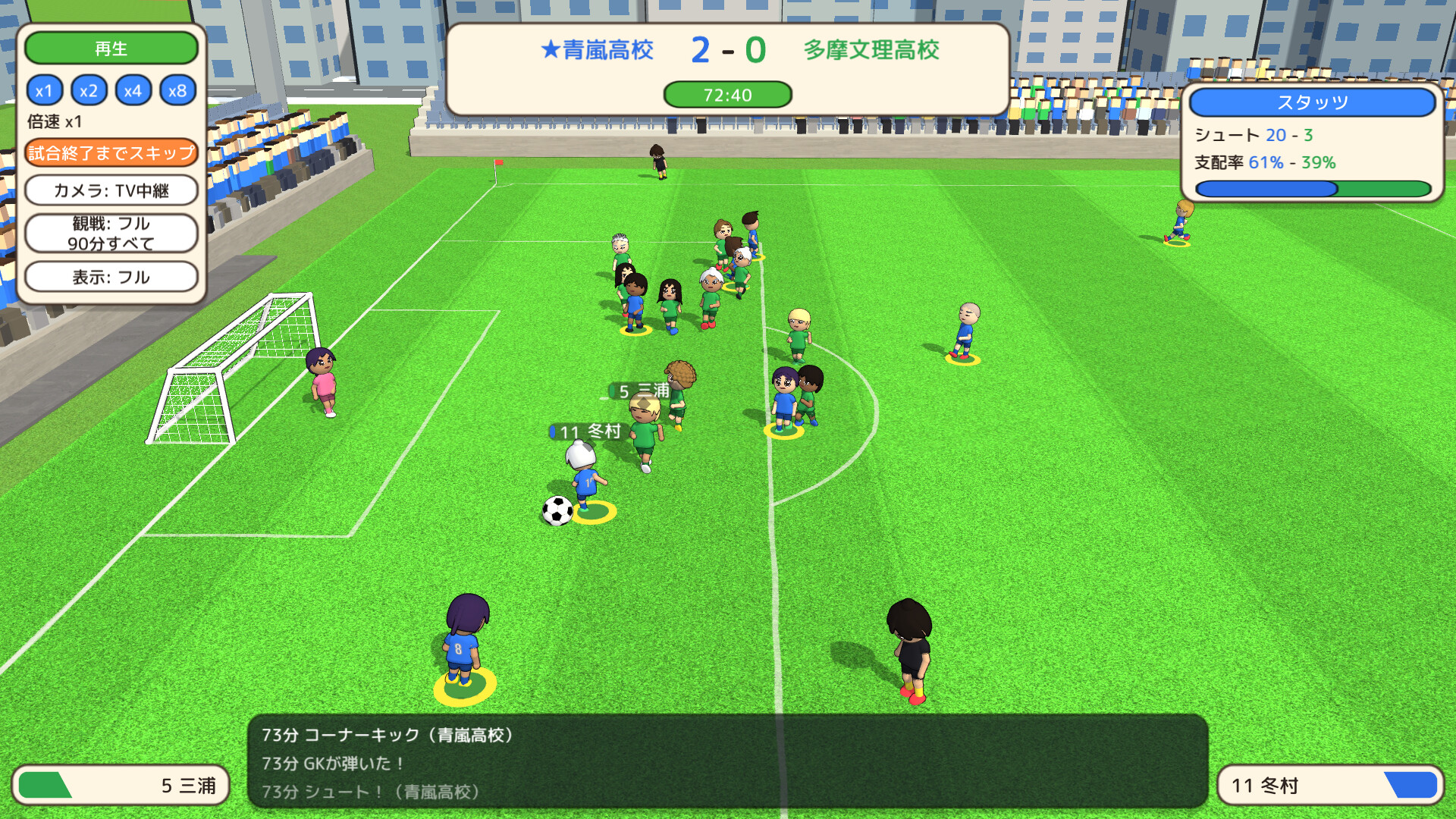
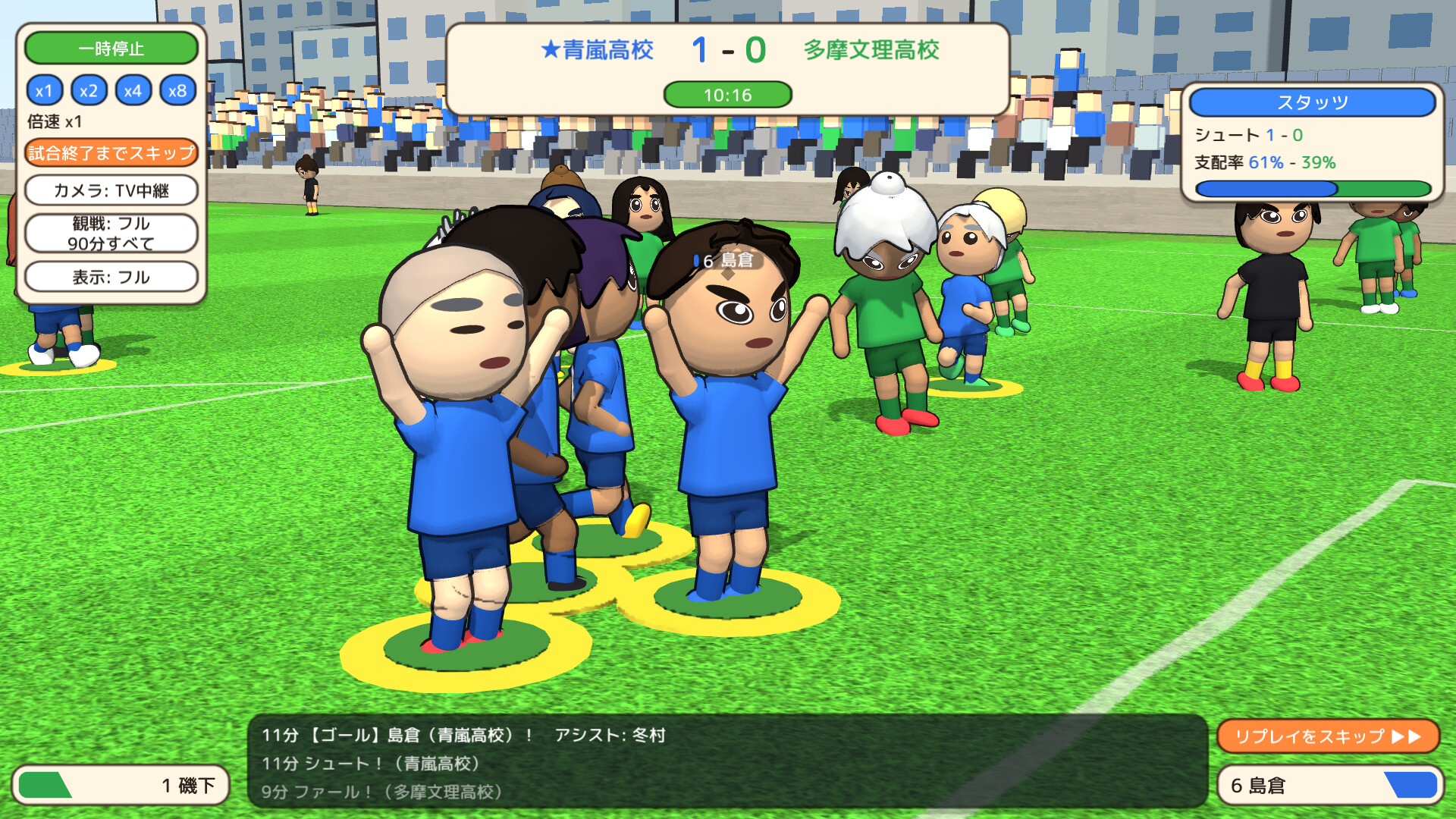
Eleven players move on the pitch by themselves, guided by your tactics and team selection. Free kicks build a wall according to the distance and the angle. You can watch from the broadcast, overhead or dynamic camera, or skip ahead to the result. Goals, assists, shots, tackles, saves and a mark out of ten are recorded for every match, and each player's profile shows his average mark and recent form.
■ Tactics
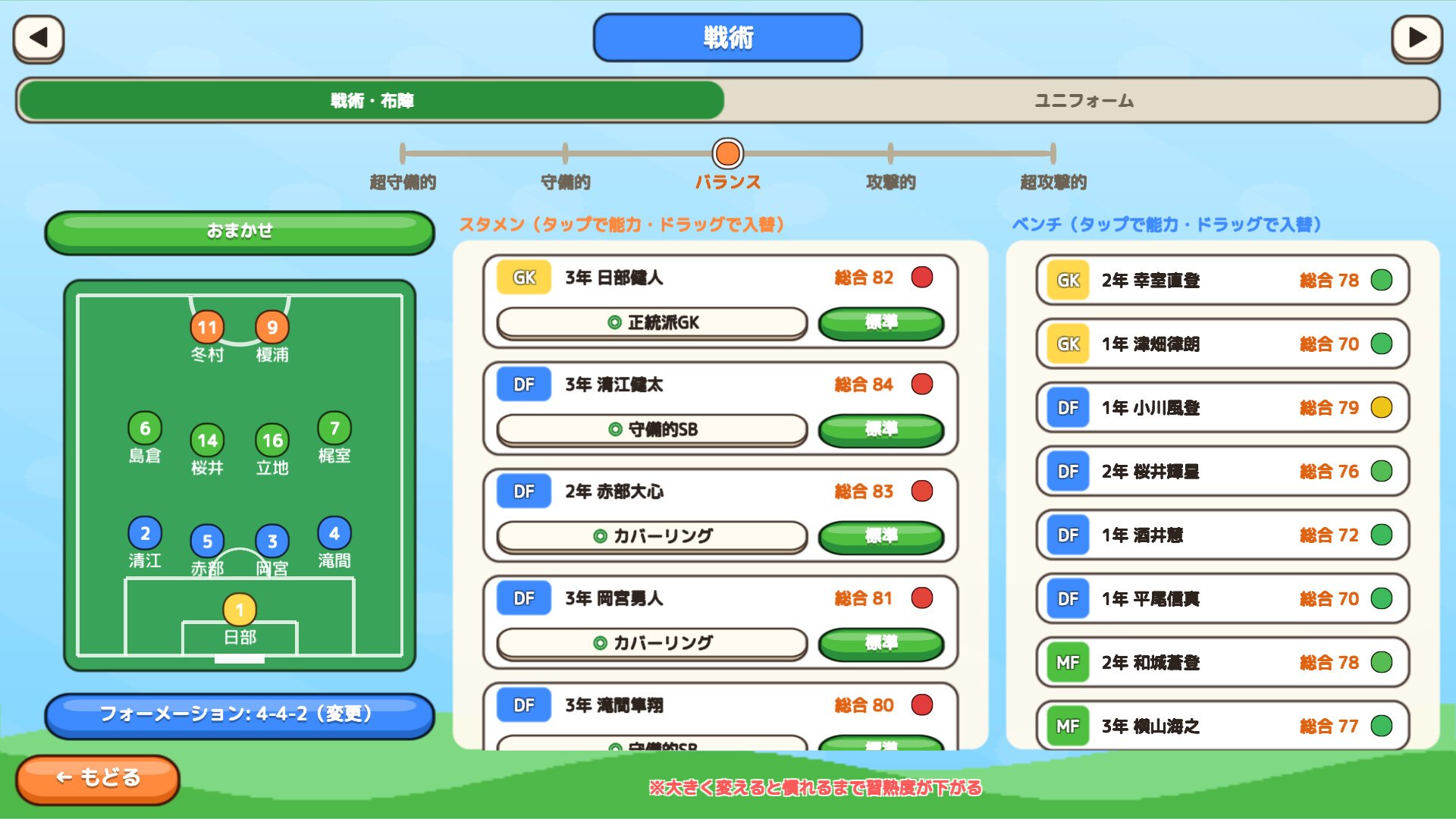
You set the formation, how high the defensive line sits, how hard the team presses, and the tempo in attack. You can also put a man-marker on a particular opponent.
■ Leagues and tournaments
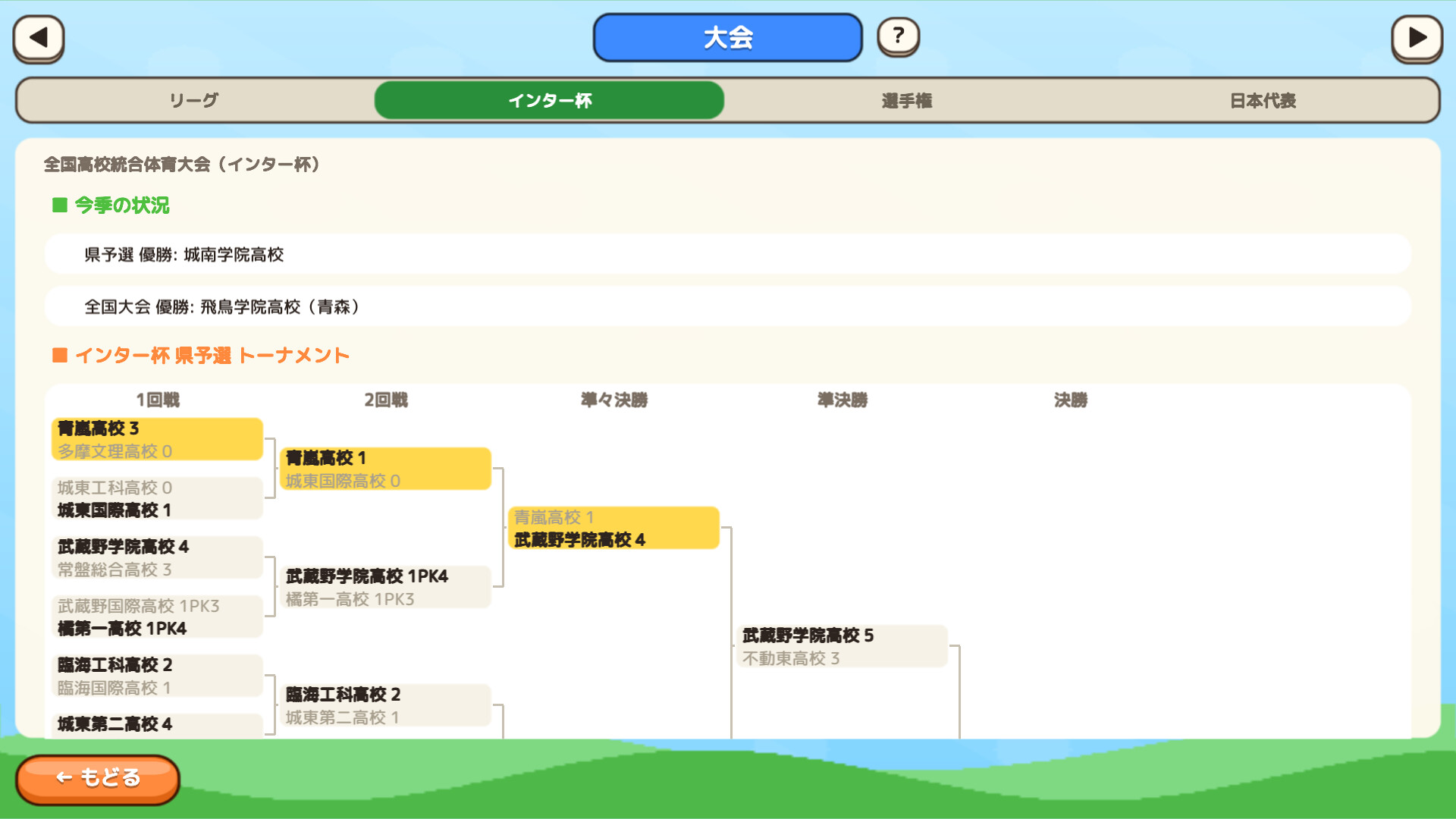
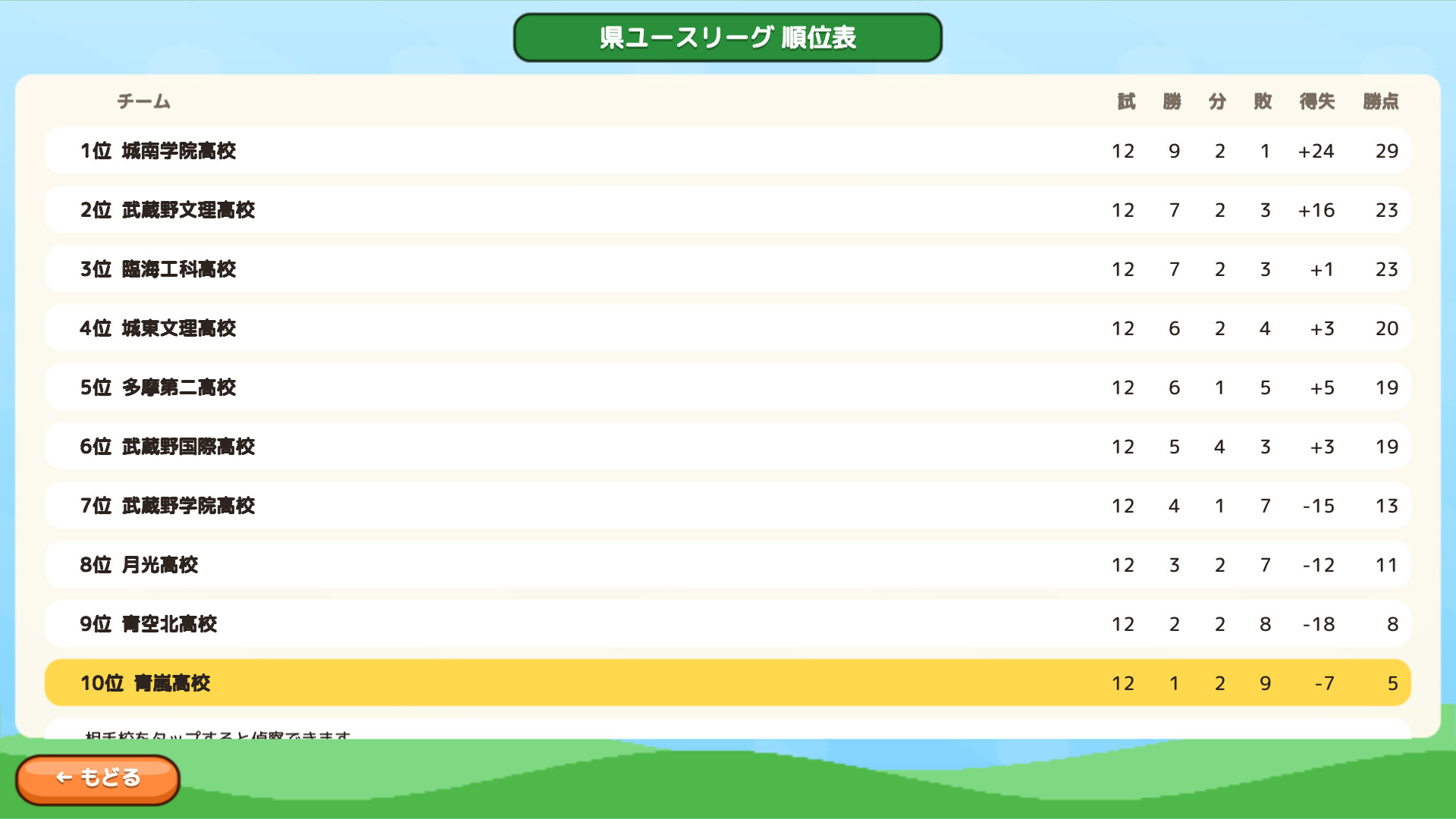
The 64 schools in your prefecture play across three divisions, with two regional leagues above them. Teams are promoted and relegated on results. The two leagues above also take the youth sides of professional clubs. The summer tournament and the winter championship are for schools only: win the prefectural qualifiers and you go through to the nationals. Each of the 47 prefectures has its own level.
■ The national team
There are U-17, U-20, U-23 and senior tournaments. You can see the draw, the results of every match including those between other countries, the tables and the brackets. A player who is called up leaves your squad for a few weeks. His caps and goals are recorded at each age group.
■ After they leave
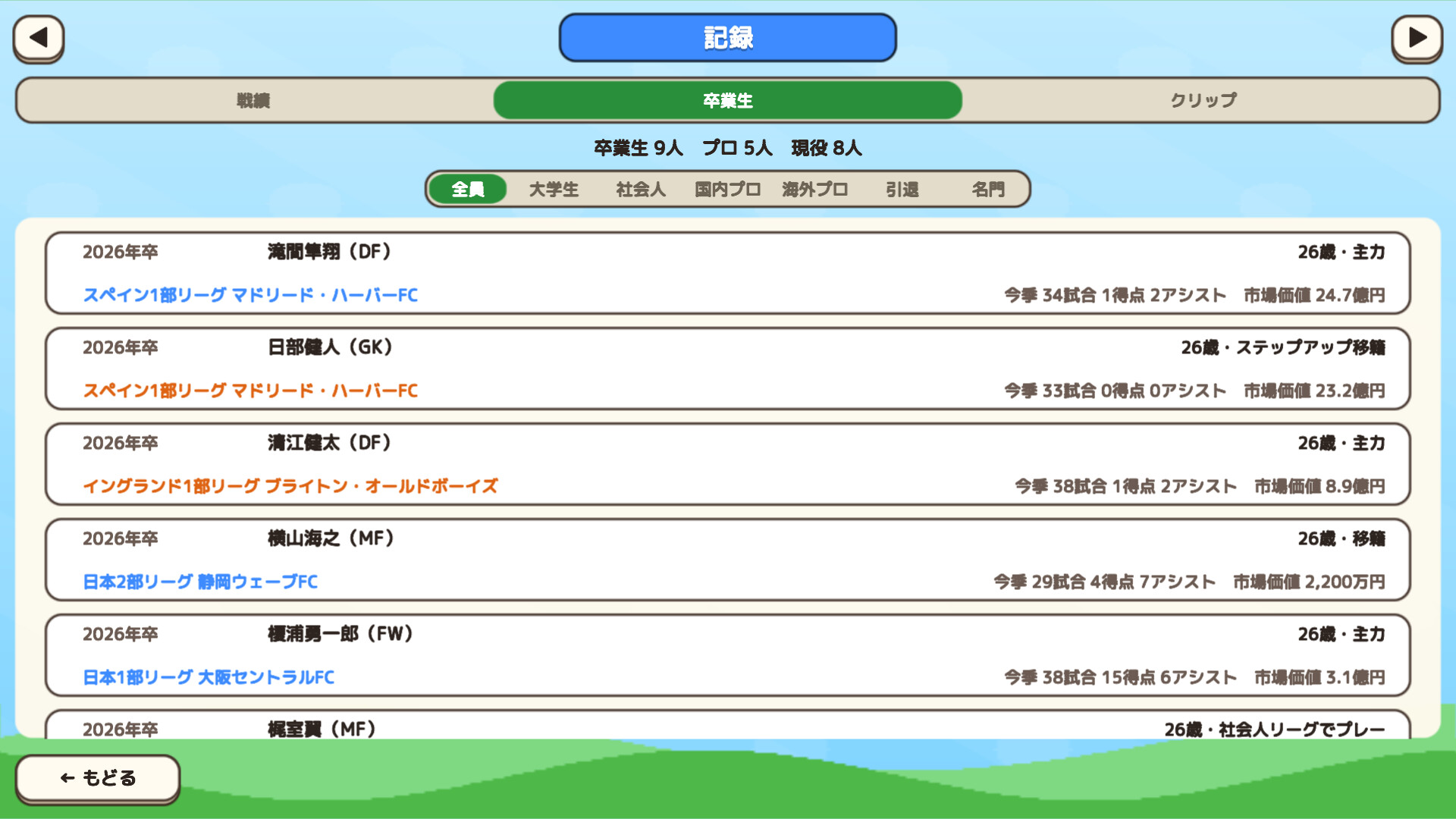
Graduates go on to university, to the three domestic divisions, or to leagues in 24 other countries. The alumni list follows their season-by-season record, transfers, honours, market value, caps and retirement. Some carry on at amateur clubs after university. Old boys who make it as professionals donate to the club and come back to help with training.
■ Running the club
You manage the funds, the squad's morale, the facilities, scouting and prize money, and you decide how the money is spent — facilities, trips, scouting. Events happen according to what the club has achieved, such as donations from old boys and invitations to play other teams.
■ Custom players
Once per in-game year you can bring in a player with a name, a look and a position you choose. His growth and ceiling are drawn the same way as any other player's.
■ Saves and records
There are three save slots, so you can run teams in other prefectures or schools at the same time. Saves sync to Steam Cloud. The Hall of Fame keeps your career record as a manager even if you delete a save. There are 33 achievements.
Every school, player, club and tournament in the game is fictional. Any resemblance to real people, organisations or competitions is unintended.
Available Tables (0)
View available tables...Events Timeline
View full events timeline...Initial Release