3D Bumper Billiards
About the Game
The view from inside the cue ball
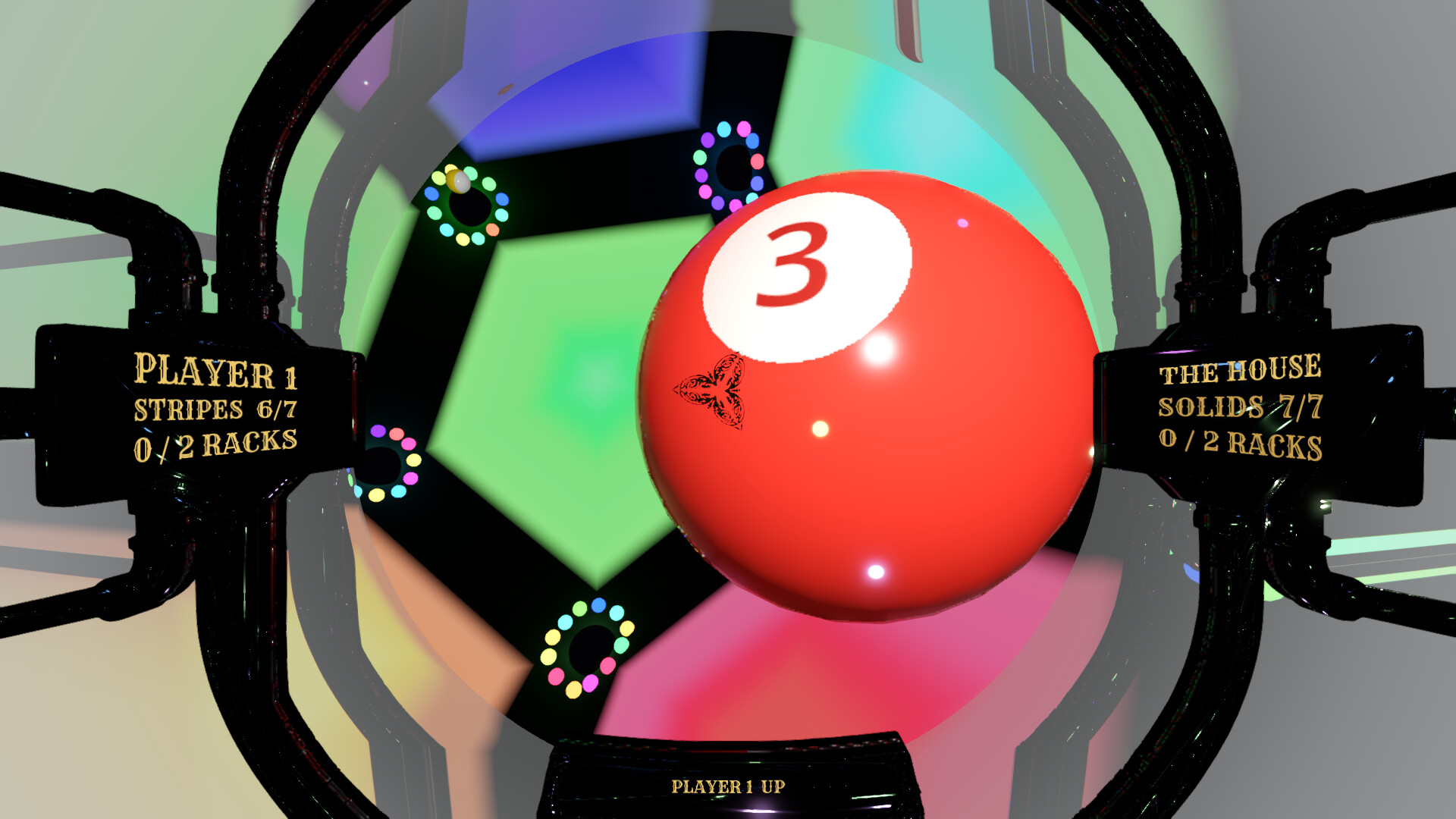
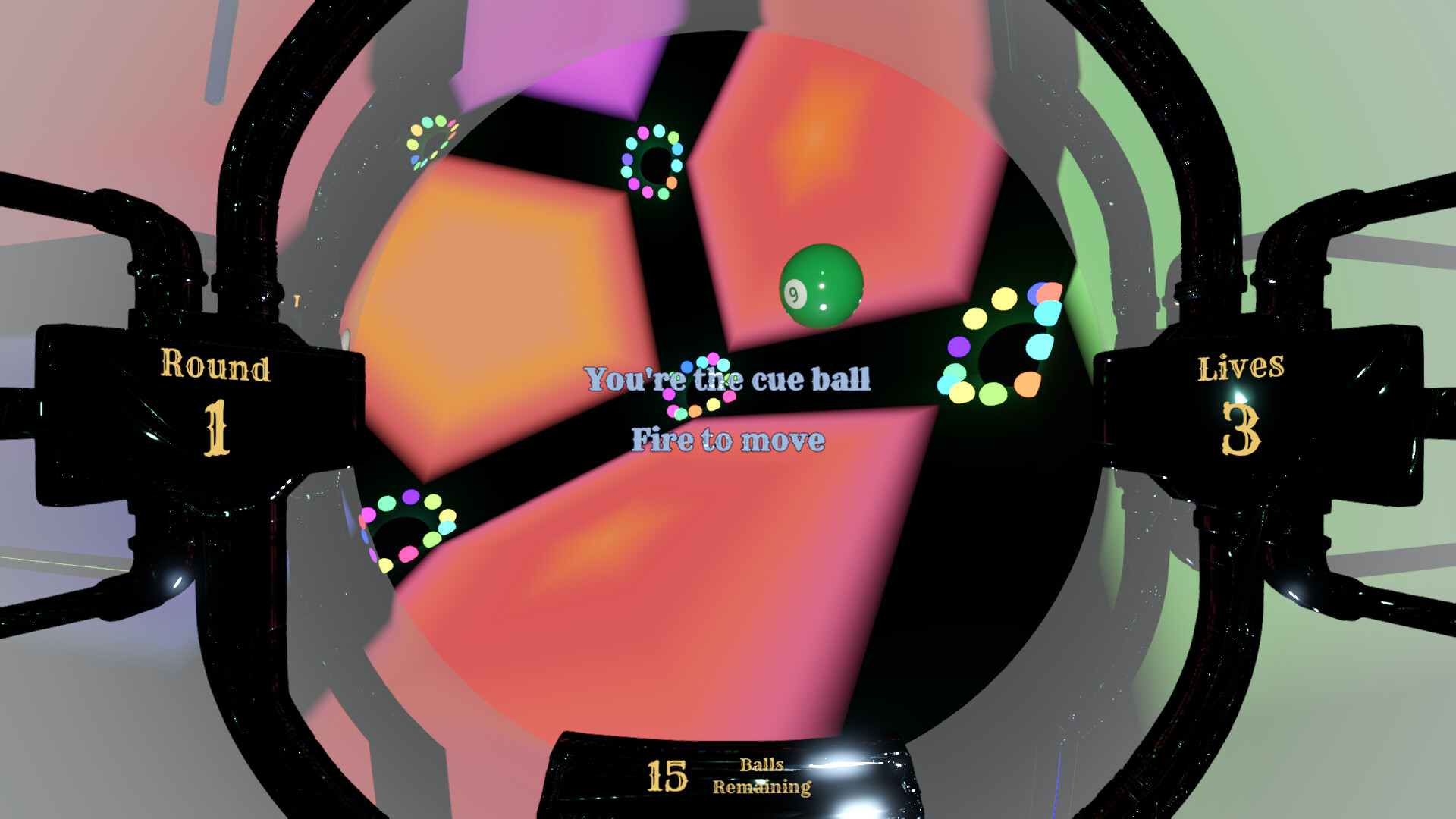
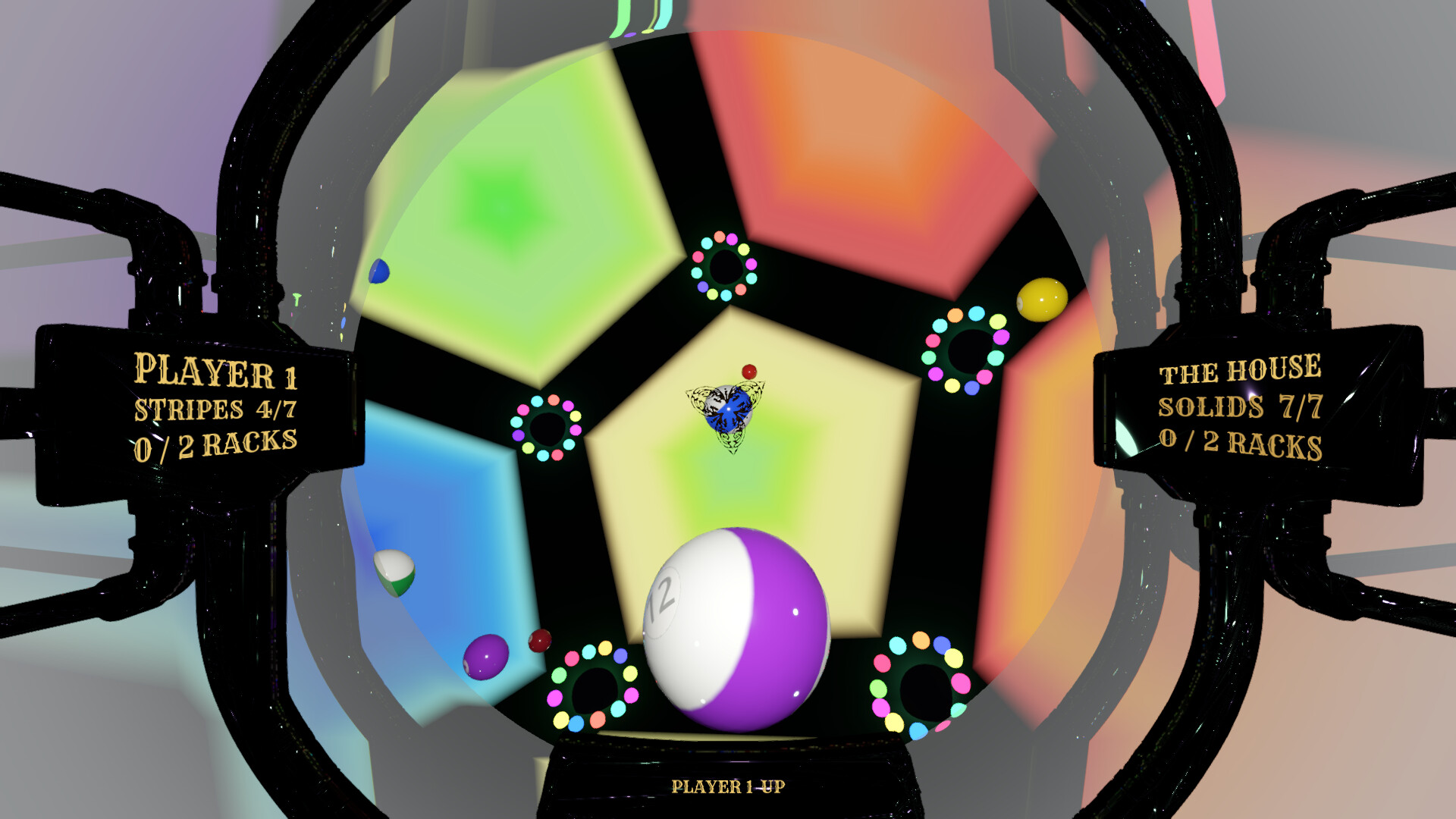
That round window in the screenshots is a porthole, and you're looking out of it from inside the cue ball.
Outside, fifteen numbered balls float in a sealed room. There's no table and no gravity. The middle of every wall is a glowing bumper, and every corner is a pocket inside a ring of lights.
Every shot throws you backward
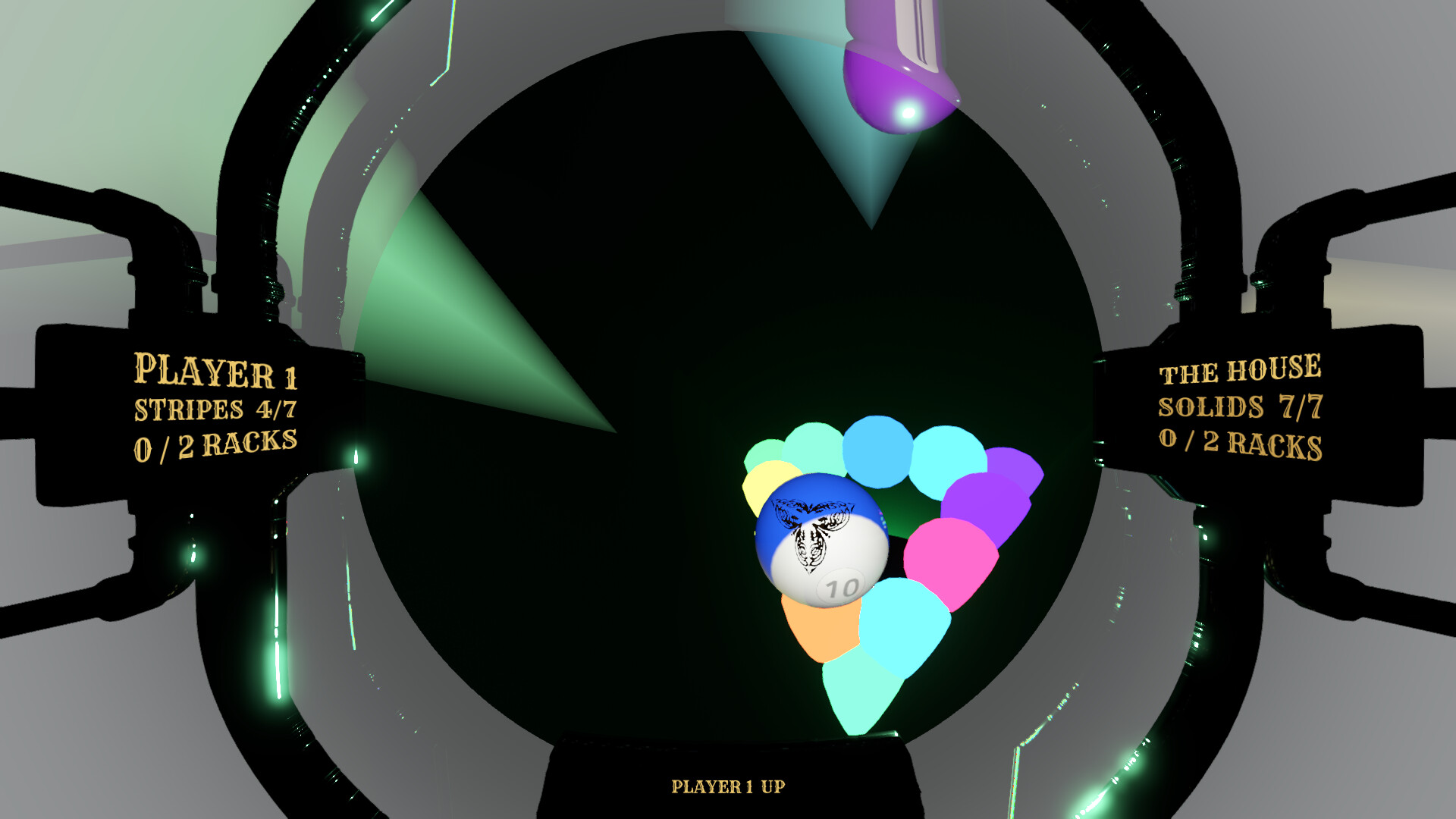
There's no cue stick. You hold the button to charge and let go to fire a pulse at whatever you're facing. The ball you hit goes forward, and you go back.
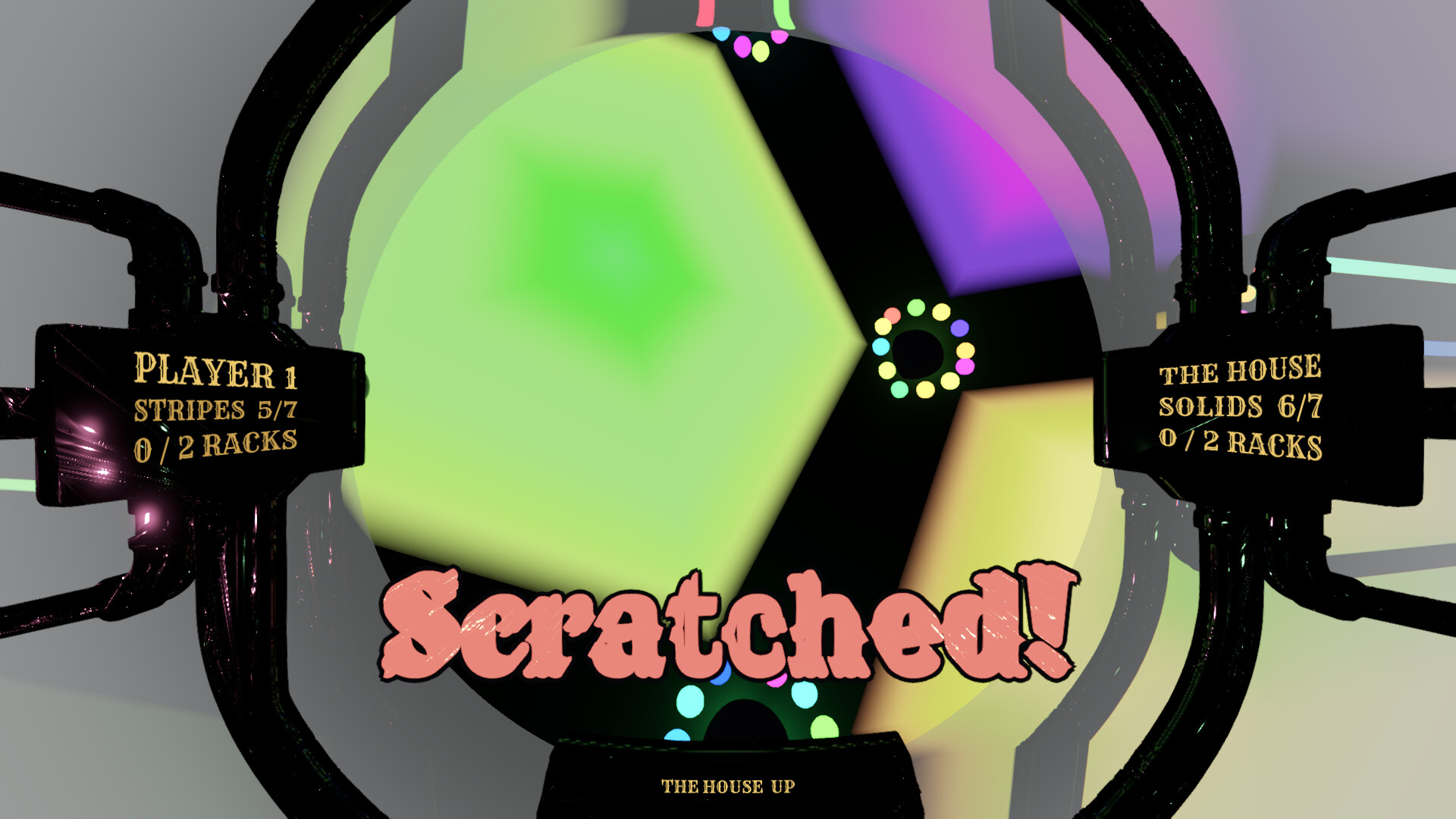
That kick is the only way to get around the room, so every shot is also a move, and you're setting up the next one while you take this one. It's also how you lose. Sink the 6 off the far wall, feel very pleased with yourself, and keep drifting backward into the pocket behind you. That's a scratch. On your own it costs a life; in a match it hands over the turn. Either way you drop back in somewhere else.
Nothing ever stops moving
There's no air in the room, so the balls never settle. The bumpers kick balls back into play, the corners around the pockets slow them down, and every collision costs a little speed. Over a rack, the room winds itself up. You get a few clear moments after the break before it all gets away from you, and how long they last is different every time.
Alone, against the bot, or passing the mouse
On your own: clear three racks on three lives.
Against the bot: best of three racks. The bot plays by your rules: it has to turn, aim and fire the same pulse you do, and it scratches too.
Two players, one screen: best of three, passing the mouse and keyboard back and forth.
Matches are solids against stripes, and the first ball down picks your suit. Because the balls never stop, nobody waits for a turn. You fire as often as you like, and your turn ends only when you sink one of your opponent's balls, or yourself. Knock in their last ball and you've won them the rack.
Five arenas, all open
A cube, a tetrahedron, an octahedron, a dodecahedron and an icosahedron. The pockets are the corners, so the tetrahedron has four and the dodecahedron has twenty. You can make any arena bigger or smaller, and choose how the physics behaves, from slow drifting to pinball. The winner of a match picks the felt, walls and metalwork for the rematch, and each arena keeps its own Hall of Fame.
Everything is open from the first minute. There's nothing to unlock, no account to make, no ads and no shop. We're asking you to climb inside a ball and be sealed in a box, so the least we can do is let you choose the box.
Who made this
Pilfered Parrot Global Industries is a much smaller operation than the name suggests, and this is our first game.
The demo is free. If you'd like Steam to tell you when the full game is out, add it to your wishlist.
Available Tables (0)
View available tables...Events Timeline
View full events timeline...Initial Release