1453: Fall of Constantinople
1453: Fall of Constantinople


About the Game
Everyone knows the city will fall. No one knows who they'll be that day.
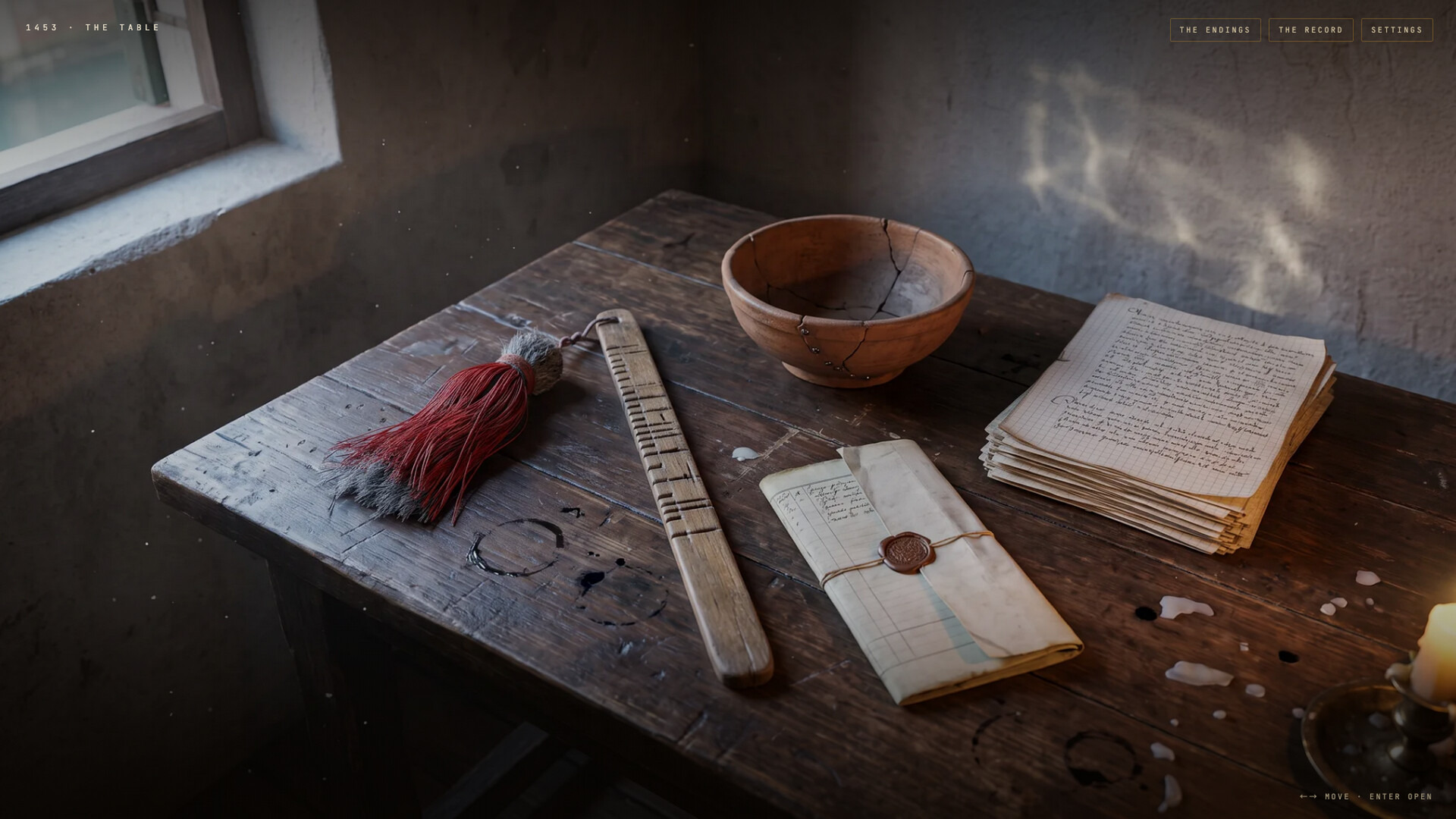
Venice, 1500. Anna Notaras — daughter of Byzantium's last great duke, who left before the end and spent fifty years ransoming its survivors — is writing down testimonies of the siege. Four witnesses sit at her table. Their accounts don't always agree. She writes them down anyway.1453: Fall of Constantinople is a choice-driven, illustrated historical novel about the fifty-three days that changed a city's fate — told from both sides of the walls, in four interlocking stories.
Four testimonies, one clock
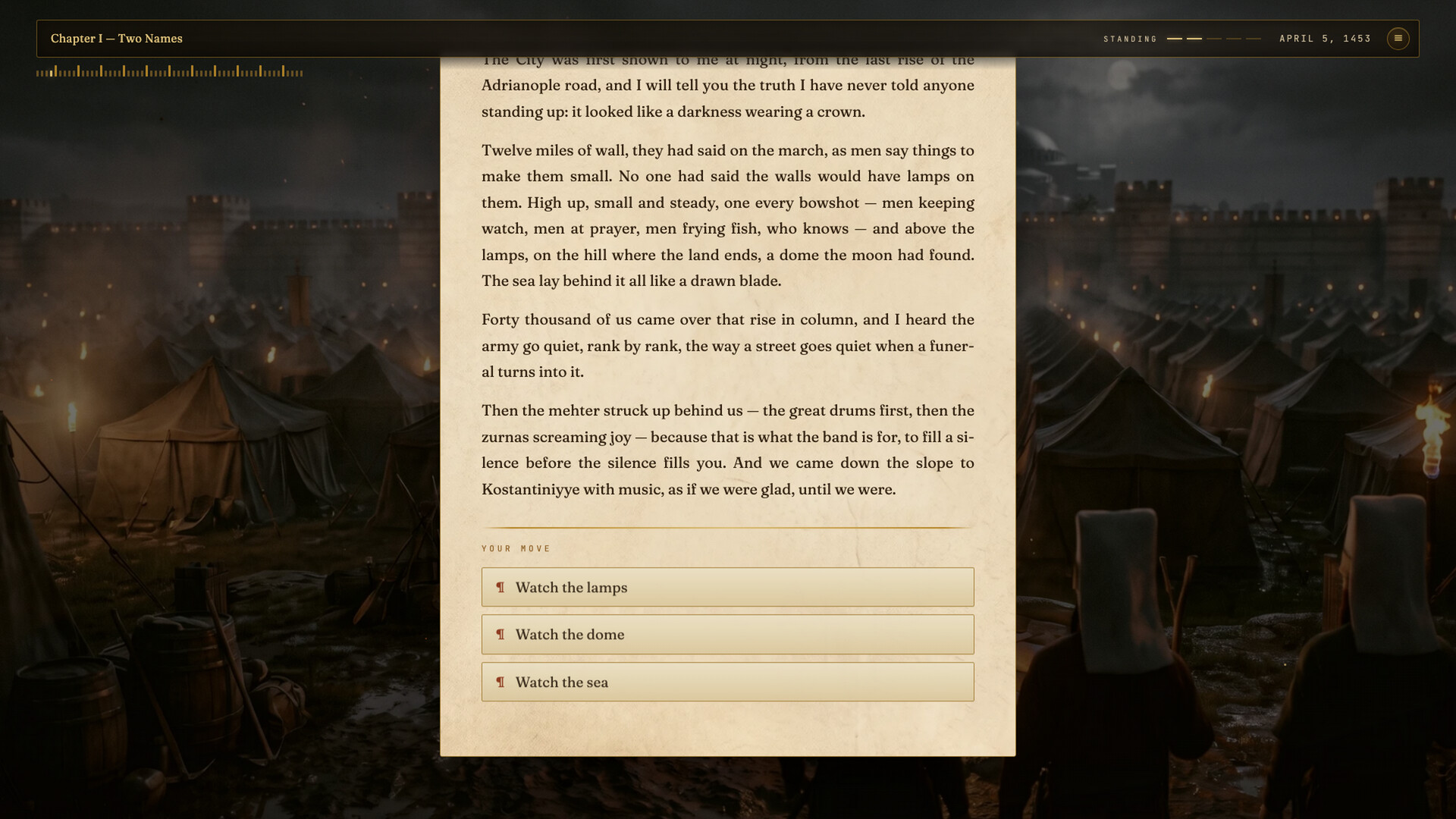
- The Janissary — born Greek, taken as a boy, now besieging the city his grandmother prayed toward.
- The Baker's Daughter — running the ovens, the queues, and the rumors of the Petrion quarter as the bread runs out.
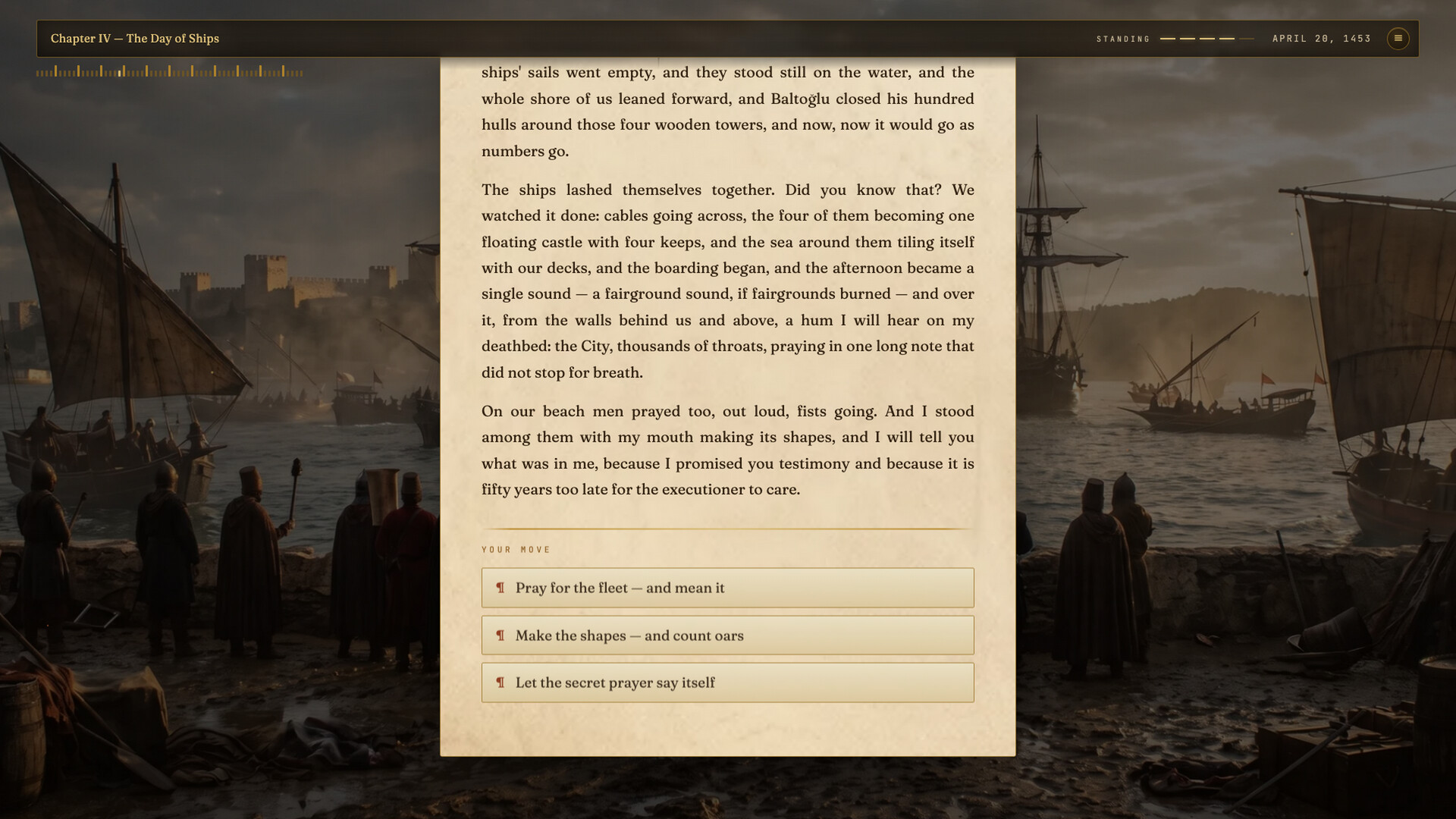
- The Engineer — a foreign specialist fighting the underground war of tunnels, water bowls, and burning towers.
- The Noble — carrying the emperor's secret census, hearing the surrender embassies, weighing the Church's gold for the mint.
The city remembers
Your choices cross between testimonies. Mercy shown in one story becomes a sixth ending in another; a bribe paid at court becomes the boat a girl might board on the last morning. One city, one clock, interlocking fates.What the sources say
After every chapter, the game shows its cards: is this scene in an eyewitness diary, a later chronicle — or a legend born centuries after? The fall of Constantinople is told through contested sources, and honesty about them is a feature, not a footnote.What's inside
- Four deep routes with 5–6 distinct endings each, plus a frame story that binds them.
- Cross-story memory — completed testimonies visibly change scenes and endings in the others.
- A living visual world — painted-realism scenes of the siege, alive with slow ambient motion behind the words.
- A score moving between mehter rhythm and Byzantine chant as the walls and the days wear down.
- The sources codex — every major event flagged: attested, reported, legend, or disputed.
- Both sides carry equal weight — Ottoman and Byzantine lives written with equal care; no side's ending is the "true" one.
Images and music are AI-assisted with human editorial control; text and code are human–AI co-written.
Available Tables (0)
View available tables...Events Timeline
View full events timeline...Initial Release